Netanyahu, Rivlin differ on anti-Semitism in Europe
Separate interviews given by President Reuven Rivlin and by Prime Minister Benjamin Netanyahu to CNN about European anti-Semitism highlight the differences between them over Israel’s attitude toward the rise of the far right in Europe.
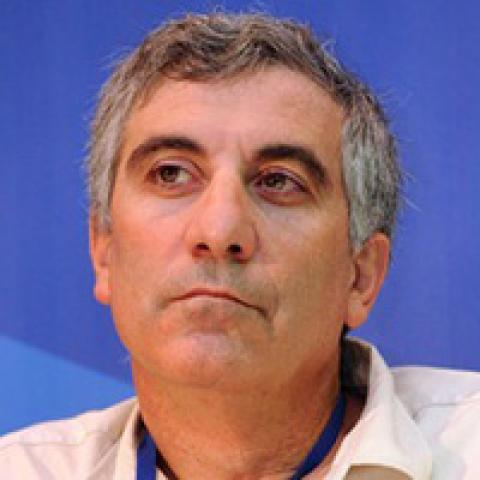

They may both belong to the same political party — the Likud — but there is still a long history of personal differences, not to say animosity, between Prime Minister Benjamin Netanyahu and President Reuven Rivlin. “It looks like Netanyahu isn’t my friend,” Rivlin said last February, describing the icy relationship between the two men.
This seems to be why Netanyahu is trying to pass legislation limiting the president’s right to decide which Knesset member will form the next government after elections. Netanyahu fears that Rivlin will use the criminal investigations he is facing — especially now, with Israel Police recommending that he be indicted for bribery in Case 4000 — and hand over to another Likud Knesset member the task of forming the coalition. More specifically, he fears that Rivlin will task former Education Minister Gideon Saar with that mission. And so he initiated the so-called Gideon Saar Law, forcing the president to task only a Knesset member who is also party head with the composition of the coalition. The Ministerial Committee on Legislation is expected to approve this week the recent toned-down version of the proposed law, to that effect. Originally, Netanyahu proposed that only the Knesset member who has the most Knesset members’ support could be tasked by the president.
Interviews on the topic of European anti-Semitism, which both men gave recently to CNN, highlight the disagreement they have over Israel’s relationship to Europe’s rising far-right parties. For several years now, Netanyahu has developed close ties with some of those right-wing governments, and some of their leaders have even visited Israel this year. Austrian Chancellor Sebastian Kurz visited last June, as did Hungarian Prime Minister Viktor Orban in July.
In July 2017, Orban described Adm. Miklos Horthy, who ruled Hungary during the Holocaust, as “an exceptional statesman.” He went on to establish a historical museum that all but ignores the active participation of Hungarians in the massacre of the country’s Jewish population, and he used anti-Semitic tropes against the American-Jewish businessman of Hungarian descent, George Soros, who supported his rival. In a meeting with Netanyahu this past July, Orban spoke more moderately, saying, “We are proud that in Hungary, self-identifying Jews who celebrate and preserve Jewish tradition can feel safe. Hungary has zero tolerance for anti-Semitism … it makes sense that a Hungarian patriot and a Jewish patriot find common ground.’’


