Betraying Reformist backers, Rouhani paves way for Iran’s hard-liners to take office
After supporting President Rouhani in the past two elections, Reformists are breaking with the president in public ways.
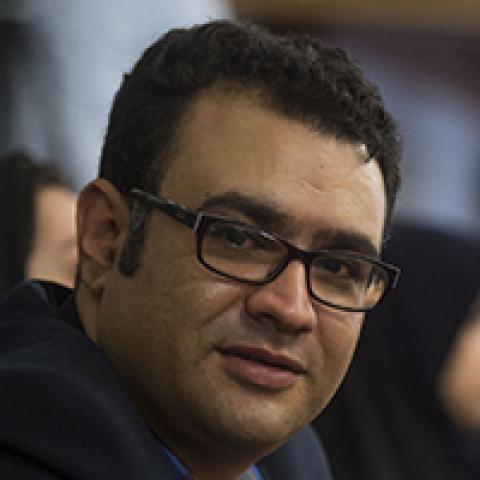

"On victory day, everyone claps for a winner who acts with nonpartisanship. But they all keep a distance from him as the hard times come by," said Iran's President Hassan Rouhani on Jan. 10. These sarcastic remarks were apparently meant for some inside the Reformist camp who have recently criticized his performance.
After more than five years of unwavering support, even the Reformist camp's traditional leader, Mohammad Khatami, has spoken out against the president's "passivity." Rouhani started to fuel fury among his Reformist backers after he offered them few spots in his Cabinet following his re-election in 2017. Now, with differences that have rapidly grown in the 18 months since, few Reformists would go the extra mile to back Rouhani. Saeed Hajjarian, a top ideologue of the camp, has acknowledged the rift, blaming it on the president's failure to live up to his election slogans and resist pressure from hard-liners.
Hajjarian's stance was met with an unprecedented counterattack from Rouhani's chief of staff, Mahmoud Vaezi, who argued that, with those comments, Reformists are seeking to secure votes ahead of the 2021 presidential election. Vaezi noted that such an effort will be in vain, however. Separately, he described some Reformists as temporary election-time fans. In one case, he even referred to them as "extremist Reformists." The name-calling triggered the ire of the camp leaders.
But the crack was exposed most notably in the joint meeting with Reformists called by Rouhani last October. The invitation was declined by such senior Reformist figures as Gholam-Hossein Karbaschi (former mayor of Tehran, 1990-1998), Mostafa Moeen (former minister of higher education, 1997-2003) and Abdollah Nouri (former interior minister, 1997-1998). Reports leaked from the meeting indicated tensions between the two sides, despite having reached an agreement to set up a joint working group, which was never implemented. Earlier, in July 2018, a similar draft deal to form a joint committee had been reached, but the committee has never been formed.


