Iraq’s two leading parliamentary movements amp up coordination
The Fatah and Sairoon movements have stepped up their efforts to see that the Cabinet is completed and for the government to properly face the issues ahead.
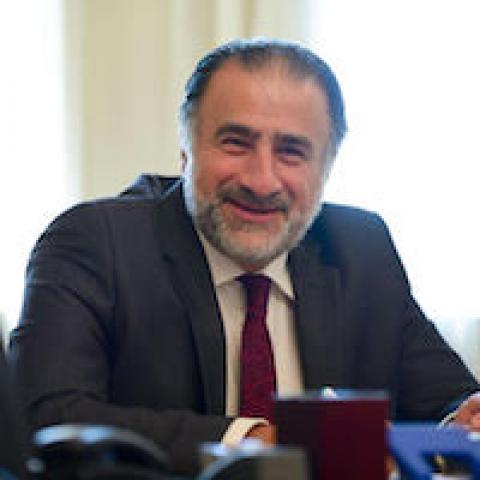

As Iraq’s government formation continues to stall, the country’s two main political movements — Fatah and Sairoon — are teaming up to take control of the political scene and to prevent progress from being stalled by infighting with smaller parties.
The Iraqi political scene is known to be one of continuous crises. Political parties are addicted to them, often dealing with crises by creating bigger ones so they can forget the previous ones. They postpone any decision related to the previous crises and deal only with the one at hand. However, after the formation of the current government Oct. 24, political crises have been few and far between, perhaps due to the fact that President Barham Salih works in full sync with Prime Minister Adel Abdul Mahdi and parliament Speaker Mohammed al-Halbusi. All three cooperate on policy issues, and the president deals with crises that erupt, as he did when he mediated a dispute between the Hikma political coalition and the paramilitary group turned political movement Asaib Ahl al-Haq. At the same time, the prime minister does not interfere with the daily political issues that concern the political blocs, keeping his distance and leaving them on their own to deal with these subjects.
Yet the slow government formation process has disturbed the calm seas of politics. The country’s two largest parliamentary blocs — Islah and Al-Binaa — have failed to agree on who will head the three ministries that remain without a minister, namely the Ministry of Interior, Ministry of Defense and Ministry of Justice. Sairoon is part of the Islah bloc, and Fatah is part of the Al-Binaa grouping. The political wrangling among the parties within the blocs has meant failure to reach consensus over a single candidate for each ministry. The government is also slow in the implementation of its program as it is waiting for the completion of the Cabinet. It is also waiting on the appointments of high-ranking positions, such as heads of independent commissions, deputy ministers and director generals of many of the ministries.
The Fatah movement headed by Hadi al-Amiri and the Sairoon movement headed by Muqtada al-Sadr have engaged in covert negotiations for some time to reach an agreement on how to cross to the next phase of politics. On Feb. 11, representatives of the two movements met publicly and announced an agreement between them. Amiri, speaking at a press conference following the meeting between the two sides, said they had “formed a joint committee between Sairoon and Fatah to discuss [with our partners] the completion of the Cabinet formation, the appointment of independent commissions and remaining institutions, and the subject of local governments and services.” He also added, “We have not discussed names of any [potential ministers for the vacant posts], but will do so in the first parliament session.”


