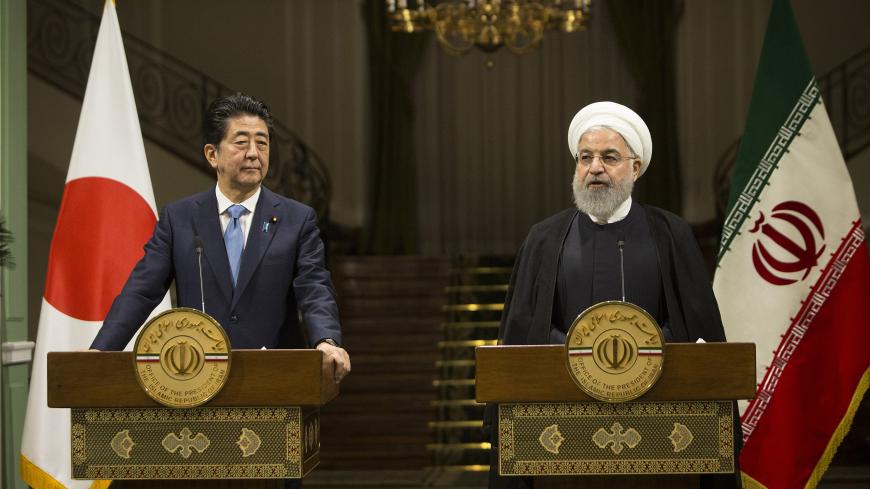
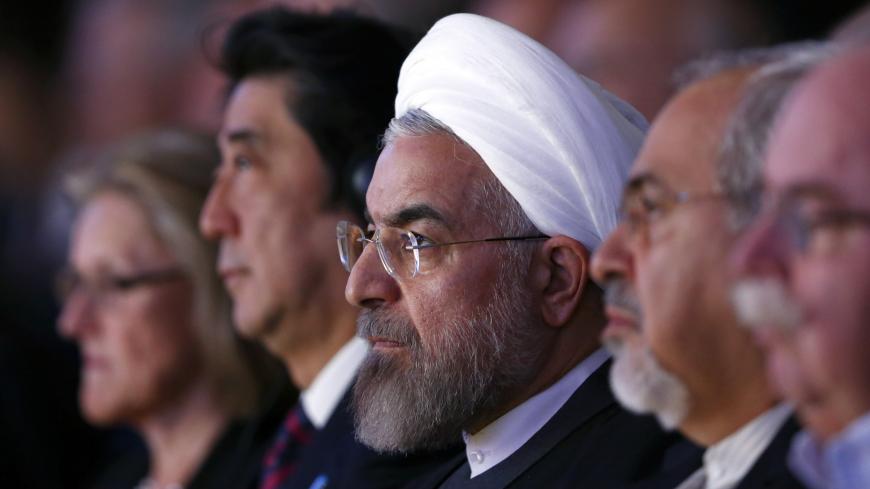
Not a day has gone by during the past two weeks in Iran without speculation about the Japanese premier's visit to Tehran and the agenda of his talks with Iran's leadership. The speculation has been fueled by reports that US President Donald Trump, during his May 27 trip to Tokyo, had embraced Shinzo Abe's offer to help alleviate the tensions between Tehran and Washington that have reached alarming levels.
There has been no confirmation from Islamic Republic officials, who assert that the visit had been in the making long before Trump's presser in Tokyo. Also, before boarding his plane from the Japanese capital, Abe told reporters that his country sought to play a role in regional "peace and stability," making no direct reference to mediation plans.
Nevertheless, the Iranian press has no such reservations and continues to push theories. "Regardless of all speculation, what matters is the timing, as the trip occurs in the midst of the maximum US pressure policy being implemented against Tehran," reported pro-Reform Etemad, describing the visit as "Japanese opportunity." Yet in a separate editorial, the paper expressed pessimism about Japan's capacity to be a powerful and independent mediator in any international crisis. The article reduced Japan's role to that of a "messenger," stressing that not much should be expected from Tokyo, a major ally of Washington in Asia.
Abe's trip marks the first time the Islamic Republic has hosted a Japanese premier. But his father, Foreign Minister Shintaro Abe, visited in 1983, when Iran and neighboring Iraq were fighting a devastating war. Shintaro Abe proposed a package for peace that urged the two sides to keep their fire away from the Persian Gulf. Although his effort failed to put an end to the bloodshed, some Iranians are now hoping that the "father-and-son diplomacy" may prove workable at last.
AL-MONITOR All-Access gives you unlimited access to all our journalism, the full Daily Briefing, exclusive interviews, premium newsletters, and live events — for less than $2/week.