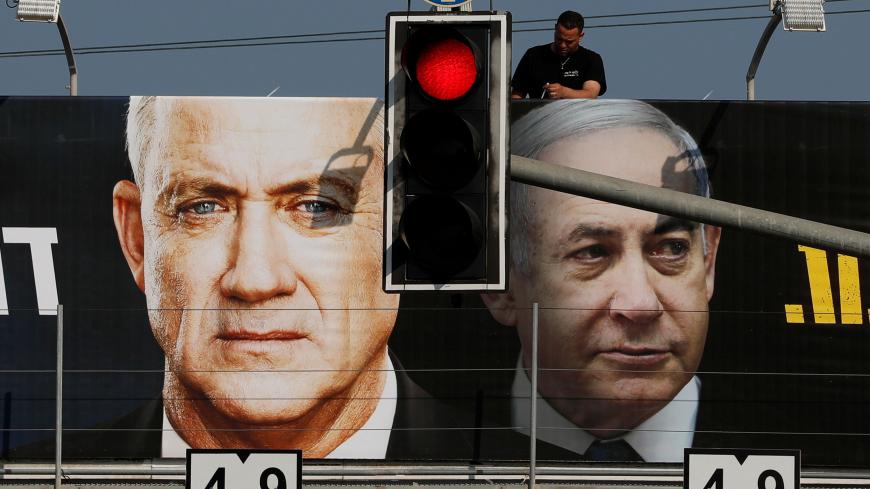
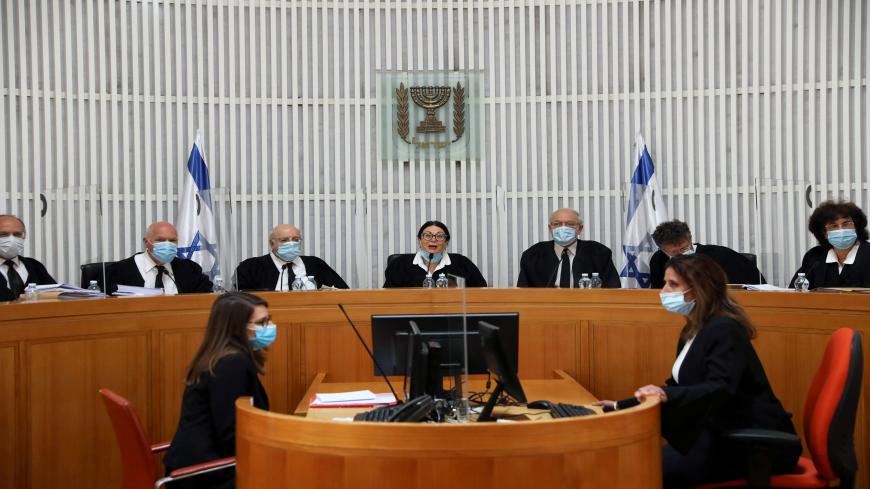
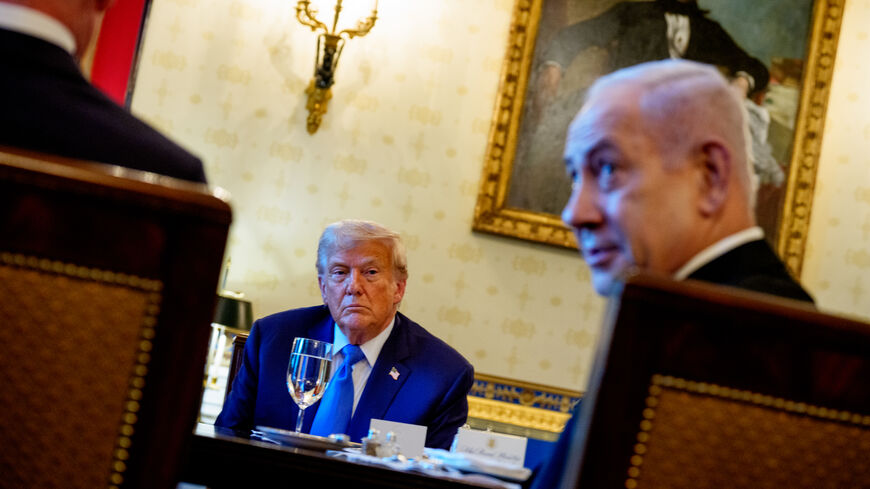
The wild Israeli political ride is nearing a crucial junction, with one path leading to a power-sharing government led by the Likud's Benjamin Netanyahu and Blue and White leader Benny Gantz, and the other to a fourth round of elections or some other form of chaos. This is the timetable: On May 3, an expanded lineup of 11 Supreme Court justices will convene to consider several petitions demanding that they disqualify incumbent Prime Minister Netanyahu from forming Israel’s next government and arguing that his April 20 coalition agreement with Gantz is unconstitutional. Sunday’s deliberations will focus on whether a person under criminal indictment is eligible to form a government, and the following day will be devoted to petitions against the agreement itself, which includes amendments of two fundamental laws that anchor the authority of Israel’s government and the legislature.
In an April 30 opinion to the court, Attorney General Avichai Mandelblit conceded that the coalition deal “entails agreement on a new model of government that is not natural to Israel’s form of government,” but argued that its flaws fall short of requiring the court’s intervention. If the court does not make speedy rulings, the coalition's house of cards could come tumbling down.
In an unusual move, the court hearings will be broadcast live. They are scheduled to wind up on Tuesday, May 5, two days before the legal deadline for forming a government. Should Netanyahu inform President Reuven Rivlin that he does not have the endorsement of 61 Knesset members for a new government, Israelis will return to the polls, probably in August, for the fourth time in 17 months. Adding to the tension, there is no deadline for the justices to rule on the petitions, which bring up intricate issues.
The justices will probably rule on Tuesday, leaving Gantz and Netanyahu sufficient time to complete the complex and unprecedented legislation required to implement the coalition agreement and form a government before the May 7 deadline. If they fail, Netanyahu will apparently ask Gantz to obtain the signatures of all his party’s Knesset members on a request to President Rivlin to approve the agreement before the Knesset has passed the required legislation. Gantz will face a tough choice. By agreeing to Netanyahu’s request, he would grant him 14 additional days to form a government, and Netanyahu would no longer need the Blue and White once the lawmakers’ signatures are in his pocket. Netanyahu could then renew his pressure on a handful of Blue and White lawmakers to jump ship and join a narrow government under his leadership, reneging on his deal with Gantz, as he has done to other putative allies throughout his political career.
AL-MONITOR All-Access gives you unlimited access to all our journalism, the full Daily Briefing, exclusive interviews, premium newsletters, and live events — for less than $2/week.