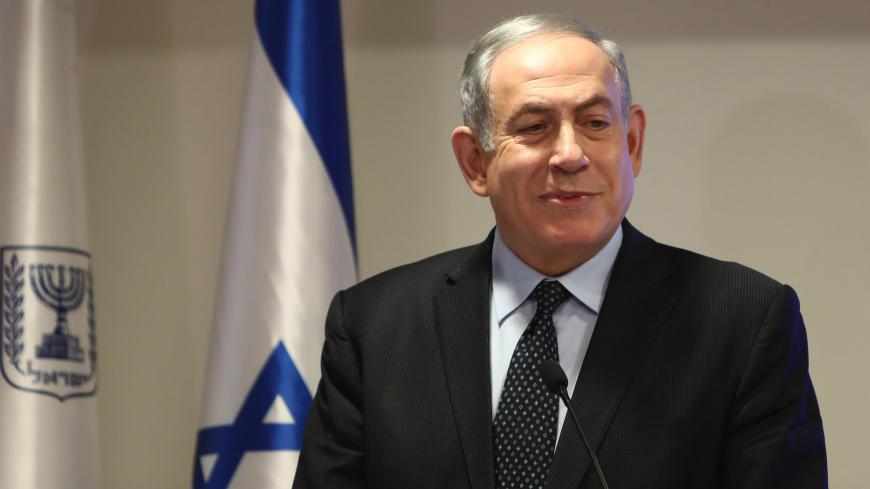
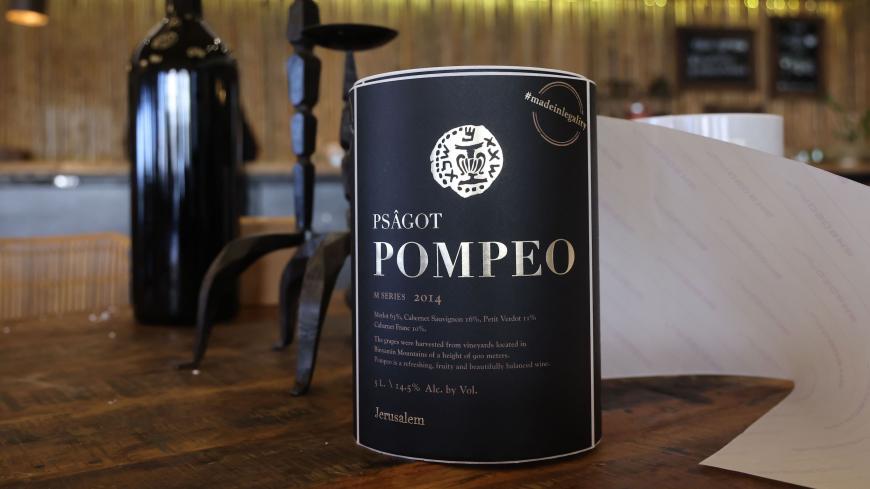
Secretary of State Mike Pompeo arrived to Israel on May 13 for an eight-hour visit marking the end of an era in Israeli-US relations. “No more one-man show; that’s an old story,” a high-level Blue and White member told Al-Monitor on condition of anonymity. “Pompeo understands that now he has to deal with a different system altogether. Until now, the Americans were used to closing everything with [Israel’s ambassador to the United States] Ron Dermer, who served as [Prime Minister Benjamin] Netanyahu’s right-hand man in Washington. But now, surprise surprise, the party’s over. From now on, Israel is governed by a two-headed regime.”
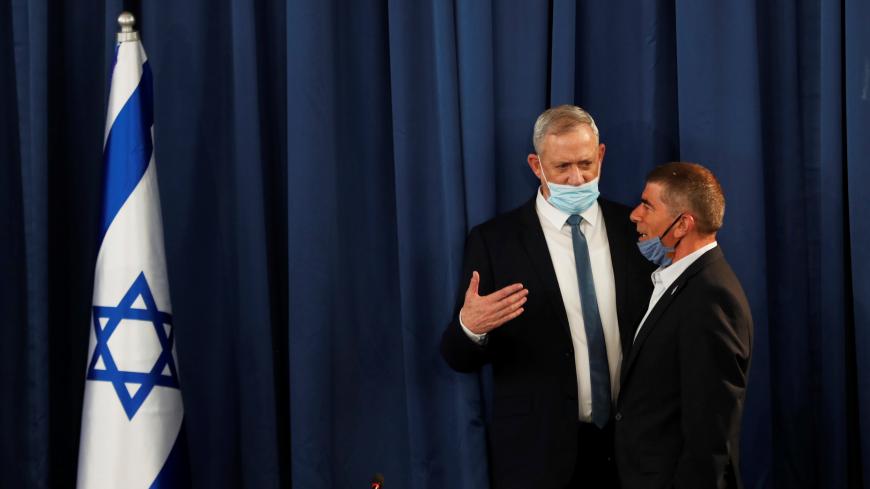
This new situation was evident in the fact that Pompeo chose to meet with future Foreign Minister Gabi Ashkenazi even before the latter was sworn in, while he did not meet with outgoing Foreign Minister Israel Katz at all. With Netanyahu, an old friend of Pompeo's, the Americans didn’t need to work with Israel’s foreign minister, but they certainly will now. “The Americans have the entire world on their head; they are not up on all the details [regarding Israel],” remarked a senior Israeli official who participated in the Pompeo meetings. The official told Al-Monitor on condition of anonymity, “They have internalized the new situation and understand that from now on, the game will have totally different rules. It will be hard for them to get used to the change.”
The meeting mainly addressed the following issues: Israeli annexation plans for the Israeli localities in the West Bank and the Jordan Valley, the Iranian issue and China. With regard to the first item, Pompeo was careful to declare before his visit that annexation is “an Israeli decision,” but he was much less polite when it came to China. Outside the room, speaking to the media, American official sources expressed "concern" over China’s continuous investments in Israeli infrastructure and technology. Inside the room, in confidential talks between American and Israeli officials, the Americans sounded quite different. Israel is being asked to choose between China and its greatest ally (the US), which provides it with a diplomatic, economic, military and political umbrella. So far, China has invested billions in Israel and ranks second in terms of commerce with Israel.
Netanyahu will have to make a difficult but obvious choice. Ahead of Pompeo’s visit and on the backdrop of American warnings, Jerusalem reportedly related to Washington it was reassessing Chinese participation in the bid for the construction of the biggest desalination plant in the Middle East, to be located near Ashdod in the south of the country. Now Jerusalem is concerned over Beijing’s reaction, should the Chinese company be distanced from the tender. Israel hopes not to become another victim of China’s "wolf warrior" diplomacy.
AL-MONITOR All-Access gives you unlimited access to all our journalism, the full Daily Briefing, exclusive interviews, premium newsletters, and live events — for less than $2/week.