Inspired by US protests, Ethiopian-born Israeli ministers battle against police brutality
Absorption Minister Pnina Tamano-Shata and Deputy Public Security Minister Gadi Yevarkan, both of Ethiopian origin, are reinforcing their battle against police brutality.

The May 25 killing of George Floyd by a Minneapolis police officer and the protests that followed reminded many in Israel of similar cases right here in the Middle East. The most prominent ot these in Israel was the killing of Solomon Tekah by a policeman in July 2019. The official investigation of that event has yet to be completed. At the time, Mazal Mualem wrote in Al-Monitor that the protest that erupted after Tekah’s funeral was one of the most violent that Israel has seen since the country was founded. It gave voice to the deep crisis in trust between a marginalized group in Israeli society and the various law enforcement agencies, chief among them the police and its Internal Affairs division. For Israelis of Ethiopian origin, these two groups personify the institutionalized racism they face because of the color of their skin.
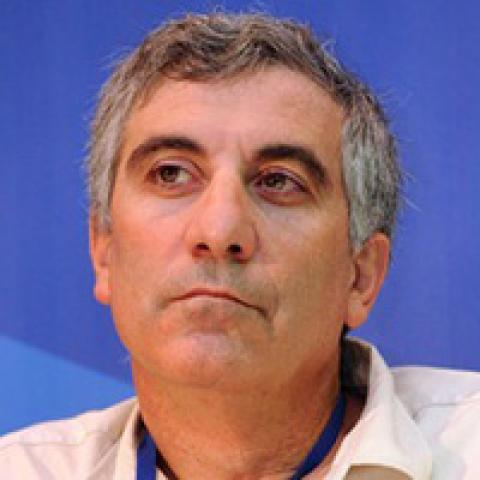
Maybe that's why the first step taken by Deputy Minister of Public Security Gadi Yevarkan (Likud), himself the child of Ethiopian immigrants, was to propose legislation to dismantle Internal Affairs and replace it with a new agency under the auspices of the Justice Ministry. Headed by a judge, that body would have much broader powers than the current Internal Affairs division now wields. Upon submitting his proposed legislation, Yevarkan said that policemen who fail to follow the law should be severely punished.
The solution for dealing effectively with the attitude of the authorities in general and law enforcement in particular is probably the inclusion of blacks — Israelis of Ethiopian origin in the case of Israel — and other minorities in key positions of power. In Israel’s current unity government, there are two such people. The first is Yevarkan, of course, who was appointed deputy minister of public security, who is responsible for the police but also for the integration of Ethiopian immigrants in the police force. An even more senior position is held by Knesset member Pnina Tamano-Shata (Blue and White), minister of immigrant absorption. She is the first woman from the Ethiopian community to serve in the Knesset, and now she is also that community’s first minister.
Tamano-Shata has proved herself in the battlefield over these issues from a very young age. Born in the Gondar district of Ethiopia, she was three years old when she immigrated to Israel as part of Operation Moses, together with her father and five siblings. They crossed the desert of Sudan on foot until they reached a remote meeting point, from where they were flown to Israel. The story of the community’s immigration by way of Sudan is told in the film "Red Sea Diving Resort," or as it is also known "Operation Brothers" (2019).


