Backed by Trump and Turkey, Armenia's Pashinyan eyes third term in pivotal poll
As Russia and the West vie for influence, Prime Minister Nikol Pashinyan appears on track to secure a new mandate for his peace agenda with Azerbaijan and rapprochement with Turkey.

YEREVAN/TAVUSH, Armenia — In normal times, Mehmandar, Armenia’s largest wholesale market for fruits and vegetables in the Ararat valley near the Turkish border, is a beehive of activity. But these are not normal times. Russia, citing spurious hygiene concerns, had just slapped a ban on Armenian fruits and vegetables. Business is dead. Some 90% of Armenian produce was sold to Russia. “My tomatoes fetched 2,000 drams [$5.50] per kilo a week ago; now they are worth 900 [$2.45] at most,” said Karen Arakelian, a stony-faced farmer. “It’s because of the elections.”
Arakelian is right. On June 7, Armenia will hold nationwide parliamentary polls. They are being touted as a historical referendum on the future course of this Christian nation of 3 million in the southern Caucasus that was part of the Soviet empire. A startling burst of global interest has seen Russia and a Western bloc led by the United States, the European Union and Turkey backing rival candidates amid a dizzying disinformation campaign waged by both sides.
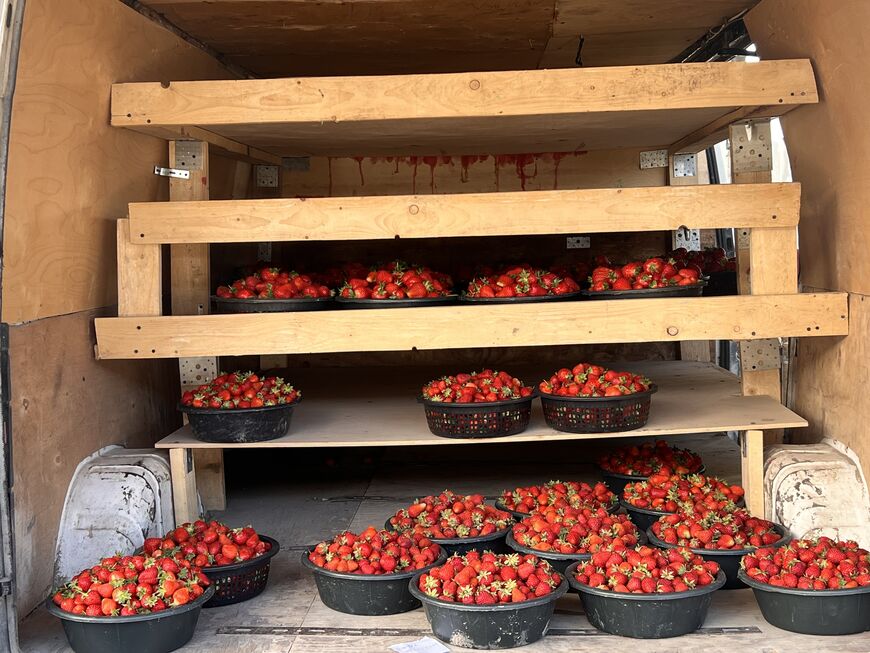
Strawberries await local customers at Mehmandar Market in Armavir, Armenia, on May 30, 2026. Prices for strawberries and other produce have fallen by half since Russia imposed an import ban aimed at pressuring Armenia’s government. (Amberin Zaman/Al-Monitor)
Neighboring Iran and Azerbaijan have their own stakes in the emerging geopolitical order. If all goes to plan, Armenia would sit at the crossroads of the Middle Corridor, a trade route linking Europe to China that would bypass Russia’s northern corridor and Iran. “This is the first geopolitical election in Armenia’s history, and foreign actors each have their favorites,” Tigran Grigoryan, head of the Regional Center for Democracy and Security, a Yerevan-based think tank, told Al-Monitor.


