Trump says Iran meeting to take place in Qatar


US President Donald Trump said Iran has requested a meeting that will be held Tuesday in Qatar, despite Tehran denying any direct negotiations were planned with Washington on the deal aimed at ending the Middle East war.
The announcement came after Iran held its first talks with Oman on managing the Strait of Hormuz since the US-Iran deal was signed, and as Washington and Tehran agreed to halt their attacks, which had strained the agreement.
"IRAN HAS REQUESTED A MEETING. IT WILL TAKE PLACE TOMORROW IN DOHA!" Trump posted Monday on his Truth Social platform, without specifying the participants.
White House spokeswoman Karoline Leavitt later told Fox News that US envoy Steve Witkoff and Trump's adviser and son-in-law Jared Kushner "will be flying to Doha for high-level meetings this week".
Iranian foreign ministry spokesman Esmaeil Baqaei on Monday said a delegation of the country's own experts would travel to Doha this week, but staunchly denied any sit-down with the Americans.
"We have not yet entered the stage of negotiating a final agreement," he said, noting that "over the coming days, we will not have any negotiation meetings with the US side at any level".
- Hormuz talks -
Iran's exercise of control over the highly strategic strait has sparked repeated flare-ups, the latest of which came early Sunday when US Central Command said it had attacked 10 Iranian military targets over "continued Iranian aggression against commercial shipping".
Iran said it retaliated with strikes against US bases in Kuwait and Bahrain.
The blockade remains a key sticking point in the negotiations.
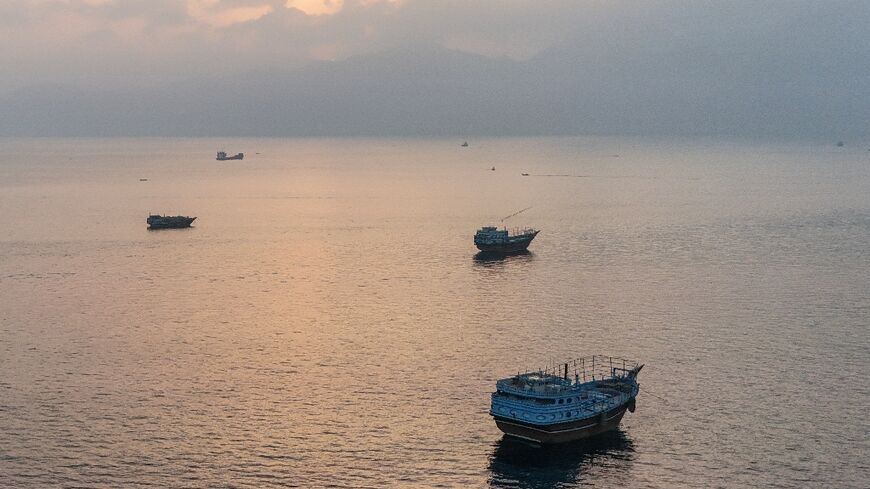
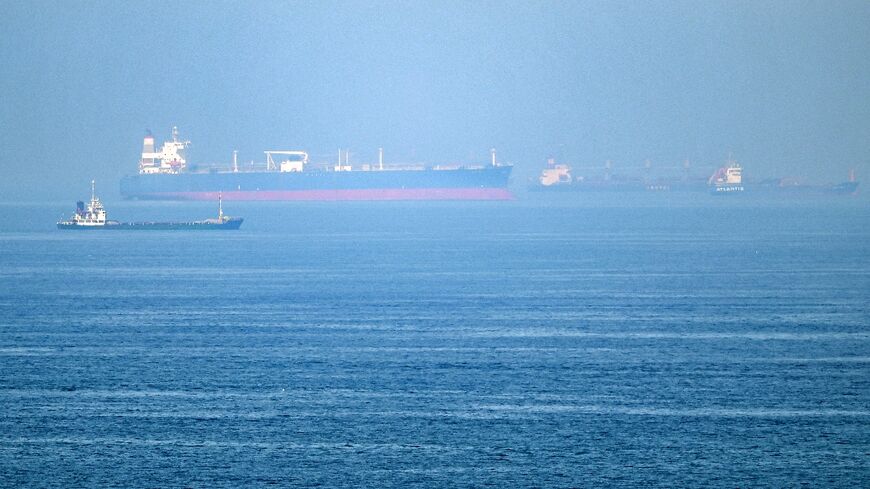
Iran and Oman border the strait, through which a fifth of the world's oil and liquefied natural gas passed prior to the conflict, and Iran said Monday they held their first talks since the deal was struck.
"During a trip to Muscat, the first meeting of the Joint Hormuz Committee was held," said Iran's Deputy Foreign Minister Kazem Gharibabadi on X.
The strait comprises Omani and Iranian territorial waters, but under international law the two cannot generally block passage or charge tolls.
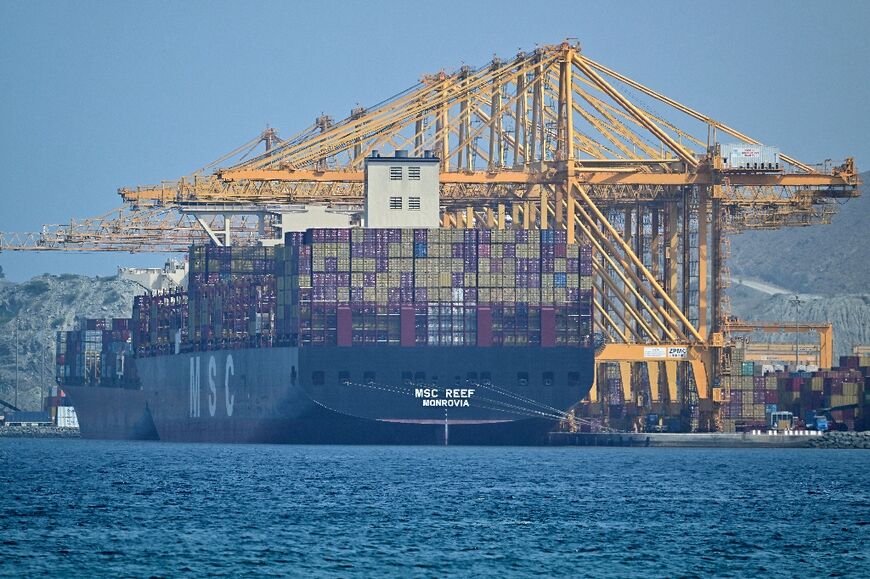
Iran warned on Sunday that any attempt by ships to bypass its preferred route through Hormuz would "increase tensions" in the Middle East.
Iran insists ships transiting the strait pass through a corridor near its own shores.
How the memorandum is to be implemented remains unclear, with Iran especially sensitive about the issue of de-mining.
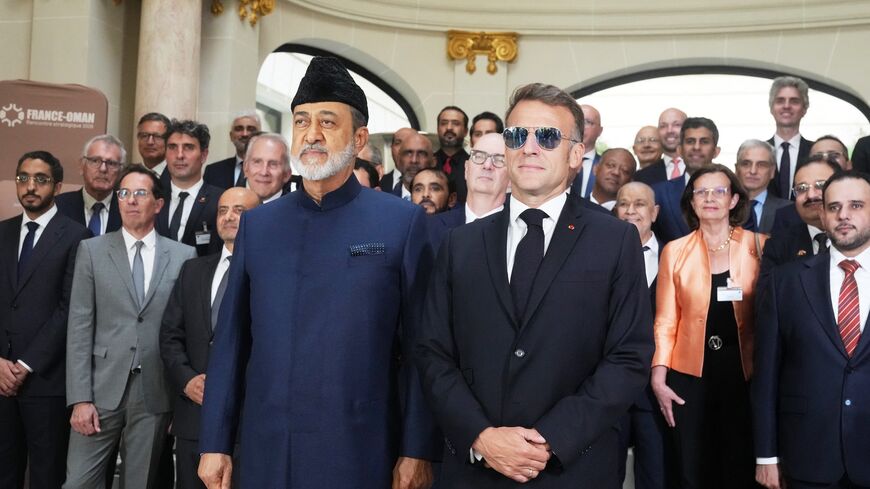
In a joint statement following a meeting between French President Emmanuel Macron and Omani Sultan Haitham bin Tariq, Paris and Muscat said they would conduct joint de-mining operations.
In response, Gharibabadi insisted that under the agreement only Iran was to conduct de-mining efforts.
"The situation is sensitive and complex. We strongly advise France not to complicate it further with its provocations," Gharibabadi wrote.
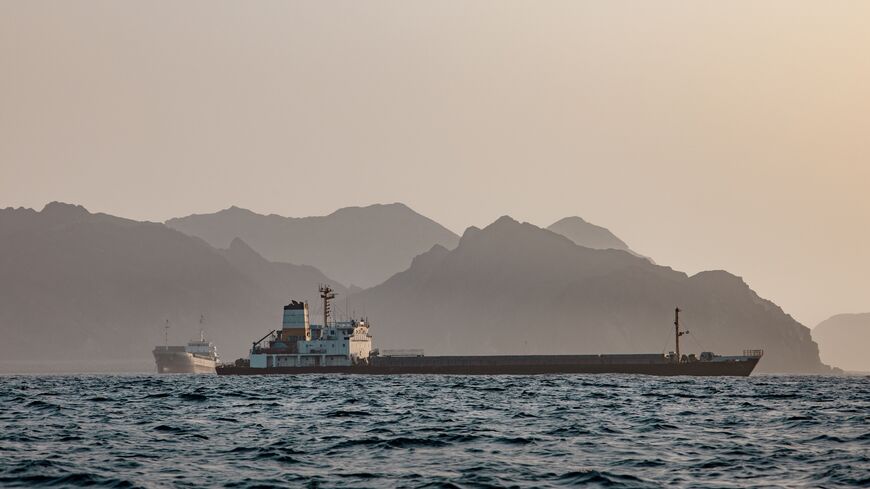
Traffic slowed over the weekend after a vessel was struck while transiting the waterway, with 29 commodity vessels crossing Saturday and 12 transiting Sunday, according to data from maritime tracking firm Kpler.
No vessels used a southern corridor through Omani waters according to data from Kpler, while another tracker, AXSMarine, found that 44 vessels had stopped publicly transmitting their position.
- 'Hegemonic dreams' -
The published text of the US-Iran memorandum of understanding, announced this month, says Iran will define the future administration of the strait in dialogue with Oman and the other Gulf States, but "in line" with international law.
Iran's Revolutionary Guards said they were taking measures to control traffic in the strait and that vessels violating those measures would be dealt with more firmly than before.
Mohammad Mokhber, adviser to Iran's supreme leader, wrote on X that as long as Iran managed the strait, Washington's "hegemonic dreams in the region will not be realised".
Experts said there would likely be more Hormuz incidents.
For Iran, "a drawn-out negotiation accompanied by controlled pressure in the strait can work to its advantage", said H.A. Hellyer of the Royal United Services Institute, a London think tank.
Oil prices, which last week fell to pre-war levels, rose modestly on Monday.
- Israel strikes -
Lebanese state media on Monday said an Israeli strike hit the country's south, the stronghold of Iran-backed militant group Hezbollah, despite a framework accord signed by the two countries last week aimed at securing a peace deal.
Hezbollah drew Lebanon into the Middle East war in March with rocket fire at Israel, triggering Israeli airstrikes and a ground invasion.
As part of the Washington-brokered deal, Hezbollah is to be disarmed, with the onus for doing so on the Lebanese army. Israeli leaders have said their troops will continue to occupy the south until then.
The Iran-backed militant group has fiercely opposed the agreement.
burs/arp/mlm