Israel tightens election safeguards as public distrust surges: What to know
Israelis have lost trust in the government and in its ability or willingness to conduct free and fair elections.

TEL AVIV — Concerns over the integrity of Israel’s Oct. 27 election are mounting as the country heads toward a closely contested vote, with observers warning about threats ranging from intimidation at polling stations to artificial intelligence-generated misinformation.
The election, the first since the Oct. 7, 2023, Hamas attack and the wars that followed, is shaping up as a major test for Prime Minister Benjamin Netanyahu. Former military chief Gadi Eisenkot has emerged as a leading challenger, with his Yashar party competing closely with Netanyahu’s Likud in recent polls.
The concerns have prompted both election officials and civil society groups to step up preparations. Thousands of Israelis have registered to monitor polling stations and vote counting, while the Central Elections Committee has tightened rules governing conduct during the campaign and on election day.
On Aug. 4, Central Elections Committee Chairman Judge Noam Solberg published new instructions aimed at preventing political interference in the election process. One provision addresses a recent practice in which representatives of political parties overseeing the election process report the identities of voters at polling stations through special apps. Solberg prohibited the practice, ruling that it infringes on voters’ right to privacy.
Public distrust
The concerns come against a backdrop of unusually high public distrust over the electoral process.
A study published on Aug. 5 by the Israel Democracy Institute found that 70% of respondents believed there was a threat to the integrity of Israel’s elections. A similar poll conducted before the November 2022 election found that only 25% expressed such concerns.
“The results of the survey reflect an enormous mistrust among citizens toward the authorities,” Tamar Hermann, a senior researcher at the Israel Democracy Institute and one of the authors of the study, told Al-Monitor.
The stakes could be particularly high in a close race. A public opinion survey published on Sunday by Israel’s public broadcaster Kan predicted that the ruling Likud and Gadi Eisenkot’s Yashar party would each win 23 Knesset seats.
“The battle over who becomes Israel’s largest party could be determined by a handful of votes. This means that even a rather small-scale manipulation of the results could be decisive,” Hermann said.
According to Hermann, some of the threats, such as fraud and disturbances, are familiar from previous election campaigns. They include, among other things, deliberately provoked clashes in certain communities designed to deter voters and lead to an increased police presence. The concern is not only physical damage to polling stations but also the creation of a threatening atmosphere around them that could cause people to forgo exercising their right to vote.
Concerns over election and campaign fairness are nothing new in Israel. According to a June 2025 report by the Times of Israel, since hard-liner Itamar Ben-Gvir was appointed national security minister in December 2022, the police have taken a tougher stance toward protesters, with the exception of right-wing activists. Many right-wing activists filmed taking part in incidents of severe political violence were not investigated. In contrast, anti-government protesters were violently arrested for trivial offenses, while Arab protesters were arrested and beaten without justification, the report found.
Still, Hermann stressed that alongside these familiar threats, novel ones are becoming more acute in the age of artificial intelligence and cybersecurity.
“The use of AI in election systems has become a major battleground regarding voting transparency and electoral integrity,” Hermann said, adding that this was why a legal requirement recently went into effect mandating the labeling of campaign content created or substantially altered using artificial intelligence tools. She said there are two main threats: ''manipulated content and bots spreading fake news during the election campaign, and AI-generated content potentially creating panic on election day.''
Hermann noted, “The risks posed by AI manipulation and cyberattacks are among the reasons why Israel opted to maintain paper ballots instead of using a computerized voting system.”
Expectations of a stormy election
The heightened concerns have also fueled civil society efforts to monitor the campaign and election day, with activists preparing for possible disruptions at polling stations and the spread of misinformation online.
Among those efforts is the Election Command Center, an organization established nine months ago to monitor defamation and misinformation and prepare volunteers to observe polling stations.
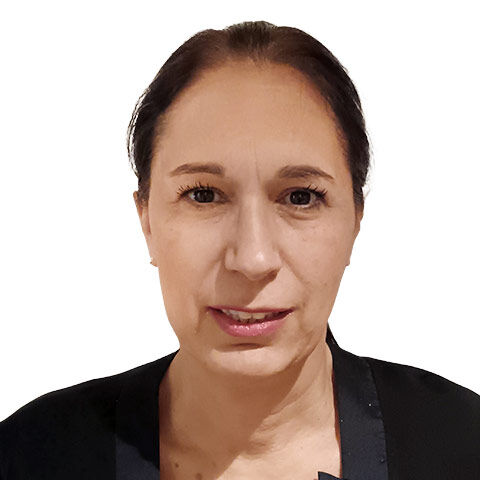
“We founded the group with the understanding that we should expect a stormy, crucial and highly emotional election campaign, with attempts to disrupt the democratic process,” Michal Beinisch, one of the group’s founders, told Al-Monitor. “We are not talking about conspiracy theories, but about concerns based on developments within the political and law enforcement spheres.”
Beinisch argued that many Israelis have lost trust in the commitment of the police, law enforcement agencies and the political echelon to protect the country’s democracy. She pointed to the case of Mordechai David, a right-wing activist and online agitator well known for recording himself confronting, heckling and blocking the vehicles of high-profile leftist figures, journalists, politicians and judicial officials in Israel. He has been questioned by police several times but released without charge each time.
“Police tolerance toward such incidents and legislation eroding the powers of the judicial system are all indications that the election campaign and election day could be under attack by anti-democratic forces,” Beinisch warned, adding, “To that we have to add the radicalization of discourse on social media and in the Israeli parliament.”
Headquartered in Herzliya, the group has 300 volunteers constantly searching the web for defamatory content targeting liberal, pro-democracy politicians and public figures. Its digital department has another 150 volunteers searching online platforms for false or inciting narratives. When they identify misleading reporting, the volunteers try to counter it with their own verified content.
In preparation for election day, the group launched an application last week where volunteers can register to monitor polling stations and observe the vote count. More than 30,000 people have already downloaded the app. The group hopes to recruit 100,000 volunteers across the country by Oct. 27 to observe polling stations and their surroundings amid fears of organized disruptions.
Eyal Naveh, another founder of the center, said that the volunteers' hard work is paying off. “We are already seeing results, with a clear decrease in defamation, fake news and hateful speech on the web,” Naveh told Al-Monitor.
He explained that the group measures these trends by monitoring the use of certain hateful words on social media and by constantly checking the profiles of targeted public figures to assess how frequently they are attacked.
“Our goal is to arrive at election day with less demonization and delegitimization of public figures and for voters to receive truthful information instead of fake news,” he said.
This one's on us.
The story doesn't end here.
Our correspondents are already on the next chapter. Read everything they file, from $2/week.
See Offers