Saudi Arabia’s southern front is back
Escalating tensions between Yemen's government and the Houthis threaten to pull Saudi Arabia back into a conflict Riyadh has spent four years trying to keep frozen.

Welcome back to AL-MONITOR Gulf.
For more than four years, Saudi Arabia has worked to keep its conflict with Yemen’s Houthis frozen. That effort faced renewed pressure this week after strikes on Sanaa International Airport were followed by Houthi missile and drone attacks targeting Abha Airport in southern Saudi Arabia. The exchange marked the most serious escalation since the 2022 truce and raised the prospect that renewed tensions between Yemen’s internationally recognized government and the Houthis could once again pull Riyadh into a conflict it has spent years trying to contain.
Thank you for reading — and subscribe here.

Leading this week
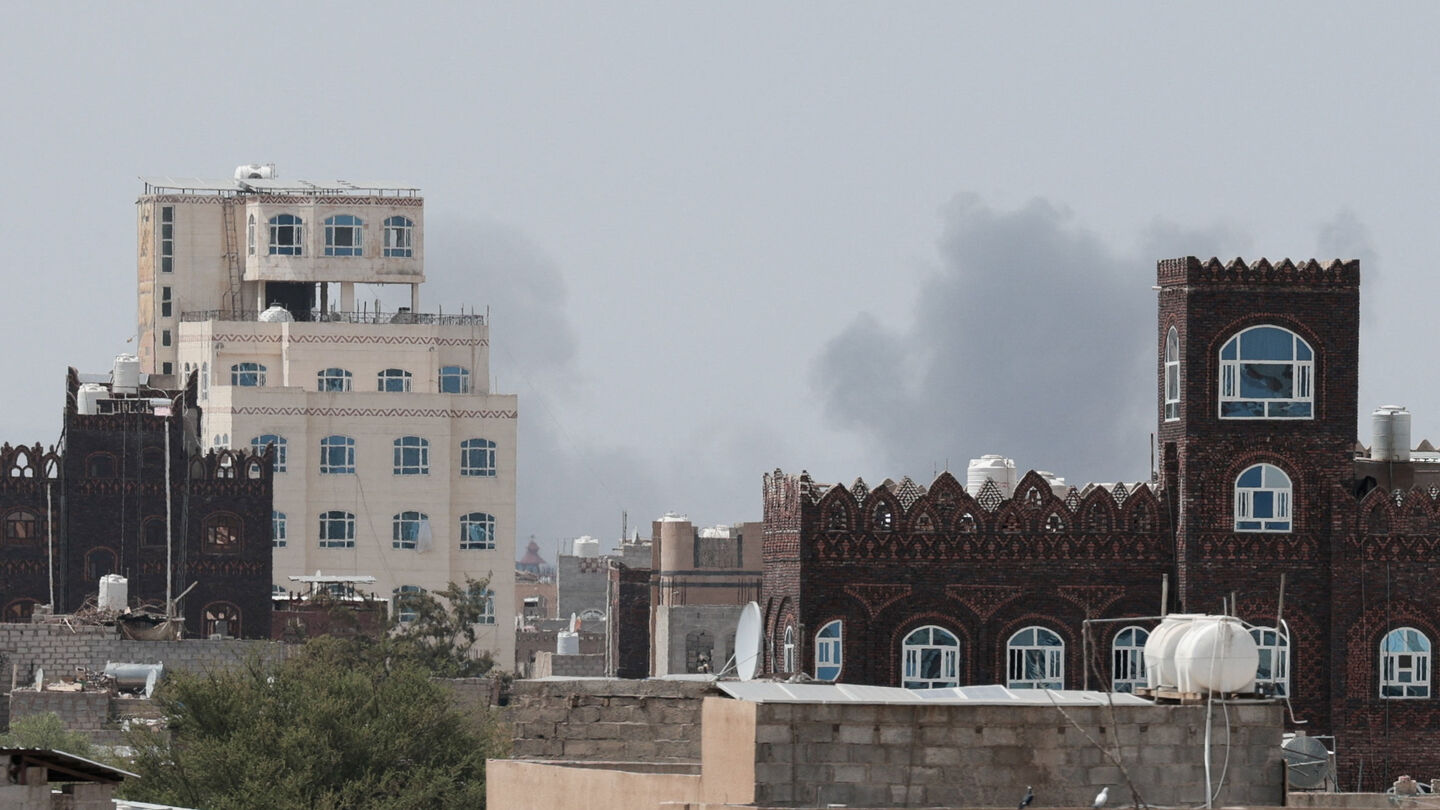
Smoke rises after reports of an airstrike hitting near the Sanaa International Airport, as seen from Sanaa, Yemen, July 13, 2026. REUTERS/Khaled Abdullah
State of play: A fragile period of de-escalation between Saudi Arabia and Yemen’s Houthis appears increasingly at risk after an escalation surrounding Sanaa International Airport. Yemen’s internationally recognized government said Monday that it targeted the airport’s runway to prevent an Iran-operated Mahan Air aircraft from landing, accusing the Houthis of allowing Tehran to violate Yemeni airspace while blocking Yemeni civilian flights. The aircraft, which was carrying a Houthi delegation returning from the funeral of Iranian Supreme Leader Ayatollah Ali Khamenei in Tehran, was ultimately diverted to Houthi-controlled Hodeidah International Airport. On Wednesday, Yemeni Information Minister Moammar al-Eryani said the incident had established a "new equation," warning that any future unauthorized flights from Iran would be treated as violations of Yemen's sovereignty rather than civilian operations.
The Houthis, however, blamed Saudi Arabia for the strike, declaring the end of the “de-escalation phase” and warning that Riyadh would “bear the consequences.” Within hours, the group launched ballistic missiles and drones toward Abha Airport in southern Saudi Arabia and warned commercial airlines to avoid Saudi airspace until restrictions on Sanaa Airport are lifted.
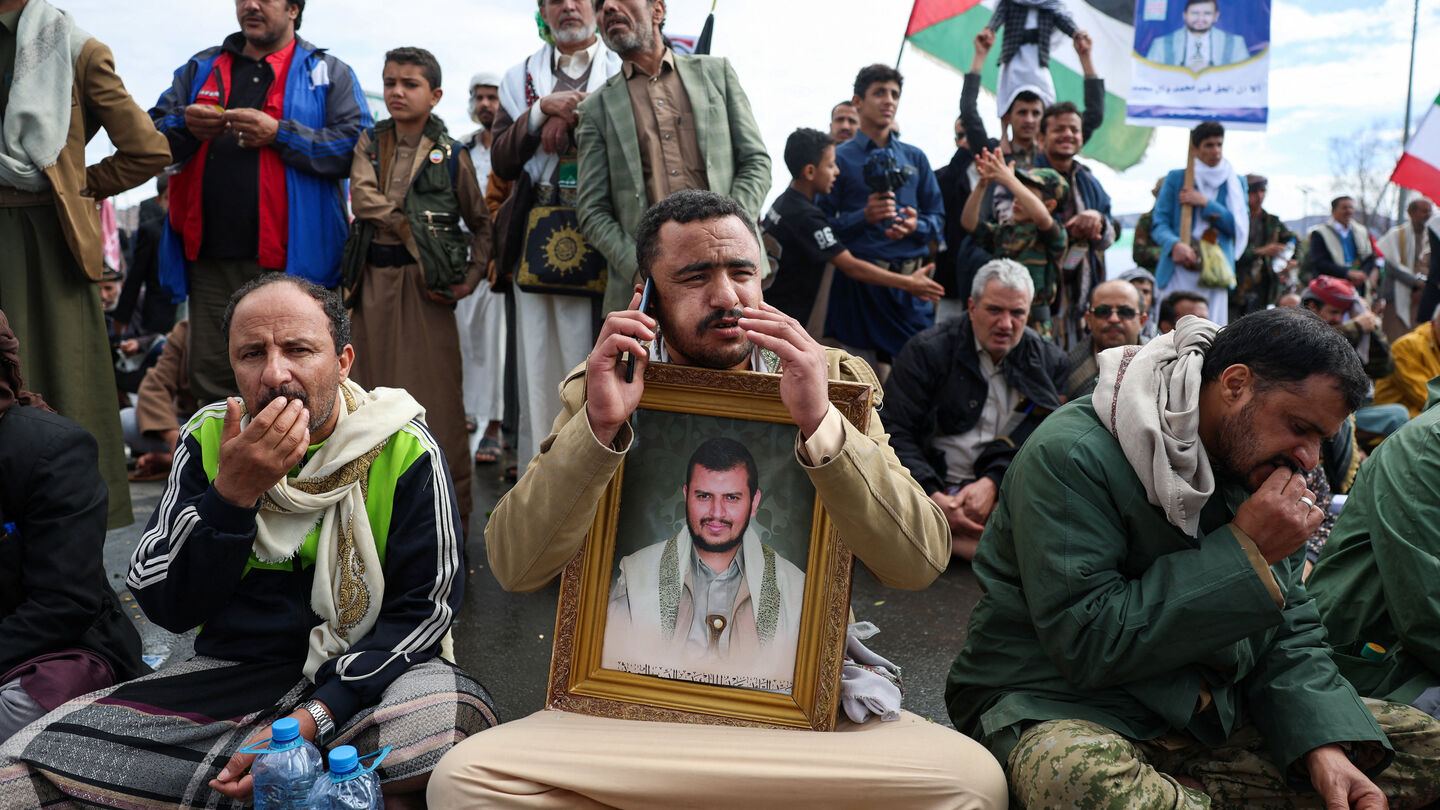
A Houthi supporter holds a poster with an image of the Houthis’s leader, Abdul-Malik al-Houthi, as he speaks on a mobile phone during a demonstration in solidarity with Iran, as the US-Israeli conflict with Iran continues, in Sanaa, Yemen, March 27, 2026. REUTERS/Khaled Abdullah
Why it matters: Behind the immediate exchange lies a broader regional dynamic. According to US officials cited by Axios, Crown Prince Mohammed bin Salman reportedly informed President Donald Trump in advance of the planned strikes and received Washington’s backing, underscoring Riyadh’s concern that any renewed confrontation with the Houthis could require renewed American military and diplomatic support.
US officials also reportedly believe the Iranian aircraft may have been transporting weapons, missile components and military personnel alongside the returning Houthi delegation, although these claims have not been independently verified.
The significance extends well beyond Yemen. Since the outbreak of the Iran war, Saudi Arabia has carefully avoided direct confrontation. A renewed Houthi front would reopen precisely the security challenge Riyadh has spent years trying to contain.
It would also threaten Saudi Arabia's growing reliance on the Red Sea as an export corridor through its East-West pipeline, which has become increasingly important as oil shipments seek alternatives to the Strait of Hormuz. Any renewed attacks on Red Sea shipping or Saudi infrastructure would therefore carry consequences extending well beyond Yemen itself.
Looking ahead: Whether this week's exchange proves isolated or marks the end of four years of relative calm will largely depend on the coming days. Riyadh still appears keen to avoid a return to full-scale war, while the Houthis have so far stopped short of launching a broader campaign against Saudi territory and Red Sea shipping.
Yet the events of this week demonstrate how quickly the southern front can once again become central to Gulf security. After months of attention focusing on Iran and the Strait of Hormuz, Saudi Arabia is being reminded that its most immediate strategic vulnerability may once again lie along its border with Yemen.

Other top stories
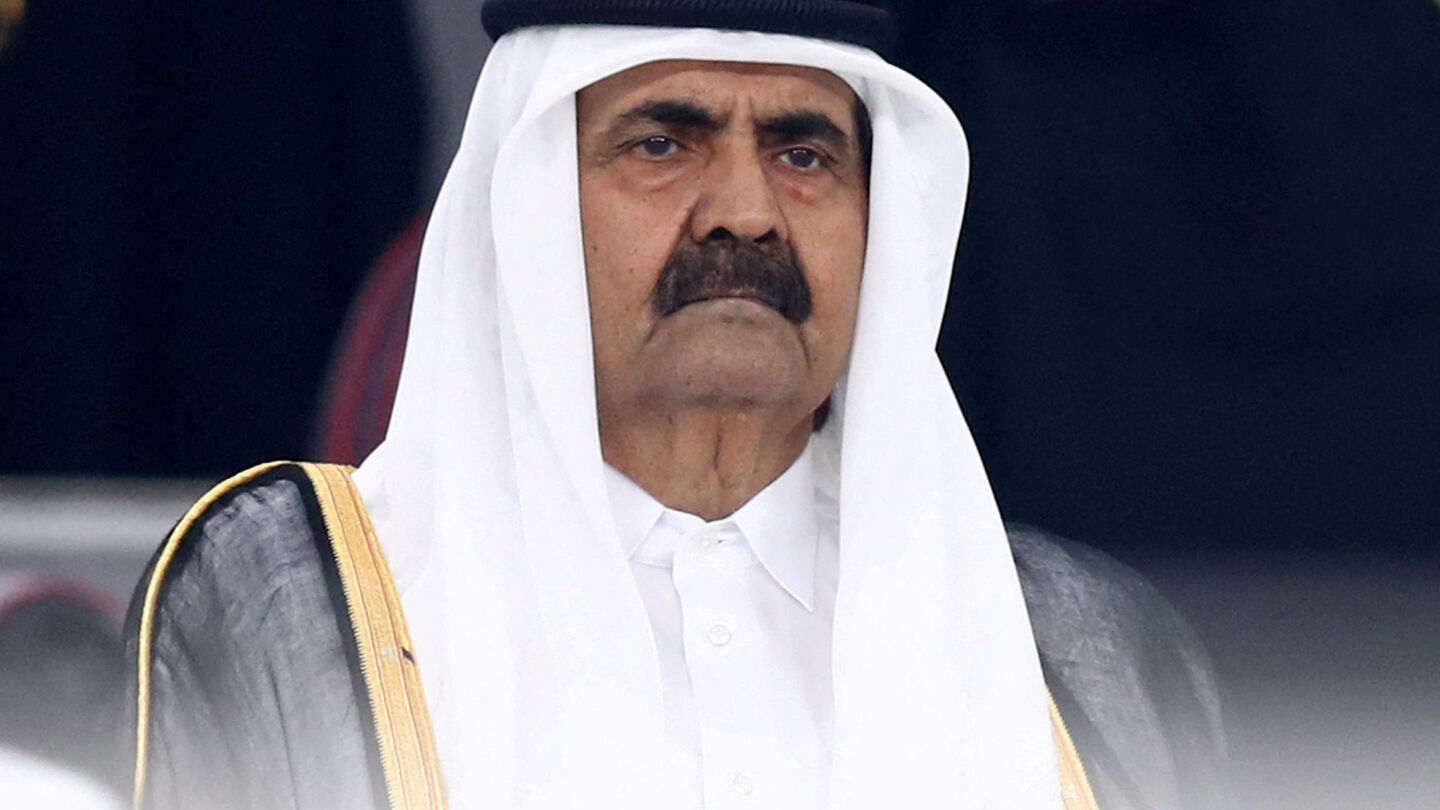
Sheikh Hamad bin Khalifa Al Thani attends the opening ceremony before the Gulf Cup Group A soccer match between Qatar and Iraq at Khalifa International Stadium in Doha, Qatar, Nov. 26, 2019. (REUTERS/Ibraheem Al Omari/File Photo)
Qatar mourns Sheikh Hamad as regional diplomacy continues
Qatar entered four days of national mourning following the death of former Emir Sheikh Hamad bin Khalifa Al Thani, whose 18-year rule transformed the country into a global diplomatic, energy and investment power before his voluntary abdication in 2013. Regional leaders, including senior representatives from Saudi Arabia, the United Arab Emirates, Kuwait, Bahrain, Syria, Lebanon and Pakistan, traveled to Doha to offer condolences to Sheikh Tamim bin Hamad Al Thani — Sheikh Hamad's son — underscoring both the emir's legacy and Qatar’s enduring regional influence. The mourning comes at a delicate moment for Gulf diplomacy, as Doha continues to play a central mediating role in efforts to contain renewed US-Iran tensions. While official ceremonies have temporarily slowed government activity, Qatar’s diplomatic engagement is expected to continue uninterrupted under Sheikh Tamim’s leadership.
US grants UAE unprecedented access to advanced technologies
The Trump administration has removed key export restrictions on advanced US technologies destined for the UAE, allowing the Emirati government and approved companies to acquire AI chips, advanced drones, commercial satellites and selected dual-use technologies without individual export licenses. Washington said the decision reflects Abu Dhabi’s support during the Iran conflict and its status as a major US defense partner, making the UAE the only Middle Eastern country to receive such treatment. The move represents another step in the deepening US-UAE strategic partnership, particularly in artificial intelligence and advanced defense technologies, although it has also drawn criticism from some members of Congress over potential technology leakage to China and alleged conflicts of interest surrounding the Trump family's business ties with Emirati investors.
Defense brief

A Boeing MQ-28 Ghost Bat drone stands at the Rheinmetall stand at the 2026 ILA Berlin Air Show on its opening day on June 10, 2026 in Schoenefeld, Germany. (Photo by Sean Gallup/Getty Images)
Kuwait advances naval modernization with Rheinmetall deal
Kuwait has awarded German defense company Rheinmetall a contract to equip eight Al Dorra-class guided-missile boats with its Multi Ammunition Softkill System, marking the first deployment of the German decoy launcher by the Kuwait Navy. The package also includes Omnitrap-ER decoy ammunition and system integration, with deliveries scheduled through 2029.
The procurement forms part of Kuwait’s largest naval modernization program in more than 15 years. The Al Dorra vessels are being built by Abu Dhabi Ship Building under the UAE’s EDGE Group, which serves as the prime contractor. The program combines Gulf shipbuilding with European defensive systems, reflecting Kuwait’s growing focus on improving the survivability of its naval fleet against increasingly sophisticated anti-ship missiles and drone threats.
The contract is part of Kuwait’s accelerating military modernization drive, which has gained new urgency due to the Iran war. Over recent months, the country has accelerated procurement across multiple domains — from counter-drone systems and air defense to naval capabilities — as it seeks to strengthen deterrence and address operational vulnerabilities exposed by the regional conflict.

Economic brief
DP World pushes east as UAE rethinks Hormuz dependence
DP World is planning a new multipurpose port and container terminal on the UAE's east coast, a move that would allow cargo to bypass the Strait of Hormuz and reduce reliance on Jebel Ali, the region's largest container hub. According to reports, the Dubai-based operator is discussing new facilities in Fujairah as shipping disruptions linked to the Iran war continue to reshape regional logistics. The project would expand the UAE's infrastructure on the Gulf of Oman, where Fujairah already hosts Abu Dhabi's crude oil export pipeline and one of the world's largest bunkering hubs. If completed, the new facilities would strengthen an emerging logistics corridor outside Hormuz, complementing Jebel Ali while giving the UAE additional capacity to manage future disruptions to one of the world's most strategically important maritime choke points.
Saudi Arabia expands economic outreach with Canada
Saudi Arabia and Canada recently signed 13 commercial agreements and memorandums of understanding worth more than 1 billion Canadian dollars ($710 million) during Prime Minister Mark Carney's visit to Jeddah, covering energy, artificial intelligence, mining, defense and advanced technologies. The two countries also committed to finalize a bilateral defense memorandum and deepen cooperation on critical minerals and industrial development. The visit, the first by a Canadian prime minister in 26 years, reflects Saudi Arabia's expanding role as an economic and strategic partner for Western governments seeking to diversify trade, investment and supply chains. It also signals the continued international appeal of Vision 2030, as Riyadh increasingly positions itself as a hub for energy transition, artificial intelligence, mining and advanced manufacturing, while broadening its network of strategic partnerships beyond traditional allies.
This one's on us.
The story doesn't end here.
Our correspondents are already on the next chapter. Read everything they file, from $2/week.
See Offers