Khaled Daraghmeh always insists that the youth and visitors who volunteer to work on his property every week fill their bags with the herbs and fruit grown on his land.
“The almonds at this time of year are very good,” Khaled says, also known as Abu Jamal. He calls his son Mo’men to show the guests the best almond tree. “The lemon trees are never bare — see the yellow lemons? In the summer, they change color to green but in both cases they are still delicious.”
Abu Jamal is from the village Deir il-Lubban that lies just off the main road between Ramallah and Nablus. His family has owned an ancient stone building, referred to as the khan, for many generations. The family also owns the land that the khan resides on, more than 22 square kilometers (8.5 square miles) of it.
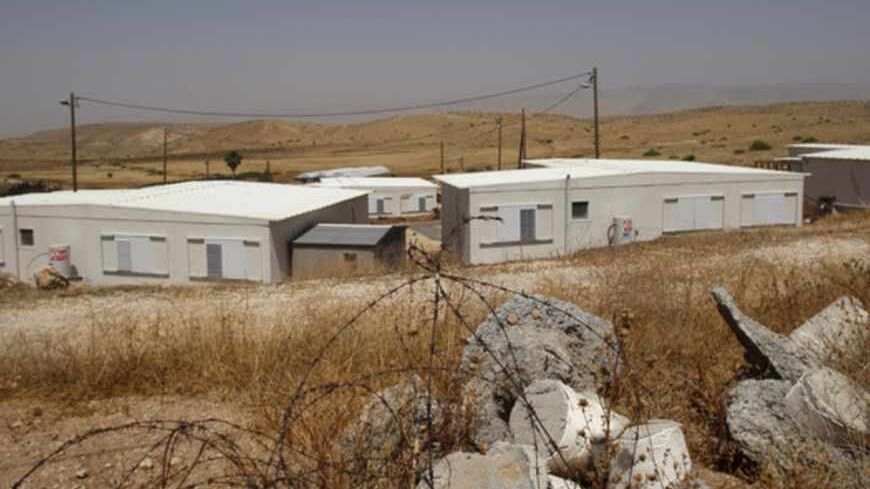
It is this land, and the khan itself, which have proved to be the thorn stuck in the throats of Jewish settlers. Lubban al-Sharqiyyeh is surrounded by six illegal settlements, and Abu Jamal’s parcel of land lies between one settlement established on the village’s land called Ma’ale Labuneh, preventing it from being linked to the other settlements such as Eli and Shilo, which extend from the Jordan Valley to the Green Line.
AL-MONITOR All-Access gives you unlimited access to all our journalism, the full Daily Briefing, exclusive interviews, premium newsletters, and live events — for less than $2/week.