'Regime Can’t Go On Like This,' Says Syrian Opposition Leader
Cengiz Çandar talks with Sheikh Moaz al-Khatib, leader of the National Coalition of Syrian Revolutionary and Opposition Forces, about the roles and interests of the United States, Russia and Iran in Syria and his efforts to arrive at a solution to the crisis.
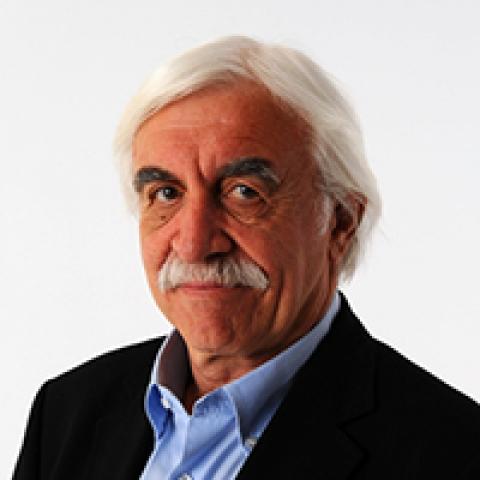

Moaz al-Khatib must be the head of a political organization with the world’s longest name — the National Coalition of Syrian Revolutionary and Opposition Forces. Because the name is so long, its members and president refer to it simply as the Coalition. In Arabic, it would be Etilaf.
The name of the Coalition's leader is at least as long: Ahmed Moaz al-Khatib al-Hassani. He is addressed, for short, as Sheikh Moaz. “Sheikh” is an honorific for religious officials, and Sheikh Moaz is an interesting man of religion. He once served in Damascus in the prestigious position of imam of the Emevi Mosque, which has a prominent place among Islamic institutions worldwide. Born in 1960, Sheikh Moaz hails from a family that can claim to have a number of Emevi imams as members, including his father. Although he is known as a scholar who taught theology, his real profession is geophysical engineering. Khatib worked for six years in the Syrian section of Royal Dutch Shell. He speaks English and can express himself in that language on a file of political issues as complicated as Syria.
Coalition officials recently met with four Turkish journalists in a hotel near the Istanbul airport that was used as the headquarters of the Syrian National Council (SNC) until the formation of the Coalition in Doha in November 2012.
In addition to Sheikh Moaz, Monzer Makhous, from a prominent Alawite family from Latakia participated in the conversation, which lasted more than three hours. The fact that a notable personality of the Alawite community, the base of support for the regime of Bashar al-Assad, was sitting alongside a Sunni religious personality was in itself telling.


