Israeli police neglect crime in Israeli Arab sector
Israeli police dedicate vast resources to fight organized crime in central cities, but little effort fighting violence and crime in the Arab Israeli sector.
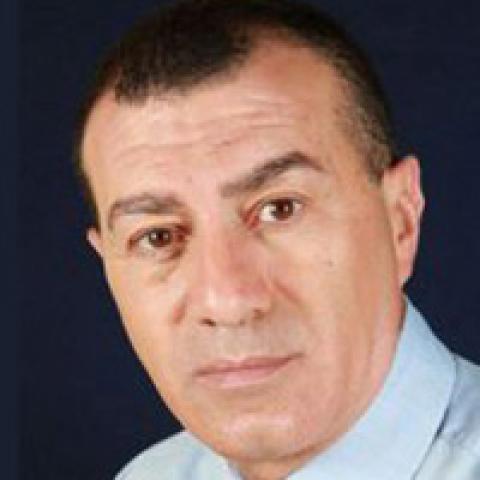

Two major criminal cases were exposed in the media in Israel this week. Both of them involved popular singers: one Arab, and the other Jewish. The Jewish star, whose name has not yet been released for publication, has been linked to parties at which there was sex with minors. The media has covered every tiny detail of the police investigation as soon as it was released for publication. The latest details featured in the headlines of every newspaper, as well as on TV and radio news shows. After a special police team spent months secretly collecting evidence and testimony, news surrounding the “well-known singer affair” has become the main topic of discussion everywhere.
The second incident involves Israeli Arab singer Shafik Kabha, who has long been one of the most popular artists within the Israeli Arab sector and the territories. Kabha was shot dead three weeks ago, on Oct. 22 at the entrance to the town of Umm al-Fahm by a suspect riding a motorcycle. The murder sent shock waves throughout the Israeli Arab community, not only because Kabha was a much-admired performer for more than three decades, but also because of the intolerable ease with which a man was murdered, even though he was not involved in any criminal activity. In fact, he had just finished performing at a wedding. More than 10,000 people showed up for his funeral. Thousands also demonstrated in the victim’s village of Kafr Qara, demanding that the police take bold action to identify the murderers.
All this drama barely received any national coverage in Israel. It was as if the killing took place in some other country. The vast majority of Jewish Israelis have no idea who Shafik Kabha was, and besides, the murder of an Arab citizen in broad daylight isn’t considered newsworthy by the Israeli media. It barely merits a sentence and a half on the news, if that, and obviously no one keeps tabs on any ongoing investigations. To all too many people in Israel, the country’s Arab population has become invisible. The murder of Shafik Kabha was only mentioned in a sidebar in the press after the police arrested three suspects in the crime and revealed the motive: It was alleged that Kabha was shot dead because he refused to perform at a wedding involving the family of one of the suspects.
Murders have become a common occurrence in the Arab sector. At Haifa University, a multiyear study conducted by Arye Rattner, director of the Center for the Study of Crime, Law, and Society, and Gideon Fishman examined violence in Israeli society from 1980 to 2007. The research findings indicated that the number of criminals who committed violent and extremely violent crimes in the Arab sector was significantly higher proportionally than the number of Arabs in the general population, in some cases double or even triple their ratio in the general population.


