Jordan skeptical of US-led peace plan
Jordan may be forced to accept an Israeli-Palestinian peace settlement not to its liking.

Jordan, which shares the longest border with the Palestinian occupied territories and hosts the largest number of Palestinian refugees, is feeling the pressure of a possible US-led breakthrough in the Israeli-Palestinian negotiations.
The Jordanian government has been sending mixed signals lately in regard to US Secretary of State John Kerry’s peace mission. On the one hand, Jordan is keen to be involved in the bilateral peace talks if for no other reason than to directly plead its own national interests. On the other hand, as Jordanian Palestinian columnist Orrayb Rantawi has made clear, there is no way that the framework agreement will meet the minimum expectations of the Jordanian people.
In a column published in the daily ad-Dustour, Rantawi concluded with the following: “No one can claim that Kerry’s ideas and plan meet Jordanian interests and positions, and it will be impossible to bridge this gap or to expect Kerry to extract from the Israelis any further concessions.” Rantawi assesses that Jordan is facing a moment of choice of either accepting the plan with reservations under the guise of "this is the best we can do" or rejecting it and taking responsibility for the consequences.
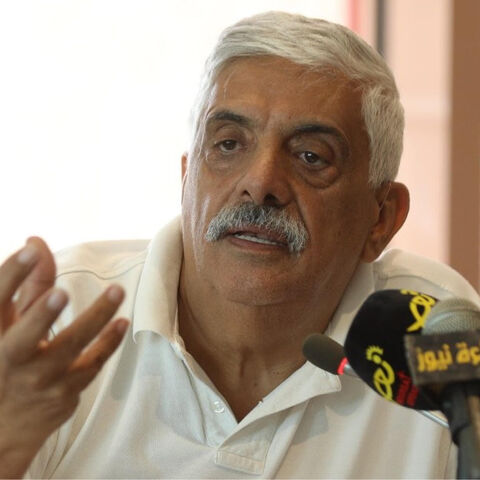
The possibility of Jordan, a major US ally, rejecting such an offer was thoroughly discussed in a lecture by Adnan Abu Odeh, former Jordanian chief of the royal court, who said that he is happy that Jordan is not involved in the talks so as not to bear responsibility for the outcome. Speaking in late January at the Ad-Dustour Research Center in Amman, Abu Odeh said that in the past, Jordan has had the ability to say no. He argued that at those times, the Arab world was strong, and Arab countries were ready to step forward and make up for the financial deficit that such a decision might inflict on the Jordanian economy. Abu Odeh then posed the rhetorical question, “Would Jordan be able to say no now with its huge national debt and dependency on Western aid?” The well-respected former official argued that a lot of work needs to be done to prepare the public regardless of which direction King Abdullah II and his advisers ultimately take.


