Islamic Jihad leader: negotiations gain 'nothing'
In an exclusive interview with Al-Monitor, Palestinian Islamic Jihad leader Ramadan Abdullah Shalah said, “Our performance from one war to another is getting better. If in 2012 we hit Tel Aviv, I think the enemy can imagine what can be beyond Tel Aviv.”
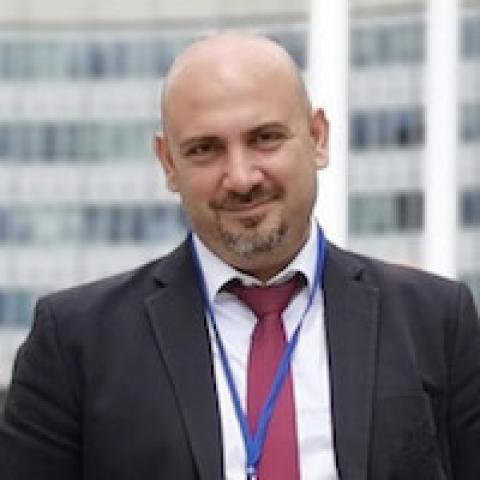

TEHRAN, Iran — Amid the sprawl of the Iranian capital, I met one of the most wanted men in the world, a man with a $5 million bounty on his head — Palestinian Islamic Jihad leader Ramadan Abdullah Shalah.
As we met, Shalah's organization was reviving a cease-fire with Israel, thanks to Egyptian mediation, less than 24 hours after the most recent storms of war struck the Gaza Strip. Tensions erupted March 11 when an Israeli airstrike killed three Palestinians in the southern city of Khan Yunis. Islamic Jihad and other armed Palestinian factions retaliated by launching 130 rockets across the border in the most intense confrontation since the November 2012 war, which also ended with an Egypt-brokered truce.
I asked Shalah about the restored truce and whether it had been coordinated with Hamas. The UK-educated jihadist said that his group had been contacted by the Egyptians, who offered to mediate.
"We told them we are committed to the last truce as far as the Israelis are committed, so it's as much restoring the last truce as signing a new one," said Shalah. He elaborated, "During the past two years we were committed to the truce, but the Israeli occupation continued to break it. The Palestinian factions observed during these years maximum restraint, but after the last attack by Israel, we felt that they are miscalculating our response. Israel might have started thinking that we're afraid or that all the equations set during the previous wars are void due to the situation in the region. We wanted to tell the enemy and the friend not to misunderstand us. It's true that we signed a truce in 2012 — a truce, not a surrender document."


