Former IRGC leader claims Iran's border to Lebanon's shores
The Lebanese presidential elections are of a piece with Iran's regional strategy.
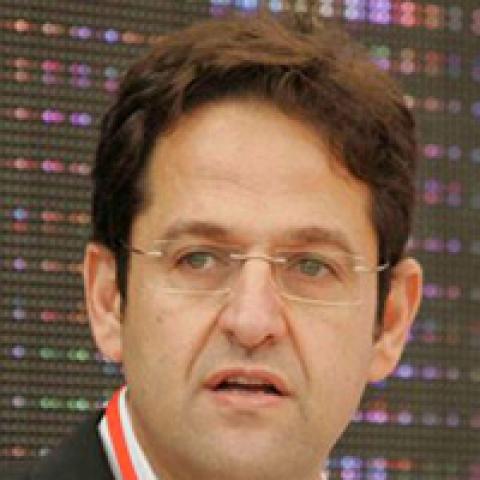

Yahya Rahim Safavi, the former commander of Iran's Islamic Revolutionary Guard Corps (IRGC) and the current military adviser to Supreme Leader Ayatollah Ali Khamenei, said in May 2014, “[Iran’s] real borders are not what they appear, but extend to the shores of the Mediterranean Sea in southern Lebanon.”
His words triggered a storm of criticism and questions in Lebanon and the Arab region for a variety of reasons.
First, Safavi's stance, which he expressed during a television interview, clearly infringes on Lebanese sovereignty. No Iranian official issued any statement to counter the stance despite the torrent of criticism and an objection from Lebanese President Michel Suleiman. The president requested the Lebanese Foreign Ministry seek a clarification from the Iranian side. Making matters worse, instead of correcting or denying the statement, a few days later, another former commander of the IRGC, Hussein Hamdani, confirmed “the formation of a Syrian Hezbollah, after a Lebanese Hezbollah,” adding, “Syrian President Bashar al-Assad is fighting on behalf of Iran.”
These statements, despite being grave, are not new. They simply expressed openly what was being said about Iran’s expansionist intentions. But the statements raise several questions about their timing and their blatant, provocative tone. These statements are important because they were issued as the negotiations between Iran and the United States are in high gear. Radical parties affiliated with the supreme leader question the timing of the statements, and how they are related to the US-Iran negotiations. What are their repercussions on the Levant scenes, on elections in Iraq and Syria and on Lebanon's potential presidential vacuum?


