Erdogan’s Kurdish predicament
Kurds in Turkey will have the final say in Prime Minister Recep Tayyip Erdogan's bid for the presidency.
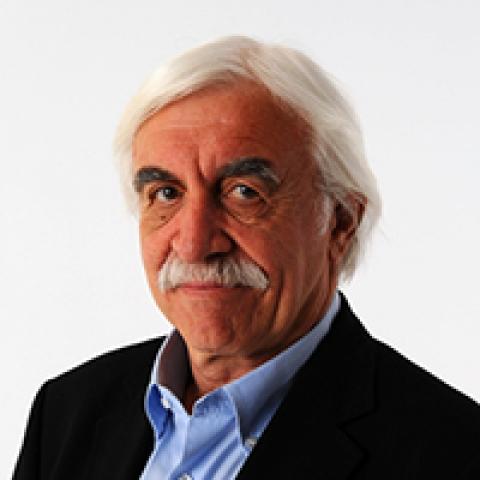

A day before the Justice and Development Party (AKP) revealed its presidential candidate, the People's Democracy Party (HDP) announced as its presidential candidate, Selahattin Demirtas. Demirtas could well be a more formidable challenge to Prime Minister Recep Tayyip Erdogan than the joint candidate named by the two main opposition parties — the Republican People's Party (CHP) and Nationalist Action Party (MHP) — Ekmeleddin Ihsanoglu, who until recently had occupied the highest post of the Islamic Cooperation Organization (the former Islamic Conference Organization). Ihsanoglu, a professor, was nominated to attract votes from Erdogan’s ostensibly invincible constituency. Yet, Kurdish contender Demirtas may rise as the real challenge.
For the second time in a decade, a Kurdish presidential candidate has emerged in a country where the majority of the population is not Kurdish. Jalal Talabani, one of the most prominent figures in Kurdish political history, was elected as president of Iraq in 2006 and 2010. This cemented Iraq's territorial integrity and kept the Kurds within the state of Iraq, although Iraq constitutionally changed to a federal country with the Kurds enjoying self-rule through the Kurdistan Regional Government.
While in Iraq a Kurdish president had been the outcome of a compromise among the three major components of the country — Shiites, Sunnis and Kurds — the speaker of parliament was a Sunni Arab, while the prime ministry was allocated to a Shiite Arab. The presidency was accorded not only to the Kurds but specifically to Talabani as the veteran political personality of the region to hold the conflicting Iraqi protagonists together, while providing a central safeguard for the federal Kurdish entity in the north of the country. Moreover, the president of Iraq was elected by the parliamentary vote over and above the consensus and the compromise reached.
Turkey’s case is different, as no such procedure exists in Turkey. The president will be elected by popular vote, and it is almost impossible that a Kurdish nationalist figure, even as popular as Demirtas, is elevated to that post by the ballot box.


