Kidnapped Lebanese soldiers spared despite arrest of Salafist cleric
The Lebanese General Security’s arrest of Ahmad al-Assir raised concerns about the life of the kidnapped soldiers in the Bekaa, although a security official confirms that there are no apparent ties between Assir and Jabhat al-Nusra, which is holding the soldiers hostage.
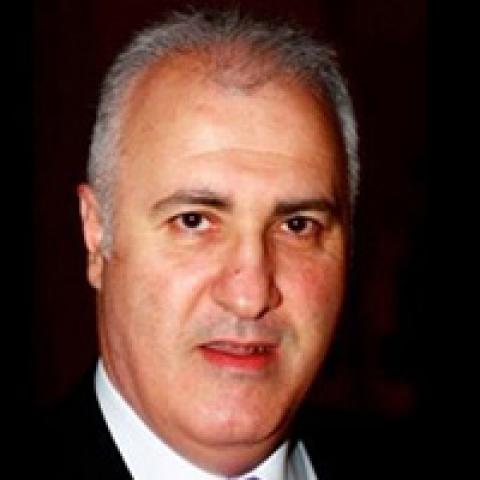

Authorities in Beirut hailed a security success on Aug. 15. The General Directorate of General Security, the body responsible for security at border crossings, facilities and ports, announced the arrest of Ahmad al-Assir, one of the most wanted men in Lebanon.
Assir had been at large since June 24, 2013, after violent clashes between his gunmen and a unit of the Lebanese army in Abra, the Sidon suburb where he lived in south Lebanon. Years before, Assir was an average Sidon citizen who in 1997 decided to become a Sunni cleric, evolving into a Salafist sheikh. That same year, he took up residence in a building in Abra that he turned into a mosque for a group of his supporters. Assir’s movement took shape over the years, until its culmination with the eruption of the Syrian crisis in March 2011. He attracted many young followers with his fiery preaching, especially against Shiite Hezbollah, Iran and Syrian President Bashar al-Assad and his regime.
Assir’s rhetoric eventually transformed into protest on the ground. He and his supporters held a sit-in in Sidon from June to early August 2012 to demand, as he proclaimed, “the rights of Sunnis in Lebanon.” They blocked the road between Beirut and the south, a road vital to Hezbollah, whose strongholds are scattered from the outskirts of Beirut to the border with Israel.
Their protests escalated during 2012 and 2013, leading to several armed clashes between Assir gunmen and Hezbollah fighters. In addition, a violent confrontation occurred between his men and the army on June 23, 2013, when his supporters attacked an army checkpoint near his mosque, killing 10 soldiers. The army responded with a massive attack on Assir’s headquarters two days later that left 18 soldiers dead along with Assir gunmen. Assir fled, disappearing until Aug. 15, 2015, when he arrived at Beirut International Airport after having changed his appearance. He carried a fake passport, claiming to be a Palestinian named Khaled el-Abbasi. According to General Security, Assir had planned to fly first to Cairo, and given that he had obtained a Nigerian visa, on to Nigeria.


