With the exception of the third presidential debate in which candidates accused each other of lying and corruption, this year’s Iranian presidential election has been relatively calm in comparison to the last two elections. No one has attempted to disclose secrets about a candidate’s wife, and the country’s longtime nuclear negotiator was not suddenly criticized for his intransigence, breaking a longstanding taboo of not debating foreign policy. But the relative calm of this year’s election changed May 17 when President Hassan Rouhani issued one of his harshest criticisms of the country’s conservative unelected bodies and his main conservative rival.
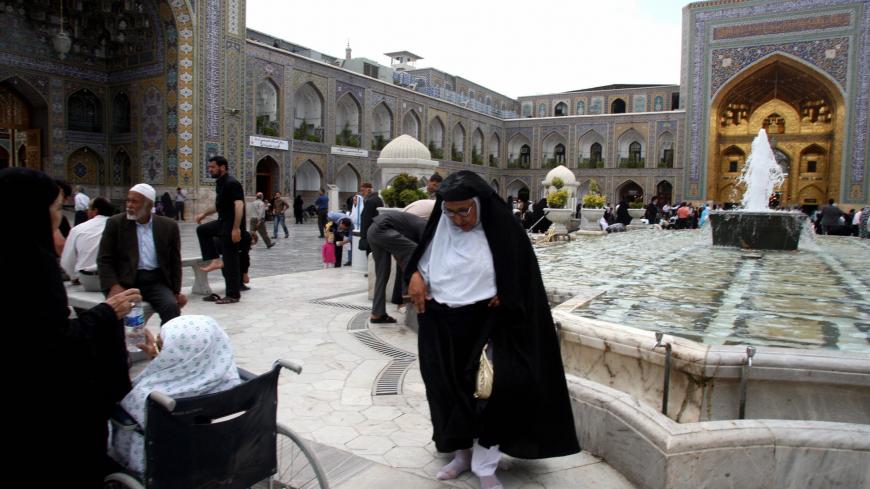
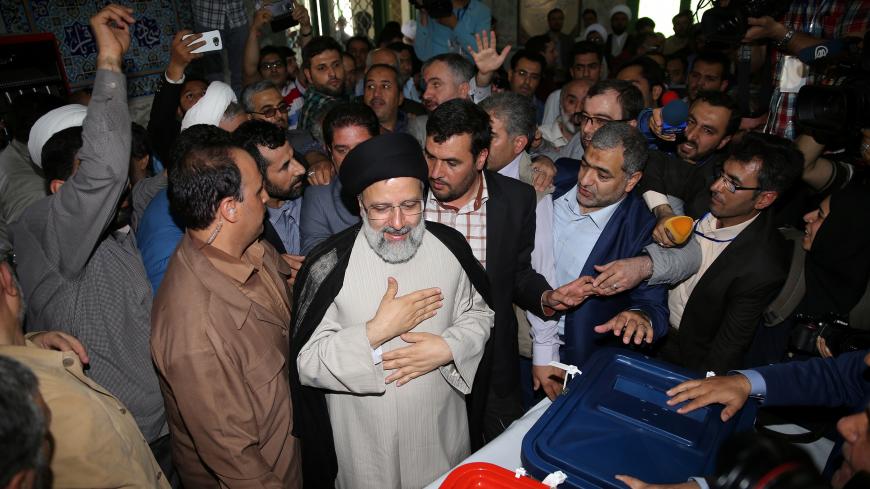
Without mentioning his name, Rouhani criticized the policies of Ebrahim Raisi, who is the head of Astan-e Quds Razavi, Iran’s largest foundation that is linked to the Imam Reza shrine in Mashhad, the holiest site in Iran for Shiite Muslims. In his criticism, Rouhani also included Raisi’s father-in-law, Ayatollah Ahmad Alamolhoda, who is the Friday prayer leader in Mashhad and who has publicly endorsed his son-in-law. “You want to manage the country?” Rouhani asked of both Alamolhoda and Raisi. “First tell me how did you manage Mashhad?”
Alamolhoda has been the Friday prayer leader of Mashhad since 2007, while Raisi has been the head of Astan-e Quds Razavi since March 2016. These two positions are arguably the two most important positions in the Khorasan Razavi province in northeastern Iran.
Citing Alamolhoda’s August 2016 comments telling people to leave Mashhad if what they wanted was music concerts, Rouhani said, “You told people to leave Mashhad if they wanted art. Now you want to have the whole country and tell people to leave Iran?” Rouhani’s comment, which was delivered at a rally in Raisi’s hometown of Mashhad, was met with cheers.
AL-MONITOR All-Access gives you unlimited access to all our journalism, the full Daily Briefing, exclusive interviews, premium newsletters, and live events — for less than $2/week.