Archives belie Israel's narrative of Palestinian conflict
Early members of the Zionist movement and later Israelis have consistently attempted to control the narrative of the conflict with the Palestinians, including by seizing photographic evidence of Palestine and the Palestinians' history.
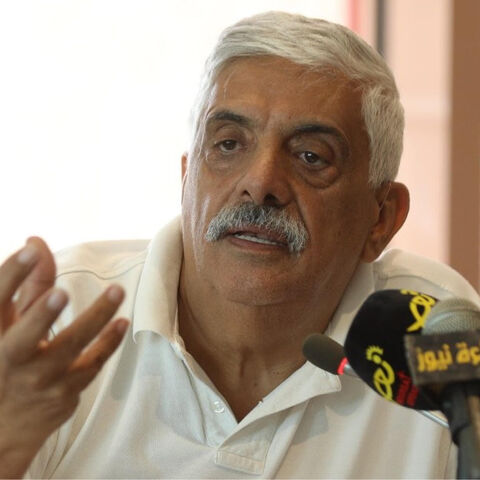

It has been said that a picture is worth a thousand words. In the Palestinian-Israeli conflict, an image can also be as dangerous as a cannon. This appears to be the conclusion reached by two women, one Israeli and the other Palestinian, who have dedicated most of their lives to researching images related to the conflict and their use and fate.
Rona Sela, a curator and lecturer at Tel Aviv University, recounted to Al-Monitor how she first became involved with these images 20 years ago. “I was doing research in the mid-1990s,” she began. “My focus was an analysis of Zionist photography in the early stages of the state of Israel. I researched the way institutional Zionist propaganda departments from the 1920s to 1948 used visual images to construct a national identity to build people’s consciousness about national issues. As the Palestinian narrative was, in most cases, missing from the Zionist one, I started searching for Palestinian images.”
Early on in her research, Sela found a large group of images by the photographer Khallil Rasas, whose work was not known but had been looted from his studio in Jerusalem. Rasas’ images of Palestinian life during the first half of the 20th century, never made public, often contradicted the official Israeli narrative. Sela published a few texts about Rasas and his work as well as other Palestinian photographers active in Palestine in the 1930s and 1940s.
Sela explained, “In the beginning, it was accidental that I came across traces of the looting, but then I started deliberating trying to find more material that was plundered and to understand what the meaning of these images was and how they fit into the larger narrative of the conflict.”


