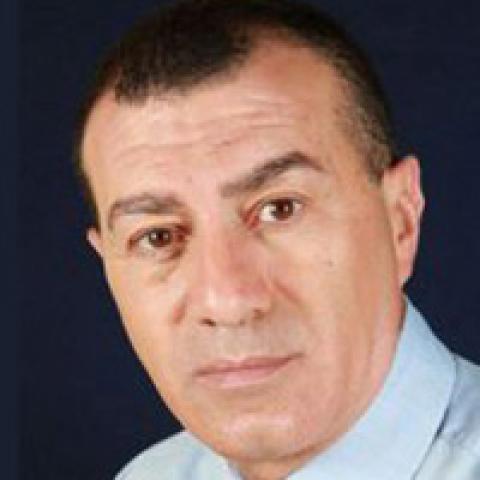
New Labor Party chair Avi Gabbay made a few surprising statements this week that made it abundantly clear he was abandoning the party’s traditional ideological stand as leader of the center-left, hoping to lure voters on the political right and gain sufficient support to replace Prime Minister Benjamin Netanyahu.
Gabbay — a newcomer to the Labor Party who was elected in the July 10 primaries to lead it — surprised most members of his party except for his ally, Knesset member Shelly Yachimovich. She claimed there was nothing new in his position. Many voters of the Zionist Camp — a two-faction union of which Labor is the senior member — who are also seeking a Netanyahu alternative were also likely taken aback by Gabbay’s statements.
Speaking on Oct. 14 at an event in the southern city of Beersheba, Gabbay declared that he would not sit with the Arab Joint List party in any future government. “We will not sit with them, unequivocally. I do not see anything that connects us to them," Gabbay said. The following day he veered further to the right, addressing a gathering of party activists like a die-hard right-winger: “We have to understand a very simple thing: We are the strong ones here. They always scare us, but we are the stronger ones. We are stronger than the Arabs. We do not have to be afraid of them; the Arabs have to be afraid of us," Gabbay said. And as if that were not enough, he added, “Jews in the Land of Israel must rely solely on themselves and ensure that everything is under their control.” He also told the stunned party members that he had met senior defense officials, half of whom do not believe there is any Palestinian partner for peace negotiations.
Before his party members could fully understand the direction in which their new leader was taking them, Gabbay continued to dismantle one by one Labor’s traditional positions. Party supporters who had sworn allegiance to the heritage of Prime Minister Yitzhak Rabin — assassinated in 1995 for trying to make peace with the Palestinians — heard the new chairman tell Channel 2 TV that there was no need to vacate West Bank settlements as part of a peace agreement with the Palestinians. “If we make a peace agreement, why should we evacuate?" he said. "I think that the dynamics or terminology we have become accustomed to here, where 'if you make peace you evacuate,' are not necessarily true." Gabbay made all of these statements in the span of 72 hours.