Israel's education policies leave ultra-Orthodox students behind
By giving preference to Yiddish over English and math, ultra-Orthodox schools prevent their graduates from seeking a future in the high-tech industry.
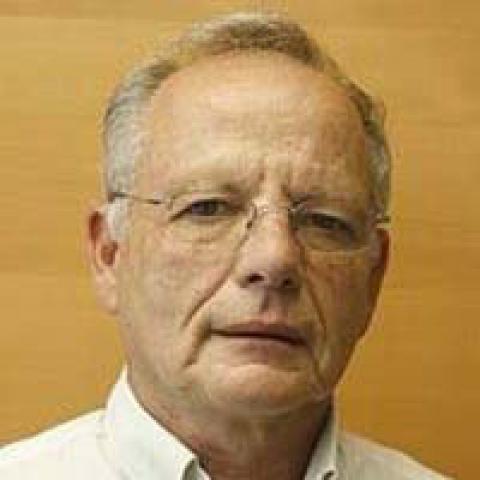

Prime Minister Benjamin Netanyahu is particularly fond of cyberspace issues and even has a social-cyber vision. At a 2014 meeting with the heads of IBM on the sidelines of the World Economic Forum in Davos, for example, he said the Israeli cyberindustry could be a catalyst for harnessing the potential of ultra-Orthodox society and integrating it into the high-tech industry and cyberindustry. Yet only a few days before Netanyahu and his wife set off last month for the 2018 summit in Davos, his government took another step toward perpetuating the ignorance and insularity of ultra-Orthodox society. This was when Education Minister Naftali Bennett signed a regulation enabling the state to fund unregulated ultra-Orthodox schools that teach Yiddish as a foreign language rather than English. Some 51,000 children attend those schools.
Yiddish, which was the lingua franca of millions of Jews in Eastern Europe for centuries, is a wonderful language well worth preserving. However, it is not particularly useful in the high-tech sector or in any other industry for that matter. Indeed, the hidden potential of Jewish ultra-Orthodox society cannot be overstated, but nor can the severity of the blow inflicted by policies such as Yiddish instruction on this potential and its damage to Israel’s strategic interests.
Indeed, one cannot underestimate the intellectual potential within the ultra-Orthodox community. But the high levels of natural growth of this community do not mean high realization of this wonderful potential. On the contrary, according to Education Ministry and Adva Center figures, the number of ultra-Orthodox children in the Israeli school system has almost tripled over the past two decades compared with a growth of 11% in the number of children in authorized state-funded schools and 16% in the number of children in religious state-funded schools. At the same time, the average school years of an ultra-Orthodox male have dropped. In fact, the rate of ultra-Orthodox men with only eight years of schooling has increased over the years to over 50% of the men. This means that more than half of the ultra-Orthodox male population received barely eight years of education, or even less when compared with the number of ultra-Orthodox men with 12 years of schooling or higher education. It should thus come as no surprise that the achievements of Israeli schoolchildren in math and science are among the lowest in the developed world. Whereas Netanyahu boasts of Israeli research achievements, the number of senior staff per capita at research universities has plummeted more than 50% over the past four decades. Obviously, hundreds of thousands of graduates of the ultra-Orthodox education system who did not study English or math and who never attended a laboratory classroom do not end up in universities or research institutes.
The Shoresh Institute for social-economic research at Tel Aviv University warned two years ago that if the rates of employment and productivity among Israel’s ultra-Orthodox and Arab communities don’t catch up with those of other Israelis, the government’s deficit (as a percentage of the GDP) is expected to quadruple, whereas the debt-product ratio would soar to the point of national bankruptcy. Even now, more than half the country’s adult population does not pay income tax. Some 89% of the state’s income tax revenues are paid by 20% of the adult population. After all, someone has to pay for Yiddish lessons in ultra-Orthodox schools. Otherwise, how will the students realize their potential in cyberspace?


