Will Israel's religious right stand for conversion therapy for gays?
The statement by United Right party head Rafi Peretz on conversion therapy for gays generated harsh reactions also from within his own political camp.
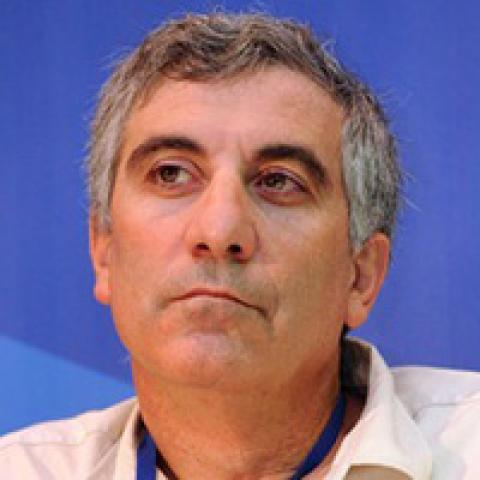

In political jargon, the recent comments by Education Minister Rabbi Rafi Peretz are referred to as an “electoral terror attack” — a slip of the tongue or troubling remark during an election campaign that generates an uproar and is potentially damaging to a candidate and his party. This best describes the July 13 TV interview in which Peretz, leader of the United Right party, expressed support for gay “conversion therapies,” saying, “I think they are possible. I have to tell you that I have a very deep understanding of education and I have done this."
His comment was interpreted, rightly so, as support for the type of treatment banned in many countries and which the United Nations High Commissioner for Human Rights has ruled unethical, lacking scientific grounding and inefficient. Israeli psychologists and psychiatrists also consider categorically “gay conversion” dangerous, inefficient and a potential source of suicidal tendencies. In 2014, the Ministry of Health warned the public against conversion therapies. Following the public outcry, Peretz retracted from his statement admitting that these conversion therapies are inappropriate.
As expected, the education minister’s pronouncement set off a political storm. Prime Minister Benjamin Netanyahu was quick to announce that Peretz’s comments “about the gay community are unacceptable and do not reflect the views of the government I head. I spoke this evening with Rabbi Rafi Peretz who clarified his comments and stressed that the education system would continue to accept all the children of Israel regardless of their sexual tendency.”
The response of former Education Minister Naftali Bennett, who represents the more modern stream of religious, right-wing Judaism, was more interesting. In fact, one of the main reasons for his decision prior to the April elections to step down from his leadership of HaBayit HaYehudi and form the New Right party was the rigid religious-ideological stance of HaBayit HaYehudi, on homosexual issues, among others. Bennett then formed the religious-secular New Right party, while HaBayit HaYehudi merged with radical-right parties to form the United Right.


