Is Hamas linked to recent terror attack against Israeli youth?
Israel’s security services suspect that Hamas or Islamic Jihad infrastructure in the West Bank were involved in the recent killing of student and IDF soldier Dvir Sorek.
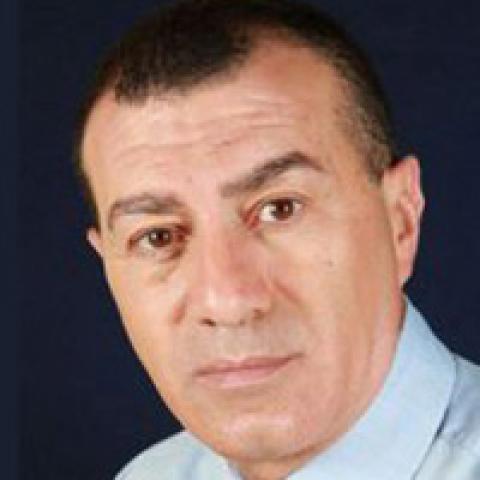

The Aug. 7 murder of Dvir Sorek, a 19-year-old soldier from the West Bank settlement of Ofra, was probably carried out by an organized terror cell. Initially, authorities suspected its members tried to kidnap Sorek, but further investigation led to the conclusion that he was stabbed to death by one or more assailants who had tailed him in their car along a 200-meter stretch of road on which he had been walking. Sorek had gotten off a bus at the southern gate to the Etzion settlement bloc of Efrat and was heading for the nearby yeshiva next to the settlement of Migdal Oz, where he studied as part of a combined religious study-military service program.
Israeli security officials believe the attack was neither a local initiative nor “popular terrorism” — a term the military uses to describe terrorists unaffiliated with any organization. The working hypothesis is that a Hamas or Islamic Jihad group operating in the Hebron area was responsible for the murder. While neither group claimed responsibility for the attack, both hailed its perpetrators. Hamas spokesman Hazem Qassem described the attack as “the most powerful response” to recent talk about Israeli intentions to annex Area C of the West Bank, saying it “proved that Israel had failed in its security coordination with the Palestinian Authority (PA).” Hamas also urged West Bank residents to hide the perpetrators so that Israel could not catch them.
The Etzion settlement bloc south of Jerusalem has been the scene of many terror attacks over the years. In 2005, terrorists shot dead three Israeli civilians as they waited for a ride at the Etzion junction. During a yearlong wave of terrorism that broke out in September 2015, several Israelis were killed and wounded in stabbing and car-ramming attacks in the area. However, the Etzion settlement bloc attack seared most deeply into the memories of all Israelis is the June 2014 kidnapping and murder of three Israeli teens — Gil-ad Shaer, Naftali Frenkel and Eyal Yifrach — which set off a war with Gaza known as Operation Protective Edge. It also prompted three Israeli Jewish terrorists to murder a Palestinian youth, Mohammed Abu Khdeir from the Shuafat neighborhood of Jerusalem, and burn his body. Israeli security authorities have learned the lessons of that grim summer, concluding that just one incident can result in a horrific chain reaction and spin out of control.
The response of the Israel Defense Forces (IDF) to the 2014 kidnapping-murder was a crucial trigger of the war with Gaza. In searching for the youths, the IDF launched a widespread manhunt codenamed Operation Brother’s Keeper, arresting hundreds of Palestinians, among them 50 whom Israel released from jail as part of a 2011 exchange with Hamas for kidnapped Israeli soldier Gilad Shalit. Hamas responded by firing rockets at Israel, and the rest is history. The IDF engaged in a 50-day war, the longest in its history, during which 63 soldiers, five civilians and a migrant worker from Thailand were killed. Over 2,000 Israelis were wounded. On the Palestinian side, more than 2,000 combatants and civilians were killed, and some 11,000 were wounded.


