Can a dish and a tale help Syria's internally displaced integrate?
Displaced women from different parts of Syria build bridges with the locals in Atareb by cooking and talking.
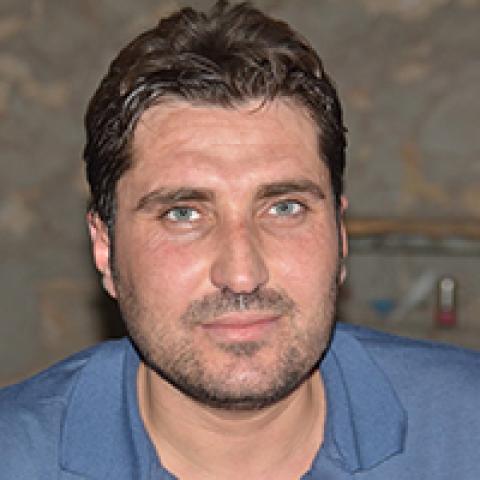

“Women of Aleppo had been strong, independent and right next to their man — particularly in the Syrian revolution,” said Umm Karamwa as she stuffed zucchini with minced meat and rice.
“Aleppo women played a vital role in the revolution, alongside men. They worked in nursing and tended to the wounded from the Free Syrian Army (FSA). They participated in demonstrations and in civil, relief and educational activities under the banner of the Syrian revolution,” she told 20 women, all of whom are part of a project that aims to integrate internally displaced women into their new surroundings in Atareb, a town in the western Aleppo countryside.
Born and raised in the neighborhoods of eastern Aleppo, Umm Karamwa, a housewife, was forced to move to Atareb in 2016 when the regime forces took over their area, which prompted thousands of pro-opposition civilians to leave their homes for the Aleppo countryside, under control of the FSA. She has been living in Atareb, 25 kilometers (16 miles) west of her city, since 2016.
Umm Karamwa then knowledgeably spoke, with some nostalgia, to the women about Aleppo’s rich heritage including the Citadel to the covered market and other aspects of Aleppo's archaeological heritage. Some of the women were locals; others were displaced from different governorates.


