Netanyahu's plan to annex Jordan Valley kills all chances for Palestinian state
While political leaders are lining up to oppose the threats to the two-state solution posed by Israeli Prime Minister Benjamin Netanyahu’s pre-election statement, a closer look at the devastating effects on the ground shows that the viability of a Palestinian state would be threatened if annexation of the Jordan Valley is carried out.
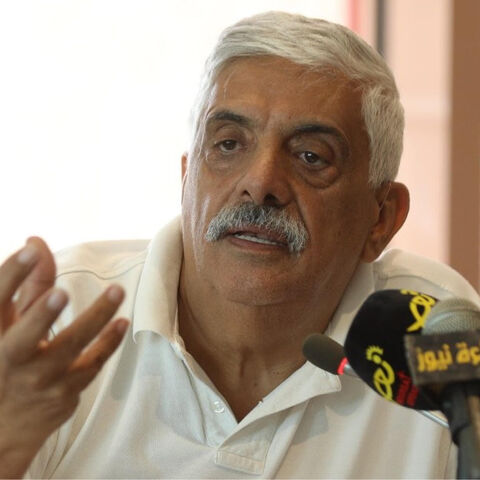

When Israeli Prime Minister Benjamin Netanyahu announced Sept. 10 that he plans to annex the Jordan Valley in the occupied West Bank if he wins in the legislative elections today, there was initially no response from the Arab states. While a number of traditional Palestinian allies did speak up, the implications of such a move go far beyond normal political disputes.
In a significant move, Saudi King Salman bin Abdul-Aziz Al Saud called Palestinian President Mahmoud Abbas Sept. 12 to condemn Netanyahu and insist that the Saudis are strongly opposed to the annexation move.
Meanwhile, Faisal J. Abbas, editor-in-chief of the leading English-language Saudi daily Arab News, warned Sept. 13 the Israeli leadership that the annexation move will further complicate issues. “The prospects for a two-state solution are rapidly receding. Unless Netanyahu, or whoever becomes the next leader of Israel, has a plan to throw nearly 5 million Palestinians into the sea, the demographics on the ground will make coexistence impossible,” he said. He added, “There is no gain for Israel going forward, for such a move would only make normalization of ties with Arab countries more difficult.”
Jordan, one of two countries that has a peace agreement with Israel and that controlled the West Bank before the Israeli occupation in 1967, also reacted in a strong way. Foreign Minister Ayman Safadi met with key European ambassadors based in Jordan to express his country’s opposition.


