Syria’s Kurds face ISIS threat, US indifference as Turkey destroys critical infrastructure
Turkish strikes have left hundreds of thousands without water and electricity, as well as undermining security at prisons and detention centers where tens of thousands of Islamic State fighters and their families are being held.


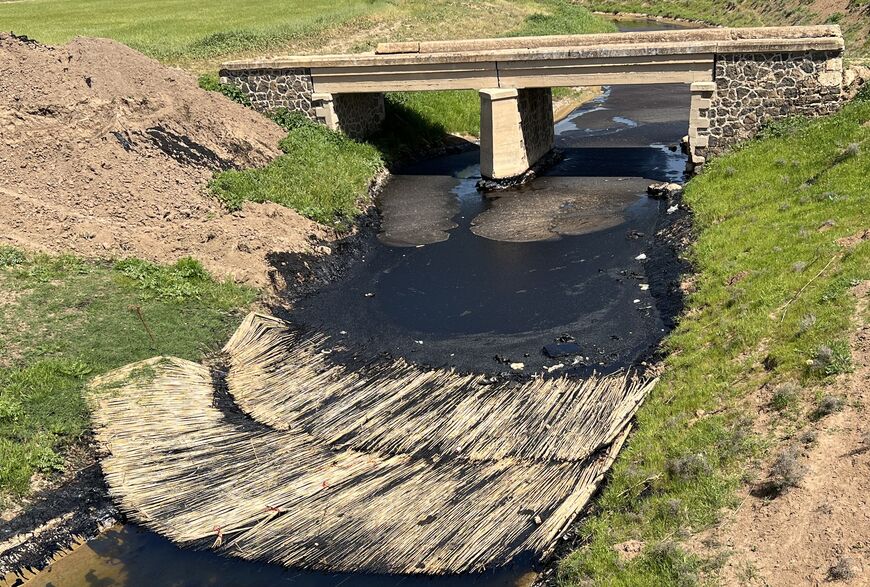
TELL BRAK, Northeast Syria — A black slick of oil coating the Jaghjagh River stretches for miles in northeast Syria, killing its fish, turtles and fabled freshwater mussels, seeping into the nearby fields and decimating crops. “Our sheep are dying; our children are being poisoned by the fumes,” said Hasan Abdallah, an Arab farmer in the town of Tell Brak, pointing a leathery finger at the sludge that locals are unsuccessfully seeking to contain with dry reeds.
The latest environmental horror was triggered when fighter jets and armed drones belonging to the Turkish military bombed an oil pipeline yet again near the town of Rmeilan in January, as part of Ankara’s determined campaign to intimidate, impoverish and destabilize the Kurdish-led self-administration in northeast Syria by targeting critical infrastructure on the grounds that it poses a threat to Turkey's national security. Turkish President Recep Tayyip Erdogan has vowed to keep up the campaign until “the terror state on our borders” is destroyed.
The impact of the Turkish attacks, which began in October and resumed with ferocity in January, are being felt across the Kurdish-governed space, leaving hundreds of thousands — including those in displacement camps — without water and electricity, and undermining security at prisons and detention centers where tens of thousands of Islamic State (ISIS) fighters and their families are being held, according to the United Nations and aid agencies.
Top targets included the gas and power-generating complex Suwayda near Derik, which used to perform three vital functions: bottling gas for household use, generating electricity through gas, and transmitting electricity through the public grid to five other stations. It was damaged in the first wave of strikes and then taken entirely offline in January after a second crippling wave.


