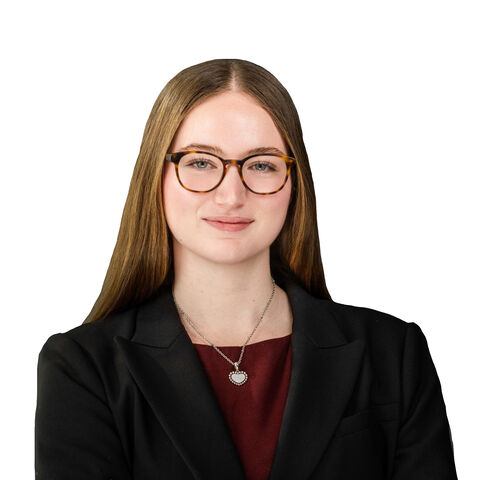
Araghchi will head to Russia on Thursday to meet with officials including Foreign Minister Sergey Lavrov and, according to Iran’s Foreign Ministry, will update the Russians on the US-Iran talks. Speaking to reporters on Wednesday, Araghchi stated, "The aim of the Moscow trip is to convey and present the written message of the supreme leader to the Russian leader." Araghchi did not comment on the contents of the letter.
Russia is a close partner of Iran and has said Iran has the right to a peaceful nuclear energy program. Earlier on Wednesday, Russia’s upper parliamentary body ratified a 20-year deal with Iran that Putin and Iranian President Masoud Pezeshkian signed in mid-January. The agreement outlines joint projects in the nuclear energy sector, strengthening the nations' military cooperation and counterterrorism initiatives and expanding exchanges in defense technology.
Araghchi was in Moscow last week for a second round of trilateral discussions with Russia and China over the Iranian nuclear program after previous talks in Beijing on March 14.
Rafael Grossi, who heads the International Atomic Energy Agency, has been to Iran many times since assuming his role in 2019, but this visit comes at a critical time for Iran’s nuclear program. The United States and the Islamic Republic hope to reach a new nuclear deal amid Iran's rapidly expanding nuclear capabilities, an escalating US sanctions campaign and mounting tensions in the region.
The talks began last Saturday in Oman, with the American side led by US Middle East envoy Steve Witkoff and the Iranian side led by Foreign Minister Abbas Araghchi.
In an interview with Le Monde published on Wednesday, Grossi emphasized the importance of the IAEA having a role in the US-Iran nuclear talks. The organization played a significant role in implementing and monitoring the prior nuclear deal, which President Donald Trump pulled out of in 2018. "Without us, any agreement on Iran is just a piece of paper," Grossi told Le Monde.
The White House called the first round of talks in Oman last Saturday "very positive and constructive," but mixed messaging and conflicting reports surrounding US demands and the location of the second round have left the talks shrouded in uncertainty.
Ahead of Grossi’s visit and the second round of talks, Iranian Foreign Minister Abbas Araghchi told reporters Wednesday that Iran’s enrichment of uranium is nonnegotiable.
Enriched uranium is a crucial component needed for building a nuclear bomb. Iran's enrichment levels have been on the rise since 2019, a year after Trump left the original nuclear deal. In February, the IAEA said that Iran has an estimated 605 pounds of uranium enriched to 60%, just one technical step away from weapons grade 90% enrichment, and its total stockpile of enriched uranium now stands at 18,286 pounds. If all of that stock were to be enriched to 90%, Iran could theoretically have enough uranium for six bombs.
Iran has said that its nuclear activities are solely for civilian energy purposes.
“We are ready to build trust regarding possible concerns over Iran's enrichment, but the principle of enrichment is not negotiable,” Araghchi said.
In step with Araghchi’s comment, Foreign Ministry spokesperson Esmaeil Baqaei wrote on X Wednesday that “moving the goalposts” could result in “any overtures falling apart.”
On Monday night, the US envoy stated on Fox News that Iran has no need to enrich uranium beyond 3.67%. On Tuesday, he reversed course, posting on X that Iran “must stop and eliminate its nuclear enrichment.”
The location of the second round of talks remains uncertain, with conflicting reports pointing to either Rome or Muscat as potential locations, despite Italy saying it had responded positively to a request to host.
Italian Prime Minister Giorgia Meloni is heading to Washington on Thursday for a meeting with Trump at the White House.