Iran protests: Almost 650 killed as Tehran summons EU ambassadors
Iran summons European ambassadors over alleged support for protests, as unrest continues nationwide and Western leaders show solidarity with demonstrators.

Iran summoned the ambassadors of four European countries on Monday and accused their governments of backing the protests that have rocked the Islamic Republic for a third week in a row.
At least 648 protesters have been killed in the unrest, according to the Norway-based human rights organization Iran Human Rights (IHRNGO). The group reports that nine of those killed were under the age of 18 and that thousands more have been injured since protests began on December 28.
This figure is higher than an earlier estimate released Sunday by the US-based Human Rights Activist News Agency, which put the death toll at 544 including 47 members of the security forces.
What happened: The Iranian Foreign Ministry called the British, German, French and Italian ambassadors in Tehran to its headquarters and showed them footage of what authorities described as violent acts by rioters during the ongoing protests, saying their actions went beyond peaceful demonstration, the state television station reported.
The ministry asked the diplomats to deliver the video evidence to their foreign ministers, saying any form of support for the protest movement amounted to interference in Iran’s internal affairs.
Shortly afterward, the president of the European Parliament, Roberta Metsola, announced in a post on X that she has "taken the decision to ban all diplomatic staff and any other representatives of the Islamic Republic of Iran from all European Parliament premises" in support of the “brave” Iranian protesters.
It cannot be business as usual.
— Roberta Metsola (@EP_President) January 12, 2026
As the brave people of Iran continue to stand up for their rights and their liberty, today I have taken the decision to ban all diplomatic staff and any other representatives of the Islamic Republic of Iran from all European Parliament premises.…
“This House will not aid in legitimizing this regime that has sustained itself through torture, repression and murder,” she wrote.
Iran has been rocked by nationwide protests since Dec. 28, initially triggered by a sharp plunge in the national currency that sent the Iranian riyal to a record low of around 1.4 million to the dollar.
Why it matters: Metsola’s move is the latest sign of support from the West for the Iranian protests. The United Kingdom, Germany, France and Italy were among several Western countries that publicly supported the thousands of Iranians who have been holding daily protests for weeks despite a violent crackdown by authorities.
The French, German and British leaders issued a joint statement on Friday condemning the use of violence against protesters and urging Iranian authorities to exercise restraint and respect the people's "freedom of expression and peaceful assembly without fear of reprisal."
In a post on X on Saturday, UK Foreign Secretary Yvette Cooper condemned the killing of protesters at the hands of security forces across Iran, calling on “the Iranian authorities to respect the fundamental rights of their people to take part in peaceful protests, without fear of violence or reprisals.”
A video that went viral on Saturday showed a protester who had climbed onto the balcony of the Iranian Embassy in central London and taken down the flag of the Islamic Republic of Iran, replacing it with the pre-1979 Lion and Sun flag.
On Sunday, Iran separately summoned the British ambassador to Tehran, Hugo Shorter, over “meddlesome” remarks made by the UK foreign secretary and the “desecration” of the Iranian flag from the country’s embassy in London, the director general of West Europe Department at Iran’s Foreign Ministry, Alireza Yousefi, said in a statement.
Over the past few days, hundreds of people held solidarity protests with the Iranian people in countries including the United States, the United Kingdom, the Netherlands, Finland, Turkey and Australia.
In a video statement posted on X Monday, the exiled son of Iran’s last shah, Mohammad Reza Pahlavi, urged members of the Iranian diaspora to replace what he called the “disgraceful” flag of the Islamic Republic at Iranian diplomatic missions abroad.
“All Iranian embassies and consulates belong to the Iranian people,” he said.
US President Donald Trump said on Sunday that Iranian leaders had reached out to negotiate over the country's nuclear program while he weighed a range of responses — including possible military action — to the ongoing unrest.
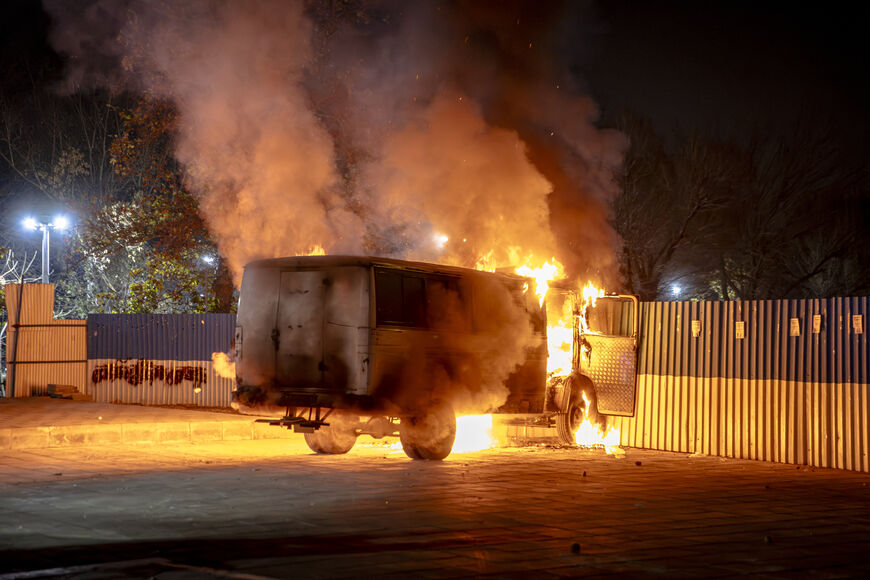
In response to the unrest, authorities organized pro-government rallies in Tehran and several provincial capitals on Monday, according to Iranian state media, as President Masoud Pezeshkian called on supporters of the Islamic Republic to mobilize against the protests.
“We call on the Iranian people to go to the squares to make a decision and not allow riots to distort their demands,” Pezeshkian said during a televised interview with the state-funded IRIB national broadcaster on Sunday.
Pezeshkian and other senior officials have accused the United States and Israel of fueling the unrest, describing the protests as the work of foreign-backed “rioters” and “terrorist elements.”
Thousands of Iranians took to the streets of Tehran on Monday in support of the government, according to Iranian state media. Pro-government rallies were also reported in Birjand in South Khorasan province, Gorgan in Golestan province, Zahedan in Sistan and Baluchestan province, and Tabriz, the capital of East Azerbaijan province, and demonstrations are expected later in the day.
Know more: On Sunday, violent clashes were reported between protesters and security forces in several cities, with online videos showing security forces firing live ammunition into crowds. Hospital staff in multiple locations told the BBC on Saturday that medical facilities were overwhelmed with the dead and injured, with one medic in Tehran reporting seeing many gunshot wounds to the heads and chests of young victims.
Other footage circulating online appeared to show dozens of bodies lying outside the Kahrizak Forensic Medical Center south of Tehran as people searched among the dead for missing relatives.
WATCH: January 8 footage from the Kahrizak Forensic Medical Center south of Tehran, Iran, shows dozens of body bags as families search for relatives killed during nationwide protests. pic.twitter.com/qzts3mvQiK
— War Monitor (@WarMonitors0) January 11, 2026
Last Thursday, the authorities imposed a nationwide internet shutdown accompanied by disruptions to phone lines — moves widely seen as efforts to block communications and silence the protesters. White House Press Secretary Karoline Leavitt said on Monday that Trump had spoken with Elon Musk about restoring internet access in Iran through Musk’s Starlink satellite service.
Speaking to foreign diplomats in Tehran on Monday, Foreign Minister Abbas Araghchi said internet access would be restored in coordination with security authorities, though he did not provide a timeline. As of Monday, the blackout had entered its 96th hour, according to internet monitoring group NetBlocks.
Araghchi also claimed that the unrest had “come under control,” though the situation remains difficult to assess amid the blackout.
The current protests represent the most serious challenge to Iran's ruling establishment since the 2022 uprising that followed the death of Mahsa Amini while in police custody.
This one's on us.
The story doesn't end here.
Our correspondents are already on the next chapter. Read everything they file, from $2/week.
See Offers