Iran vows 'crushing' attacks on US after Trump threats


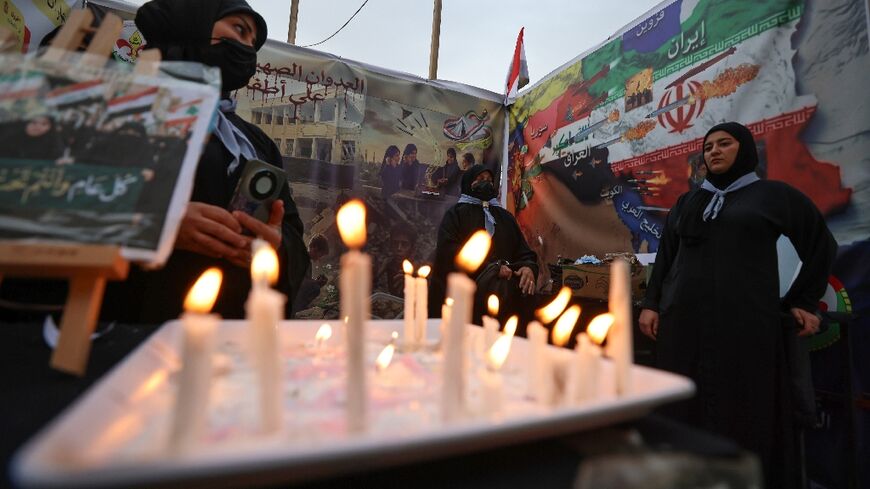
Iran on Thursday threatened "crushing" attacks on the United States and Israel, firing missiles at Tel Aviv after US President Donald Trump vowed to bomb the Islamic republic "back to the Stone Ages".
The war, launched more than a month ago by US-Israeli strikes on Iran, has spread throughout the Middle East and rattled the global economy.
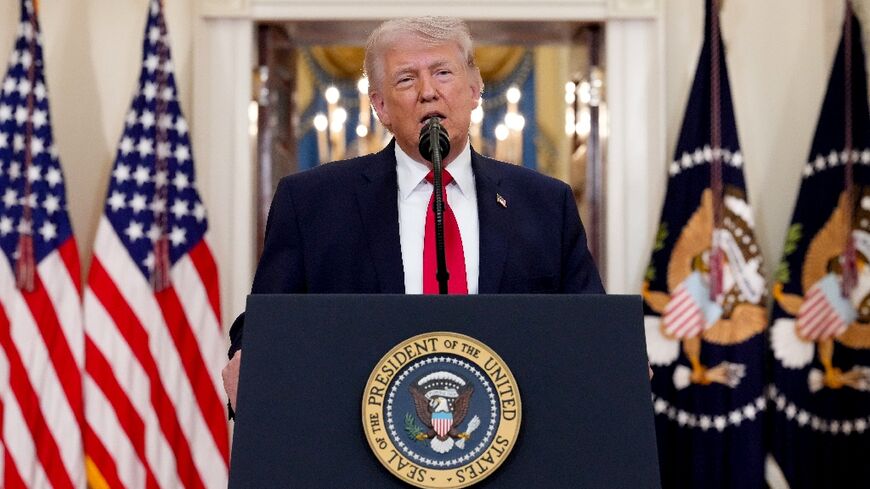
In a White House address, Trump warned attacks would intensify if Tehran did not agree to a deal.
"Over the next two to three weeks, we are going to bring them back to the Stone Ages, where they belong," he said.
Iran's response was immediate, triggering Israeli air defences against missile fire. Four people reportedly were lightly wounded in the Tel Aviv area.
Fresh blasts shook Jerusalem Thursday evening after the Israeli military warned of incoming Iranian missiles, later saying another had been launched from Yemen.
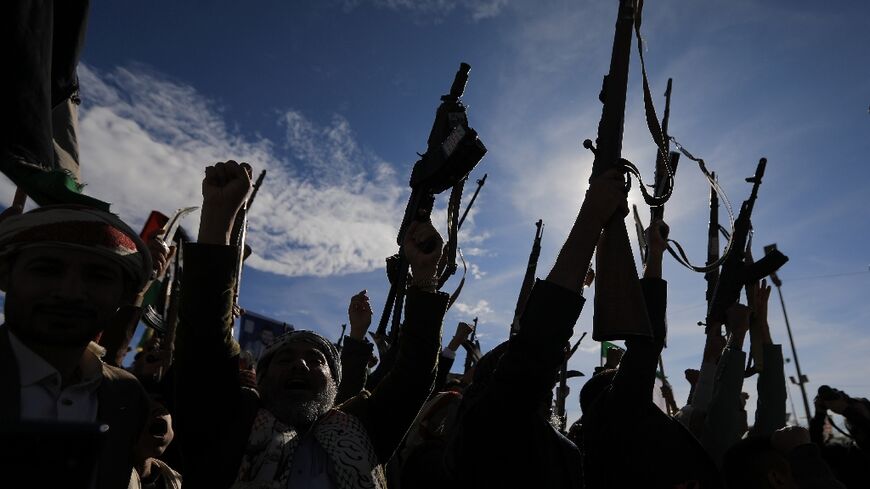
Yemen's Houthi rebels later said they had launched a fourth missile attack on Israel, firing a "barrage of ballistic missiles" at targets in the Tel Aviv area.
In Tehran, AFP journalists reported a series of loud explosions across the city. The targets were unclear.
Iranian state TV said US-Israeli strikes hit a bridge in Karaj, west of Tehran, twice Thursday -- the first causing civilian casualties, the second hitting as emergency teams responded.
Trump posted on social media that the bridge had been sent "tumbling down," promising "much more to follow!"
The country's two largest steel plants have also been forced offline by repeated US and Israeli strikes, the companies said.
In a statement carried by state TV, the Iranian military's central command said its latest wave of attacks had targeted the United Arab Emirates, Bahrain and Israel in retaliation for strikes on its industrial facilities.
It said targets included "American steel industries in Abu Dhabi, American aluminium industries in Bahrain, and the Rafael arms factories of the Zionist regime".
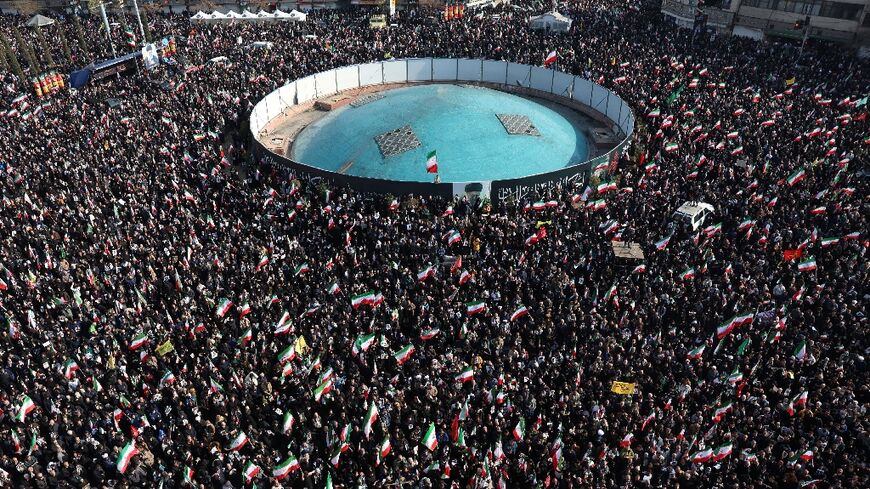
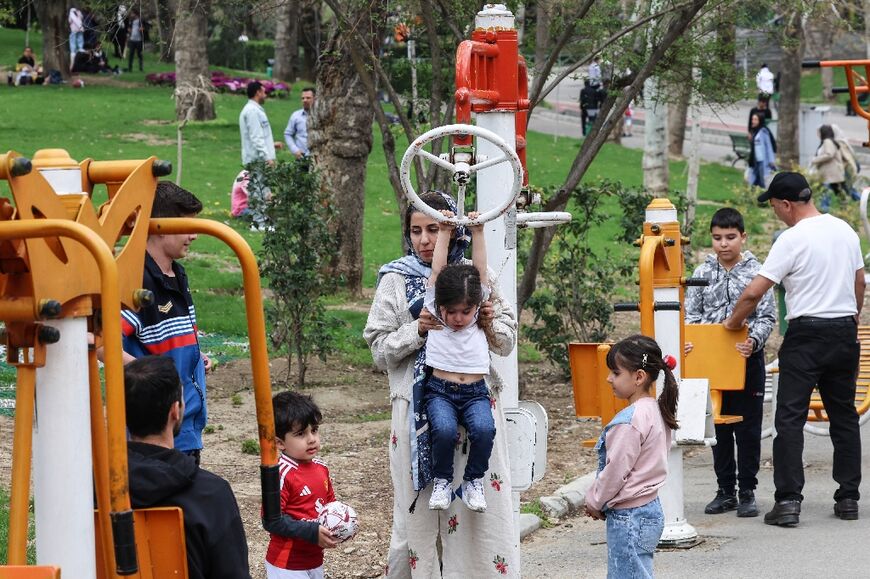
Despite the bombardment, families gathered in Tehran's Melat Park, with men smoking water pipes and children playing, marking the 13th day after the Persian New Year, Nowruz, when people traditionally picnic outdoors.
A resident said checkpoints, manned by Revolutionary Guards, had increased citywide.
"They gather in the streets in order to show people that they are still in power and nothing is gonna change," said the 30-year-old man, who requested his name not be used.
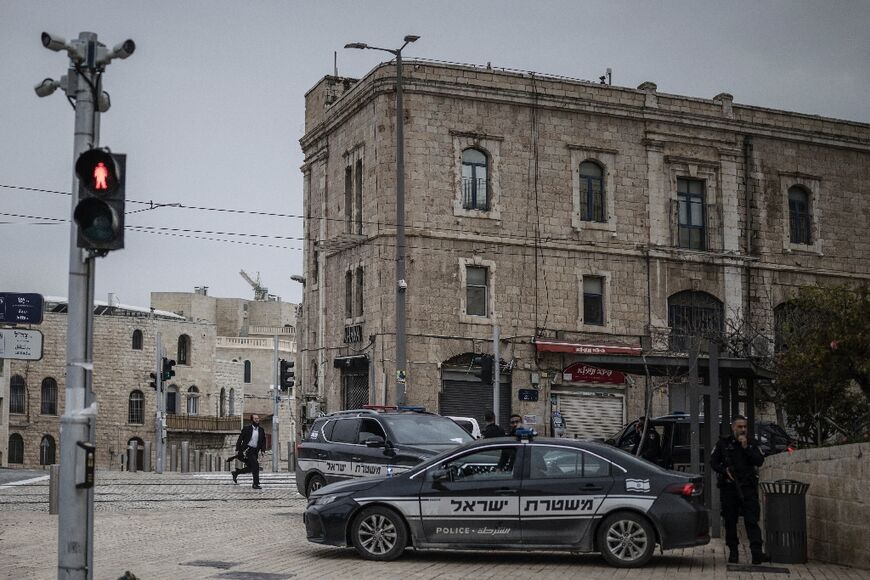
In Israel, Jewish Israelis were celebrating Passover, some marking the holiday underground.
"This is not my first choice," said a writer who gave his name as Jeffrey, at a meal organised in a Tel Aviv bunker.
- 'Key targets' -
The war continues to disrupt global shipping, with British Foreign Secretary Yvette Cooper convening around 40 countries to demand the "immediate and unconditional reopening" of the Strait of Hormuz.
Iran's Revolutionary Guards effectively shut the key waterway and oil conduit when the United States and Israel launched the war, and Trump has made its reopening a condition for a ceasefire.
Italy called for a "humanitarian corridor" to allow fertiliser and other essentials through the strait to avert a food crisis in Africa.
Tehran said it was drafting a post-war protocol with Oman to oversee shipping, but talks had not yet begun.
Trump said talks could be possible with Iran's new leadership, which he described as "less radical and much more reasonable".
Tehran has dismissed US overtures as "maximalist and irrational", saying messages had been relayed through intermediaries including Pakistan -- but no direct talks were underway.
Trump warned that without a deal, Washington had "our eyes on key targets", including power plants.
Iran's health ministry said the Pasteur Institute in Tehran had been heavily damaged in a strike.
In Lebanon, Iran-backed militant group Hezbollah said it launched drones and rockets at northern Israel, a day after an Israeli strike in Beirut killed a senior commander, according to two sources. Lebanese authorities said seven people died in the strike.
Eighteen European countries have urged Israel and Hezbollah to halt fighting amid fears Israel could seize territory in southern Lebanon.
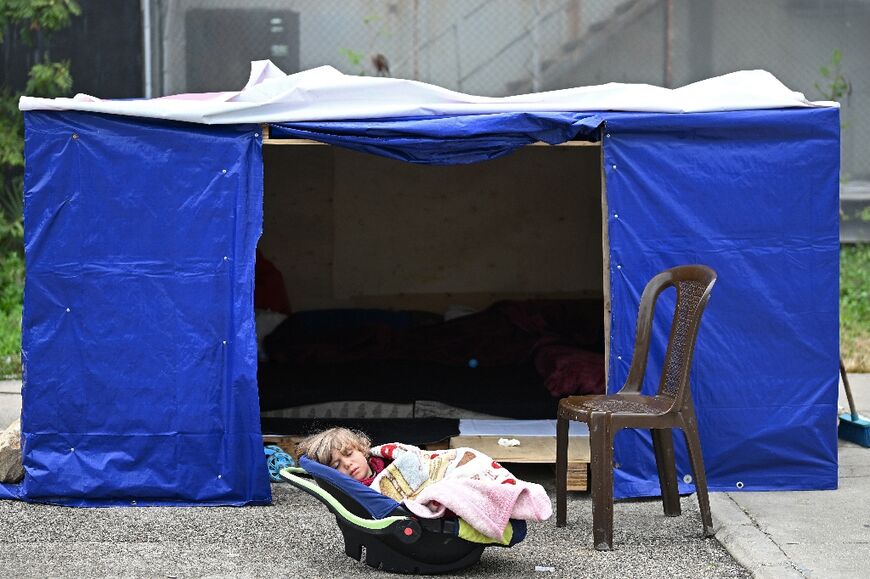
Amy Pope, head of the International Organization for Migration, warned of "very alarming" risks of prolonged displacement.
- From Iraq to Bhutan -
In Iraq, a drone targeted a US diplomatic and logistics site at Baghdad airport, security sources said.
Gulf states once seen as safe havens are now under threat, with United Arab Emirates air defences intercepting missiles and drones.
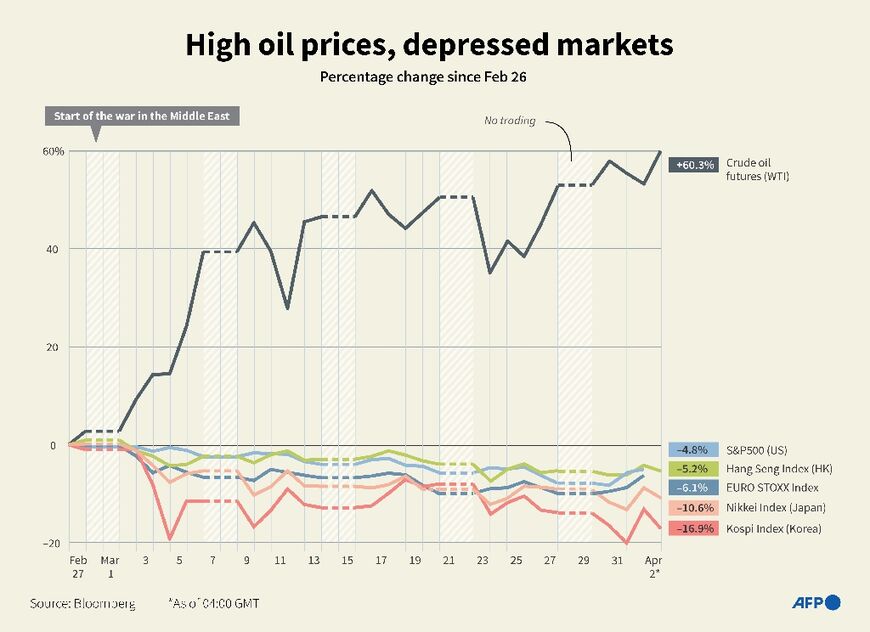
The World Bank warned of risks to inflation, jobs and food security worldwide.
Airlines in China are raising fuel surcharges, while Malaysia has asked civil servants to work from home.
Iraq's oil revenues fell more than 70 percent month-on-month, an official said.
Pakistan's government announced sharp fuel price increases, with petrol rising more than 40 percent and diesel by over 50 percent, citing global energy shocks linked to the war.
Even the Himalayan kingdom of Bhutan is feeling the impact as fuel prices spike.
AFP reporters in the capital Thimphu saw long queues at petrol stations Thursday amid shortages in the landlocked nation of around 800,000 people.
"It's not like our government is responsible, they are trying their best," said Karma Kalden, 40.
"We are helpless."
burs-ft/mlm