Lebanon bids farewell to Amal Khalil, journalist killed by Israel: What to know
Khalil's death in a targeted strike on a house where she and a colleague took cover sparked widespread condemnation by Lebanese officials and international media groups.
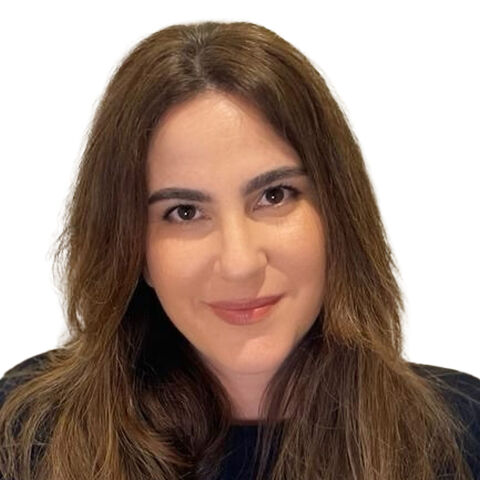

BEIRUT — The killing of Lebanese journalist Amal Khalil in an Israeli strike in south Lebanon on Wednesday prompted a wave of condemnation in the country on the eve of another round of Lebanon-Israel talks in Washington.
لحظات الوداع الأخيرة للشهيدة الصحافية آمال خليل#مباشر #الجديد pic.twitter.com/8Zb1xNrAmB
— AL Jadeed Tv (@AlJadeed_TV) April 23, 2026
What happened: Khalil, a journalist working with the local Al-Akhbar news outlet since 2006, was driving a car in the village of al-Tiri, in the Bint Jbeil district, accompanied by photojournalist Zeinab Faraj, when a strike hit a vehicle in front of them around 3:00 p.m., killing the two passengers, according to Al-Akhbar.
The two journalists, covering the war between Israel and Hezbollah since March, took cover in a house in the village. A little over an hour later, Israel launched an air attack, directly striking the house where the women were sheltering. Rescue workers rushed to the scene, where they were able to retrieve the bodies of the two people killed in the earlier strike and found Faraj seriously wounded.
As the first responders looked for Khalil, Israel launched stun grenades and opened fired, preventing them from continuing the search effort. Faraj would remain trapped under the rubble for nearly six hours. Her body was retrieved shortly before midnight.
Meanwhile, the Israeli military denied that it had targeted journalists in south Lebanon and said that its forces had not impeded rescue teams, adding that the incident was under investigation. In a statement on Wednesday, the army's Arabic-language spokesperson, Ella Waweya, said the military had struck a car after two vehicles exited a building used by Hezbollah and, allegedly in violation of the ceasefire, had crossed the defensive line established by the Israeli military.
Background: Khalil, born in 1984, hailed from the southern town of Baysariyyeh, in the Sidon district. In a January interview with The Public Source, a Beirut-based news outlet, Khalil said she had wanted to study journalism at the Lebanese University in Beirut, but her father would not let her. Instead, she enrolled in Arabic literature in Sidon.
Her career in journalism began at al-Hasnaa, a Lebanese pan-Arab women’s magazine, after which she moved on to Shabab as-Safir, a supplement of the now-defunct Lebanese newspaper As-Safir, closely aligned with Hezbollah and the March 8 alliance.
In April 2006, she joined the newly founded Al-Akhbar, which was also aligned with Hezbollah.
Months later, in July, the 33-day war between Hezbollah and Israel broke out. At the time, Khalil was living in Tyre and began covering the conflict from there, later expanding her reporting to Bint Jbeil and Nabatiyeh. By 2011, said Khalil, she was covering all of south Lebanon.
More recently, between October 2023 and November 2024, she extensively covered the fighting in the south between Israel and Hezbollah that spilled over from the Israel-Hamas war in Gaza. According to Al-Akhbar, Khalil escaped death in September 2024 when her family home was hit in an Israeli air raid.
That same month, Khalil received death threats on her phone from an Israeli number. The text message read, “We know where you are, and we will reach you when the time comes.”
Khalil was further warned, “I suggest you flee to Qatar or somewhere else if you want to keep your head connected to your shoulders.”
Her personal and professional views, based on the January interview, largely reflected support for the right of Lebanese to resist Israeli hostilities, saying that “resistance means everything” to her.
She added, “I always say in my articles, interviews, and conversations that resistance is our fate. As long as we live next to the Israeli entity, this struggle will continue. Resistance is an instinctive act among southerners against the aggressor.”
Reactions: Khalil's killing, with the retrieval of her body hours after the attack, triggered widespread condemnation by Lebanese officials.
President Joseph Aoun expressed his condolences on Wednesday in a post on X.
He characterized the attack as “Israel's deliberate and consistent targeting of journalists as aimed at concealing the truth of its aggressive acts against Lebanon, in addition to constituting crimes against humanity punishable under international laws and conventions, and serving as an incentive for the international community to intervene and put an end to them.”
Echoing a similar position, Prime Minister Nawaf Salam extended his “sincerest condolences” to Khalil's family, saying Israel's targeting of journalists and obstructing access by relief teams amounted to war crimes.
“Israel's targeting of media workers in the south while they carry out their professional duties is no longer isolated incidents, but has become an established approach that we condemn and reject, as do all international laws and conventions,” Salam posted to X on Wednesday, stressing that Lebanon will pursue actions before international forums in response to Israel's conduct.
Mourning Khalil's death as she performed her duties as a journalist, Information Minister Paul Morcos on Wednesday wrote on his X account, “Targeting journalists is a heinous crime and a flagrant violation of international humanitarian law, which we will not remain silent about. We reiterate our call to the world and supporting international organizations to take action to stop it and prevent its recurrence.”
The Lebanese Health Ministry also denounced Israel’s actions, in a statement on Thursday, saying, “The Ministry condemns in the strongest terms this heinous crime, which adds to the long list of crimes committed by the Israeli enemy against civilians, including journalists and paramedics, demonstrating its blatant disregard for laws and human values.”
Local and International media groups also condemned Khalil’s killing, which they viewed as representing a grave threat to all journalists working in Lebanon.
In a statement issued Thursday, the Union of Journalists in Lebanon accused Israel of committing a war crime by killing journalists and obstructing rescue efforts.
“The Israeli army adds another deliberate and blatant war crime to its long and bloody record, resulting in the death of Amal Khalil,” the statement read. It also urged the Lebanese government to document and investigate Israeli crimes and to allow the International Criminal Court to look into alleged war crimes committed since Oct. 8, 2023, when Hezbollah-Israeli fighting broke out.
Lebanon’s Press Club shared a similar statement, expressing “profound sorrow” over the news of Khalil’s death.
While condemning Israel’s ongoing attacks against journalists in Lebanon, the club also called on the international community to intervene to prevent further violations and attacks against journalists in the country.
The Committee to Protect Journalists declared its outrage over Khalil's death in a statement on Tuesday. The committee cited its Regional director, Sara Qudah, who said, “The repeated strikes on the same location, the targeting of an area where journalists were sheltering, and the obstruction of medical and humanitarian access constitute a grave breach of international humanitarian law.”
She further remarked, “CPJ holds Israeli forces responsible for the endangerment of Amal Khalil’s life and the injuries Zeinab Faraj sustained after the targeted strike on their location.”
On Wednesday, hours before Khalil’s body was retrieved, Reporters Without Borders called for international pressure on the Israeli military to allow rescue teams to reach the targeted area.
Know more: Khalil’s death brings the number of journalists killed this year in Lebanon to at least eight, according to data from the Committee to Protect Journalists.
On March 28, an Israeli strike killed three journalists when it hit a vehicle near the city of Jezzine, in the south. Authorities identified them as Ali Choeib, who worked at the Hezbollah-affiliated Al-Manar channel; Fatima Ftouni, from Al-Mayadeen, also viewed as close to Hezbollah; and Ftouni's brother, Mohammad Ftouni, a cameraman.
The Israeli military confirmed at the time that it had killed two journalists, describing them as Hezbollah members. It called Choeib a “terrorist from the intelligence unit of the al-Radwan force” and accused him of operating “under the guise of a journalist.”
Days earlier, an Israeli airstrike on an apartment in central Beirut killed Mohammed Sherri, head of political programs at Al-Manar, along with his wife.
At least 2,294 people have been killed in Lebanon in this latest round of fighting between Israel and Hezbollah, which began March 2, when Hezbollah launched missiles at northern Israel in solidarity with Iran following the US and Israeli attack against it Feb. 28. Last Friday, US President Donald Trump announced a 10-day ceasefire in Lebanon.
A second round of talks between Lebanese ambassador to the United States Nada Hamadeh and her Israeli counterpart, Yechiel Leiter, to lay the groundwork for direct negotiations between their governments is due to begin in Washington on Thursday.
This one's on us.
The story doesn't end here.
Our correspondents are already on the next chapter. Read everything they file, from $2/week.
See Offers