Saudi FM concludes China visit amid Trump-MBS friction: What to know
Saudi Arabia is still absorbing the war’s security fallout and is widening its circle by leaning more on Beijing as a diplomatic counterweight to Washington and as a partner that can engage Tehran.
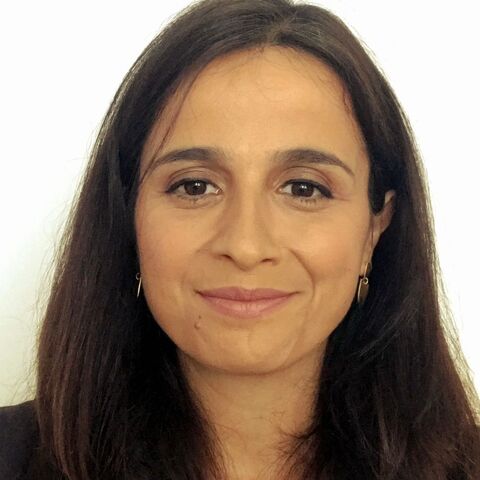


You're reading an excerpt from Al-Monitor China-Middle East, where we analyze China's deepening engagement with the region. To get this newsletter in your inbox weekly, sign up here.
WASHINGTON — Two weeks after the signing of the US‑Iran memorandum of understanding, Saudi Arabia is sending clear signals that it is hedging its geopolitical alignment and interests between Washington and Beijing.
Saudi Foreign Minister Prince Faisal bin Farhan wrapped up a two‑day visit to China on Wednesday amid visible strains in the relationship between President Donald Trump and Saudi de facto leader Mohammed bin Salman. The trip underscores how quickly Riyadh is recalibrating as the fallout from the war with Iran reshapes regional security calculus.
What happened
Saudi Foreign Minister Prince Faisal bin Farhan met his Chinese counterpart, Wang Yi, as well as Chinese Vice President Han Zheng on Tuesday in Beijing. During his meeting with Wang Yi, the two discussed "efforts to de-escalate tensions and enhance security and stability" as well as economic cooperation — particularly in the energy, industrial and technology sectors, as well as supply chains.
During the meeting with Han, the two discussed boosting economic and investment ties, according to the Saudi Press Agency.
Why it matters
Prince Faisal’s visit comes at a critical geopolitical moment for Gulf-US relations. Saudi Arabia is still absorbing the war’s security fallout and is widening its circle by leaning more on Beijing as a diplomatic counterweight to Washington and as a partner that can engage Tehran. China’s leverage with Iran and its active mediation role since 2023 give it unusual diplomatic weight at a time when Gulf capitals seek to coexist with a hardened and more brazen Iranian regime.
The economic relationship is a major driver of that strategy. China has become Saudi Arabia’s largest trading partner in the last decade, with bilateral trade running into the tens of billions of dollars annually. In 2024, the trade volume between the two surpassed $107 billion, according to China's Foreign Ministry. China is also the single biggest buyer of Saudi crude, giving Beijing significant weight in Riyadh’s long-term economic calculations. In 2024, China purchased $47.91 billion of Saudi crude; in 2025, China purchased an average of 1.4 million barrels per day of crude oil from the Gulf country, accounting for about 14% of China's total crude oil imports for the year, per China's General Administration of Customs.
Washington friction
The visit comes as US-Saudi ties show signs of decline since the conflict. During the war, Riyadh pressed for de-escalation and reportedly resisted some US operational requests. In May, The New York Times reported that Riyadh denied Washington use of certain bases and airspace for a proposed escort operation through the Strait of Hormuz. The personal tone between leaders has also soured: The last reported phone call between Mohammed bin Salman and President Trump was on May 30, and public barbs, including a crude joke by Trump, have underscored the relationship’s volatility. In March, Trump said that Mohammed bin Salman "didn’t think he’d be kissing my ass" after once viewing the United States as weak.

Crown Prince and Prime Minister of the Kingdom of Saudi Arabia Mohammed bin Salman and US President Donald Trump speaks at the US-Saudi Investment Forum at the John F. Kennedy Center for the Performing Arts in Washington, DC on Nov. 19, 2025. (Photo by BRENDAN SMIALOWSKI/AFP via Getty Images)
Saudi Arabia has also rebuffed US pressure to normalize ties with Israel, and its rhetoric has only grew more critical of the current Israeli government. While Riyadh pledged $1 billion for Trump's so-called Board of Peace, it appears not to have made good on that pledge yet, according to reports in late May. It also has withdrawn funding from LIV Golf after the 2026 season, and backed out of a proposed funding deal with the Metropolitan Opera.
Beijing’s opening
For Saudi Arabia, China offers more than symbolism. Firas Maksad, managing director for the Middle East and North Africa practice at the Eurasia Group, said it was natural for Riyadh to consult Beijing now, as the kingdom weighs its next moves on Iran and the wider Gulf posture.
“After all, China is by far the country with the greatest leverage over Iran, and it had played the key role in mediating and brokering the normalization of Saudi Arabia’s relationship with Iran in 2023,” Maksad told Al-Monitor. “And so it’s only natural at a time when so much is in flux and the regional relationship with Iran, not only Saudi Arabia, is in question that the Saudis consult with the Chinese and even try to coordinate with Beijing.”
He added that China could play a diplomatic role in helping Saudi Arabia and other Gulf states find a way forward with Iran. That possibility is increasingly relevant as Riyadh looks to diversify its foreign policy relationships and reduce its dependence on the United States. Last week, Agence France-Presse reported that the kingdom is planning to host reconciliation talks between Gulf countries and Iran.
In a recent piece for Foreign Affairs, Maksad and Ian Bremmer called China the "chief geopolitical beneficiary" of the postwar regional shift.
The diplomatic engagement is unfolding alongside steadily deepening economic and security cooperation between Riyadh and Beijing. Reports in March indicated that Saudi Arabia and China had struck a $5 billion deal to establish a production line for Wing Loong-3 combat drones in Jeddah. Under the reported agreement, a joint facility operated by the Aviation Industry Corporation of China and Saudi Arabia's General Authority for Military Industries would manufacture about 48 drones a year. Neither Beijing nor Riyadh has publicly confirmed the deal.
In mid-June, Saudi Arabia signed six agreements and memorandums of understanding with Chinese entities on development and housing projects worth more $506 million in Riyadh and Dammam.
Our take
The war with Iran may have made a lasting dent in US credibility across the region, especially among Gulf states that were directly exposed to Iranian drones and missiles. That has pushed Saudi Arabia and others to look harder at their own security architecture and to seek out partners that can provide leverage in trying to contain a less predictable Iran. That does not mean Saudi Arabia is abandoning the United States. But the war has offered lesson in the Gulf: When regional security is in flux, dependence on a single power is not a sound option.
This one's on us.
The story doesn't end here.
Our correspondents are already on the next chapter. Read everything they file, from $2/week.
See Offers