Former Assad official sentenced to 60 years in US for torture
Samir Ousman Alsheikh was convicted by a jury in March of three counts of torture, one count of conspiracy to commit torture, visa fraud and attempted naturalization fraud.
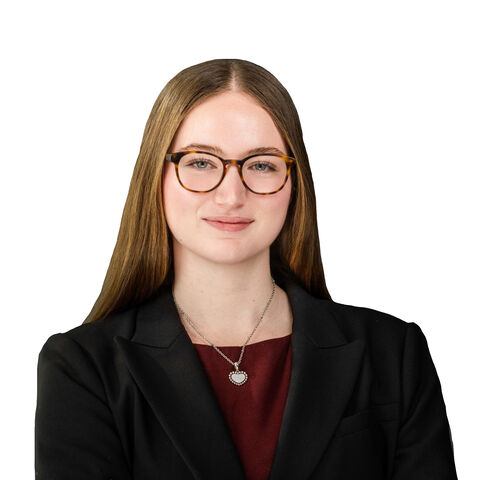

A US federal judge sentenced a former Assad regime official to 60 years in prison on Thursday for torturing prisoners at Damascus’ Adra Prison and later lying to US immigration authorities about his past.
What happened: Samir Ousman Alsheikh, 74, was convicted in March of three counts of torture, one count of conspiracy to commit torture, visa fraud and attempted naturalization fraud. He is the highest-ranking former Assad regime official to be prosecuted and tried in person outside Syria.
District Judge Hernan D. Vera handed down the sentence in federal court in Los Angeles.
"The conduct was heinous, unimaginably cruel, and almost unspeakably violent and brutal," said Vera before announcing the sentence.
The Associated Press reported that defense attorneys said they would appeal the sentence.
The case centered on Alsheikh’s tenure as head of Adra Prison, formally known as Damascus Central Prison, from about 2005 to 2008 under Syrian President Bashar al-Assad. Prosecutors said Alsheikh ordered subordinates to torture prisoners and personally participated in some of the abuse.
Three former detainees testified at his nine-day trial, which began March 3, describing beatings, prolonged suspension by the wrists and other forms of torture. Witnesses also described a torture device known as the “flying carpet” or “magic carpet,” consisting of hinged wooden panels used to fold prisoners’ bodies at the waist.
One witness testified that Alsheikh himself stomped on the device while a prisoner was strapped to it, according to the US Department of Justice. Prosecutors said Alsheikh ordered prisoners to harm or kill political dissidents imprisoned with them and sent some prisoners sent to Wing 13, where detainees were held in small isolation cells and tortured.
The jury found Alsheikh guilty on all six counts on March 16 after prosecutors presented evidence that he personally ordered the torture of the three victims named in the indictment.
Samir Ousman Alsheikh, 73, (pictured years ago with then-Syrian President Bashar al-Assad) was found guilty by a jury today of torturing Syrian inmates at Adra Prison in Damascus then later lying about it to United States immigration officials, fraudulently obtaining a green card… pic.twitter.com/41PQTq7lb4
— US Attorney L.A. (@USAO_LosAngeles) March 17, 2026
Background: In 2011, Alsheikh was appointed governor of Syria’s eastern province of Deir ez-Zor, where he also served as head of the province’s security committee. He served as governor until 2013.
According to the Syrian Emergency Task Force, an advocacy group for justice, humanitarian efforts and development in Syria, he was a close confidant of Maher al-Assad, the president’s brother and commander of the Syrian Army’s 4th Armored Division.
His tenure in Deir ez-Zor was marked by a violent crackdown on protests, according to SETF. The organization says Alsheikh ordered attacks on demonstrations and called on regime forces to besiege and bombard the city. He is also linked to the the 2012 Al Joura and Al Qusour massacre, in which more than 400 civilians were reportedly killed.
The Syrian Network for Human Rights reported in 2024 that his tenure saw the killing of 3,933 civilians, including 312 children and 261 women by Syrian regime forces and pro-regime militias in Deir ez-Zor between the end of April 2011 and mid-January 2013.
The SETF and the Syrian Network for Human Rights both worked with US authorities on the case against Alsheikh.
He applied for a US immigrant visa in 2018 and entered the country in March 2020. Prosecutors accused him of concealing his role in torture and other abuses from US immigration authorities. He obtained a green card and later applied for naturalization.
Federal authorities arrested Alsheikh at Los Angeles International Airport in July 2024 as he was preparing to board a one-way flight to Beirut. He was initially charged with immigration fraud for lying on his visa and citizenship applications, including denying that he had ever persecuted anyone in Syria.
Alsheikh’s case was prosecuted under the US Torture Act, which allows federal authorities to prosecute torture committed abroad when the accused is present in the US.
Know more: Syria's post-Assad authorities are pushing for the prosecution of former regime officials accused of crimes during the country’s civil war. In August, a Damascus court sentenced the ousted president and his army commander brother to death in absentia. The court also sentenced several former regime officials to death.
Days later, Lebanon extradited Maj. Gen. Adel Issa, a former commander of the Assad regime’s 17th Division and ground forces in Deir ez-Zor, to Syria to face allegations including intentional killings and torture resulting in death. He was the first senior Syrian military figure extradited from Lebanon to Syria since Assad’s ouster in December 2024.
This one's on us.
The story doesn't end here.
Our correspondents are already on the next chapter. Read everything they file, from $2/week.
See Offers