Israel president urges against new vote despite inconclusive result


Israel's president voiced hope Wednesday for avoiding a second election after a hard-fought vote produced no clear winner, leaving Prime Minister Benjamin Netanyahu and the opposition scrambling for options and making Israeli Arab parties possible kingmakers.
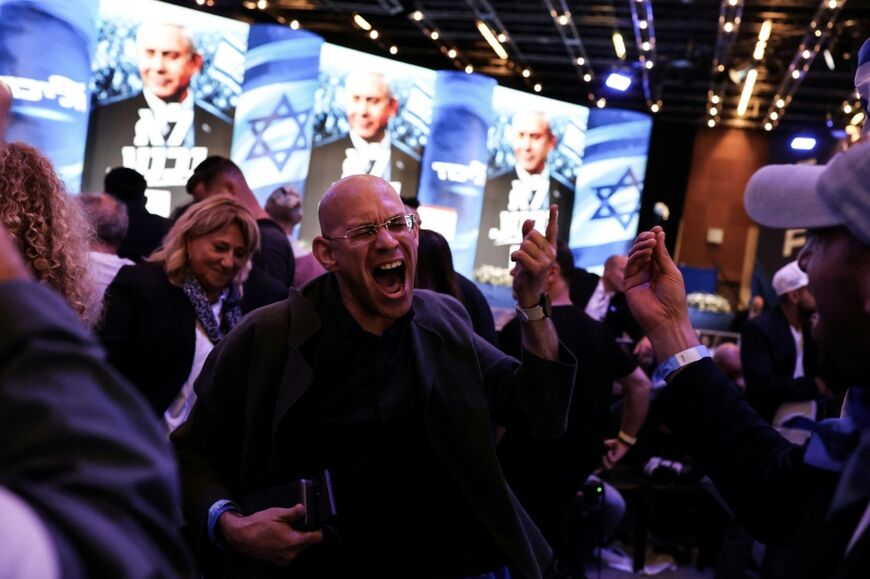
With more than 85 percent of ballots counted, Netanyahu's right-wing bloc was slightly ahead but still short of a majority after Tuesday's election, the first since the October 7, 2023 attack that led Israel to wage war in Gaza and across the region.
Both Netanyahu, Israel's longest-serving prime minister who is allied with far-right and ultra-Orthodox Jewish parties, and Gadi Eisenkot, a former military chief leading a broad opposition bloc, said they would seek to form the next government.
But neither looks set to reach the 61-seat threshold, with Netanyahu's bloc projected to win 53 of the 120 seats in parliament and Eisenkot's opposition set for 48.
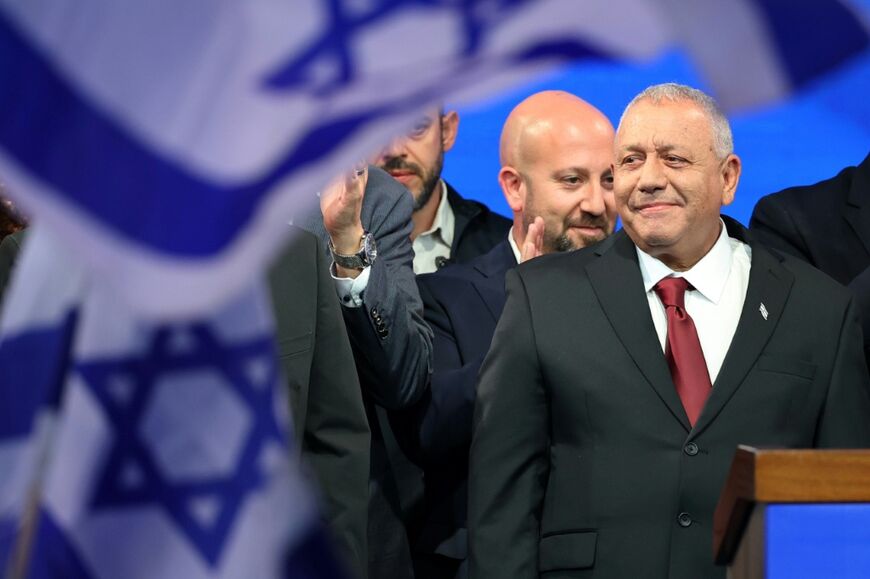
The final results could still change, but one group which made clear gains was Israeli Arabs, whose seats were set to jump to 19.
"We must do everything we can, certainly after yesterday, to avoid another round of elections," said President Isaac Herzog, who is tasked with determining which candidate to tap to form a government, urging parties to keep "an open mind".
- 'Have to talk to us' -
Yousef Jabareen, head of the leftist Arab-majority Joint List, said the Israeli public had voted for new leadership and "anyone who wants to offer a substantive and genuine alternative to Netanyahu's blood-soaked government will have to talk to us".
He later told AFP, however, that while he was willing to cooperate with an opposition-led government to unseat Netanyahu, he was not open to joining such a coalition outright.
"We do not see the possibility of being part of an Israeli government coalition under the current political circumstances, particularly given the ongoing war in Gaza, the settlements in the West Bank" and other issues, he said.
The ad hoc support of Arab lawmakers could enable Eisenkot to maintain a minority government, although few observers believe such an arrangement would survive for long.
Arab voters, descendants of Palestinians who stayed after Israel's creation and who make up around 20 percent of the population, turned out in unprecedented numbers for Tuesday's vote, enraged by the Netanyahu government's ultra-nationalist Jewish vision for the country and the Palestinian territories.
Netanyahu during the campaign relentlessly stoked fears of Arabs in power to motivate his base, and his Likud party on Wednesday accused the Arab lists of having "stolen" the election.
It alleged "corruption, threats, violence, falsehoods and the use of prohibited software" to encourage voter turnout. It did not share evidence but said it would share it with authorities.
Eisenkot and most of his allies have resisted partnering with Arab lawmakers.
But Yair Golan, the head of Israel's main left-wing party and a member of Eisenkot's camp, became its first to call for such an alliance.
"We must no longer accept Netanyahu's racist division between Jewish votes and Arab votes," Golan said on social media.
- Iran conflict -

A lack of a clear majority for either camp could mean weeks spent trying to cobble together coalitions, with new elections a possibility if negotiations fail.
"Maybe everybody lost in these elections but the Arab parties. And for the Arab parties, it's unclear that they can make use of their huge success," Hebrew University of Jerusalem political scientist Gideon Rahat said.
A stalemate could in the immediate term benefit Netanyahu, who would remain caretaker prime minister until a new government is formed.
Both Netanyahu and Eisenkot appeared to indicate another factor was on the horizon: an Israeli attack alongside the United States on Iran.
Netanyahu has ordered two campaigns against Iran, reluctantly stopping the most recent only after US President Donald Trump reached a now-defunct ceasefire.
In the days leading up to the election, Netanyahu repeatedly called for the overthrow of Iran's government. News reports, which Netanyahu denied, said military top brass pushed back on his plans for pre-election action.
Trump has said that the United States is no longer negotiating with Iran but will not attack until after next Tuesday's US midterm elections.
Speaking at a rally, Netanyahu said that Israel had a "unique opportunity" with Trump to "forever eliminate the existential threat of Iran".
Eisenkot in a post-election appearance warned Israel's security chiefs not to let Netanyahu put his political survival over the national interest.
"Netanyahu, don't you dare use Israel's security for your political needs," he said.
Defence Minister Israel Katz lashed out at the remarks on Wednesday, calling them "an anti-democratic statement detached from reality".
All eyes will now be on Herzog, who has reportedly supported a unity government, which could take on more urgency if Netanyahu attacks Iran, although Eisenkot has publicly ruled out serving with him.
bur-smw/sct/amj
This one's on us.
The story doesn't end here.
Our correspondents are already on the next chapter. Read everything they file, from $2/week.
See Offers