Costa Rica's Grynspan extends lead in UNSG poll as Nusseibeh places fourth
The Costa Rican candidate received 12 encourage votes in Thursday's UN Security Council straw poll.
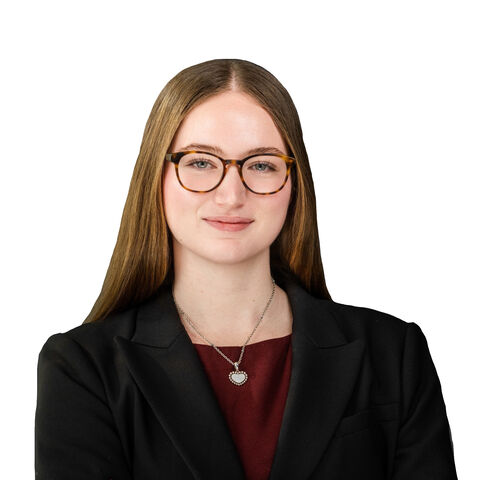

WASHINGTON — Costa Rica's Rebeca Grynspan extended her lead in the race to become the next United Nations secretary-general, receiving 12 encourage votes in Thursday's eighth UN Security Council straw poll, three more than her closest competitor. The margin matches her widest lead in the selection process so far.
According to PassBlue, Grynspan, the former vice president of Costa Rica who heads the UN Conference on Trade and Development, received three discourage votes and no votes expressing no opinion. This is the highest number of encourage votes she has received in a straw poll so far. In the previous round on Oct. 30, Grynspan received 11 encourage votes and four discourage votes.
Grynspan, 70, was born in Costa Rica to parents who emigrated from Poland. Her maternal grandparents were killed during the Holocaust. She earned a bachelor's degree in economics from the University of Costa Rica and a master's degree from the University of Sussex in England.
She served as vice president of Costa Rica from 1994 to 1998 and held several cabinet positions, including minister of housing and minister of economic and social affairs, before moving into the UN.
Argentina's Rafael Grossi received nine encourage votes, four discourage votes and two no opinion votes, while Guyana's Carolyn Rodrigues-Birkett received eight encourage votes, five discourage votes and two no opinion votes.
The Emirati and Turkish candidates remained behind the leading contenders. According to PassBlue, Lana Nusseibeh received seven encourage votes, six discourage votes and two no opinion votes, placing fourth for the second consecutive poll. Turkey's Feridun Sinirlioglu, who entered the race after the previous poll, received three encourage votes, eight discourage votes and four no opinion votes, placing sixth.
Olara Otunnu of Uganda received four encourage votes, nine discourage votes and two no opinion votes. Maria Fernanda Espinosa of Ecuador received three encourage votes, 10 discourage votes and two no opinion votes. Ivonne A-Baki of Ecuador received one encourage vote, 14 discourage votes and zero no opinion votes.
Nusseibeh, the UAE's minister of state, was nominated by Abu Dhabi on Oct. 21. She served as the country's ambassador to the UN from 2013 to 2024, becoming the first woman to hold the post.
Sinirlioglu, a veteran Turkish diplomat, was nominated on Nov. 1. He currently heads the Organization for Security and Co-operation in Europe (OSCE). He previously served as Turkey's foreign minister in 2015 and as its representative to the UN from 2016 to 2023. The two are the only candidates from the Middle East in a race that has so far been dominated by candidates from Latin America and the Caribbean.
The next secretary-general is expected to come from Latin America or the Caribbean, in keeping with an informal practice of regional rotation. The race has also renewed pressure for the UN to select a woman for the position for the first time.
As Al-Monitor’s Ezgi Akin reported, Sinirlioglu may have backing from some of the council's elected members, including Pakistan and Somalia, which have close military and diplomatic ties with Ankara.
Nusseibeh's candidacy, meanwhile, has drawn scrutiny over the UAE's role in Sudan's ongoing war. United Nations investigations and reports have documented credible evidence linking individuals and entities based in the UAE to support for Sudan's paramilitary Rapid Support Forces (RSF). Abu Dhabi has repeatedly denied providing support to the group.
On Thursday, The New York Times reported that a confidential report submitted to the Security Council found that an Emirati security firm with government ties facilitated the deployment of Colombian fighters to Sudan, moving them through areas controlled by UAE-backed forces in Libya and Somalia. In 2025, the Sudanese government lodged a formal complaint alleging that the UAE recruited, financed and deployed hundreds of Colombian mercenaries to support the RSF.
In a statement to Politico last week, Nusseibeh said that "the atrocities committed by the RSF must be subject to accountability" and that she would support the work of UN fact-finding mechanisms. She added that the conflict in Sudan would be a priority if she were appointed secretary-general.
The secretary-general is appointed by the General Assembly on the recommendation of the Security Council, which holds informal straw polls to gauge support for candidates. Council members indicate whether they encourage or discourage a candidate or have no opinion. The anonymous results are not officially released, though they regularly leak to the press. Color-coded ballots in some rounds distinguish votes from the five permanent members (P5) — the United States, China, Russia, Britain and France — which hold veto power, from those of the 10 elected members.
A candidate needs at least nine votes and no veto from any P5 member to secure the council's recommendation, which is then submitted to the General Assembly for approval.
Antonio Guterres' second five-year term as UN secretary-general ends on Dec. 31, with his successor scheduled to take office on Jan. 1, 2027.
This one's on us.
The story doesn't end here.
Our correspondents are already on the next chapter. Read everything they file, from $2/week.