PUK leader Talabani withdraws from regional government, deals blow to Kurds globally
The rupture could unravel the semi-autonomous region, which Iraq’s 2005 constitution recognized as a federal entity with strong US backing.
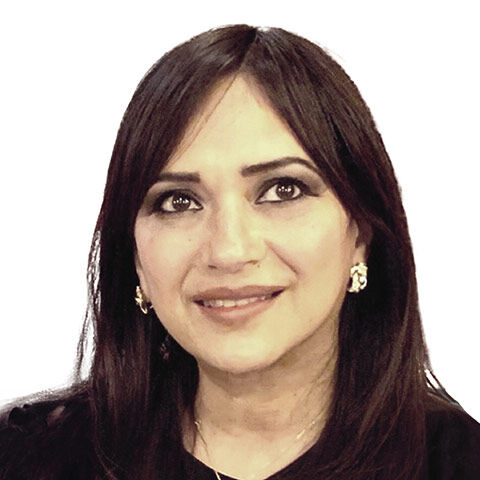

Bafel Talabani, president of the Patriotic Union of Kurdistan, the junior partner in the Kurdistan Regional Government of Iraq, announced on Thursday that it was pulling out of the coalition with the Kurdistan Democratic Party. The move unleashed a political earthquake that could break up the Kurdish entity, which was formally granted federal status under Iraq's 2005 constitution, with the firm backing of the United States.
Emerging from a two hour-long meeting with his top leadership, Talabani said they had decided to “withdraw from this failed government.”
There was no immediate reaction from the KDP.
Standoff
The move follows a protracted standoff between the PUK and its senior partner and historic rival, the KDP, over power-sharing in a new cabinet that has yet to be formed more than two years after parliamentary elections were held in October 2024.
The immediate trigger for the crisis was the KDP’s decision to reconvene the Kurdistan parliament on Nov. 4 for the first time since the elections and to elect its own candidate as speaker, despite the PUK’s decision to boycott the session. Three PUK defectors, however, took part, enabling a quorum. Vala Farid was elected as the parliament’s first female speaker.
“A minority within the KDP does not understand democracy,” Talabani said. “We will not recognize any parliamentary session or anything that emerges from this. You are forcing us to have our own administration.”
Normally, once the speaker is elected, the parliament elects the new president and a prime minister is nominated to form the new government. Today’s announcement leaves Iraqi Kurdistan in a full-blown governance crisis.
Should it remain unresolved, “I think we will essentially see Sulaymaniyah and Erbil operate as two largely separate governments,” Victoria Taylor, a former US deputy assistant secretary for Iraq and director of the Atlantic Council’s Iraq Initiative, told Al-Monitor. Talabani said as much on Thursday. “If they appoint a president of the Kurdistan Region, we will appoint our own president. If they appoint their own prime minister, we will appoint our own prime minister here,” he thundered.
Still, he did not go as far as to unequivocally assert that the PUK was going to set up its own administration, leaving the door open for compromise. The question of whether the KDP will cede to the PUK's demands remains wide open. One of the catches is that the KRG never adopted a constitution of its own; therefore, there are no guidelines as to how to unravel the mess.
'Final divorce'
As for a final divorce, Article 119 of the Iraqi Constitution says the separation of a governorate may be formalized through a referendum. This can be triggered in two ways: either through a request signed by one-third of the members of the Sulaymaniyah Provincial Council or through a petition signed by one-tenth of registered voters in Sulaymaniyah province. Neither option should be hard to engineer. However, the actual outcome of the referendum would be far harder to legislate, with many Kurds deeply alienated by chronic corruption and endless feuds between the PUK and the KDP.
There is another catch, according to Ramzy Mardini, founder of Geopol Labs, a risk and strategic advisory firm based in the Middle East. Article 117 of the Iraqi Constitution established Iraqi Kurdistan as a federal region, of which Sulaymaniyah is an integral part. “Can a governorate already incorporated into a constitutionally recognized region unilaterally invoke the region-formation procedure to leave it?” Mardini asked. The Constitution doesn’t answer that question, and it would likely require a judicial interpretation. “This isn’t a case of a governorate forming a region, but a breakaway governorate of an established federal region forming its own region,” Mardini told Al-Monitor.
Either way, any attempt to splinter the Kurdistan Region of Iraq, whose establishment marks the closest the Kurds have ever come to statehood, would be a huge blow to their brethren throughout the region, already reeling from the collapse of the Syrian Kurds’ own semi-statelet earlier this year.
Washington’s disengagement
Taylor noted that the Trump administration’s hands-off approach was also a factor in the current impasse. “The breakdown in government formation is also a result of a less engaged US government, which has often played a key role in brokering compromises between the two parties,” Taylor said. “The breakdown in Kurdistan undermines a bloc which has served as a critical advocate not only for its own interests but for US interests in Baghdad,” Taylor noted.
Nechirvan Barzani, the Kurdistan Region’s president, is married to Massoud’s daughter Nabila Barzani and is the son of Massoud’s late brother, Idris. Lauded for his diplomatic skills both at home and abroad, he has sought to mediate between the sides but to little avail.
Early signs of PUK fury emerged amid news that dozens of employees from the KAR Group, an energy conglomerate owned by a Kurdish magnate with close ties to the KDP, were expelled from their offices in Chamchamal, where the group was working on the extension of a natural gas pipeline from Khor Mor, the region’s largest gas field, located inside PUK-controlled territory, to Erbil. No reason was offered.
Negotiations over a new cabinet remained largely stalled over which party should control the interior portfolio, which is currently held by a KDP man, Rebar Ahmed, who is one of KRG Prime Minister Masrour Barzani’s closest allies. The PUK insists that it should go to one of its own, since the KDP has traditionally been allowed to hold the presidency and the premiership. The interior minister holds significant power, appointing governors, mayors and police chiefs.
However, Barzani and his father, Massoud, who is the president of the KDP and the most senior figure in Kurdish politics in Iraq, have refused to budge on the issue. Their stance is rooted in large part in the KDP’s strong performance in the Nov. 2025 national elections in Iraq. The KDP came in second with 1,101,357 votes, behind the Reconstruction and Development Coalition of former Iraqi Prime Minister Mohammed Shia al-Sudani. That was almost double the 548,866 votes scored by the PUK. The Barzanis feel this gives them an even bigger say in the governance of the region.
Hence, they were infuriated when the PUK stole a march on them by getting a PUK man, Nizar Amedi, elected Iraq’s president in April this year without consulting the KDP first. Barzani wanted his close confidante, Iraqi Foreign Minister Fuad Hossein, to get the job, which has traditionally been occupied by the PUK. The KDP said it did not recognize Amedi.
The rivalry between the Barzanis and the Talabanis is one of the oldest political feuds in the region’s history — one that boils down to who is the real boss of the Kurds rather than any competing vision for their people. The two sides went to war in 1994, and Barzani senior invited Saddam Hussain’s forces to drive the PUK out of Erbil, which they duly did. Intense rounds of US-led diplomacy produced a ceasefire and two separate administrations in Erbil and Sulaymaniyah that held through Saddam’s 2003 ouster and beyond till 2006, when they started ruling jointly.
The PUK’s refusal to back a 2017 referendum on Kurdish independence spearheaded by Massoud made matters worse. This placed the PUK squarely on the side of Baghdad, the United States, Iran and Turkey, all of whom opposed the referendum. Iraqi forces seized the moment to wrest back control of swathes of disputed territories from the Kurds, including the oil-rich province of Kirkuk, with the PUK’s complicity, the KDP claimed.
Shrewd operator
Bafel Talabani was initially dismissed as a thuggish rookie when he assumed the full leadership of the PUK in 2022 from his father, the wily and charismatic Jalal, who died in 2017 while still serving as post-Saddam Iraq’s first Kurdish president. He did so after a brief power sharing stint with his cousin Lahur whom he later jailed on charges of seeking to assassinate him. Lahur, a top intelligence figure who worked closely with the United States, was sentenced last month by a local court to five years and three months for criminal conspiracy.
Talabani has since proved to be a shrewd operator, navigating ties with Tehran and Washington, building alliances in Baghdad and ending a prolonged rift with the KDP’s close ally, Turkey.
There is little question that Turkey and Iran, home to large, restive Kurdish minorities, will not be too displeased by a weakening of the Kurdish statelet, which would give them further opportunities to leverage PUK and KDP divisions to their own benefit. Baghdad has been quietly rolling back the Kurdish region’s constitutionally enshrined rights, including those over oil and gas production revenues and the KRG’s share of the national budget.
“The divisions within Kurdistan will provide even greater opportunities for the federal government and political parties in Baghdad to take steps that centralize power,” Taylor said.
This one's on us.
The story doesn't end here.
Our correspondents are already on the next chapter. Read everything they file, from $2/week.