
Newsletter: Security A new Middle East security order? The timing of the new Saudi-Pakistan-Turkey defense agreement suggests the US' traditional allies in the region are charting their own strategic path after the Iran war. By Jared Szuba In Washington, DC, reporting on defense, national security, military
Iran’s Hormuz authority denies Trump claims of control over strait: What to know Trump administration officials have said oil shipments through the Strait of Hormuz are rising, but maritime traffic remains diminished. Iran
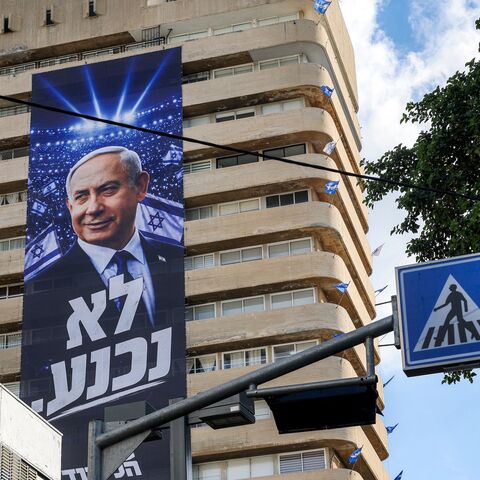
Analysis Netanyahu rejects Trump’s Gaza plan while quietly implementing it Even as Israeli Prime Minister Benjamin Netanyahu says that he rejects US President Donald Trump’s Gaza reconstruction plan, Israel is advancing its implementation. By Ben Caspit In Tel Aviv, reporting on national security, Israeli politics, defense
Newsletter: Daily Briefing Syrian court sentences Bashar al-Assad to death Turkey’s Fidan to visit Libya; Iran’s Khamenei appoints six military commanders; and more. By Ezgi Akin In Ankara, reporting on diplomacy, EU-Turkey ties, NATO
Analysis As pro-Palestinian candidates gain ground, will AIPAC's influence wane? By Adam Lucente In New York City, reporting on regional news, militancy, climate change

Analysis As US rethinks regional presence, Israel shifts focus to destabilizing Iran By Ben Caspit In Tel Aviv, reporting on national security, Israeli politics, defense
Newsletter: Daily Briefing Turkey, Saudi Arabia, Pakistan sign defense pact By Ezgi Akin In Ankara, reporting on diplomacy, EU-Turkey ties, NATO
Newsletter: Daily Briefing Israel strikes south Lebanon after 2 soldiers killed By Ezgi Akin In Ankara, reporting on diplomacy, EU-Turkey ties, NATO
Outgoing Iraqi government's policies cause billions of dollars in economic losses Abdul Mahdi's resigned government causes billions of dollars in losses to the economy. Iraq
US expresses hope troops will stay in Iraq after parliament vote Iraq's parliament votes for a nonbinding resolution to expel US troops as the United States pauses operations against the Islamic State. Iraq
Iraqi armed factions vow revenge for Shiite commanders’ killings Iraqi politicians and leaders of Shiite armed groups now incorporated into government forces have vowed to get revenge for the US drone attack that killed IRGC commander Qasem Soleimani and Kataib Hezbollah militia chief Abu Mahdi al-Muhandis. Iraq
White House defiant as Iraq threatens to expel US troops over Soleimani strike Iraq’s potential vote to expel US forces for assassinating Maj, Gen. Qasem Soleimani could spell trouble for the campaign against the Islamic State. Iraq
What Iran lost with Soleimani’s killing The top military commander’s influence went beyond his military prowess, and will be something that no successor can likely replicate. Iraq
US prepares for potential Iranian escalation and Iraq expulsion The Donald Trump administration is bracing for potential Iranian attacks throughout the Middle East after a Pentagon strike killed the paramilitary leader Qasem Soleimani Jan. 3. Iraq
Iraq can’t survive a US-Iran war The Iraqi government is on edge after the United States takes out Islamic Revolutionary Guard Corps' Quds Force commander Qasem Soleimani, calls for restraint. Iraq
Gulf investor asks US court to subpoena Kuwait lobbying records A multinational investor in a Kuwait-linked investment fund has asked a US court to subpoena US banks over allegations of misconduct by the fund. Kuwait
Top commander's assassination leaves Iran with very few options to retaliate Following Qasem Soleimani's assassination in Iraq, there has been heightened concern about an Iranian reaction. But due to Tehran's economic hardship, decreased support from the public in Middle East societies and international isolation, Iran isn't likely to seek revenge militarily against the United States. Iraq
Like a third wheel, US complicates India-Iran relations Indian Foreign Minister Subrahmanyam Jaishankar visited Tehran recently to work through bilateral relations and pursue a port development project. United States
Intel: Why Ankara is maintaining cautious silence on Soleimani killing Officials in Ankara were awake and concerned in the early morning hours of Jan. 3, after a US strike near Baghdad's airport killed top Iranian commander Qasem Soleimani. Yet 18 hours after the strike, Turkish President Recep Tayyip Erdogan is still silent. Turkey
Intel: 2020 Democrats react to Soleimani’s assassination Democrats hoping to oust President Donald Trump from the White House this year wasted no time in condemning the strike that killed Gen. Qassem Soleimani, the leader of the Iranian Islamic Revolutionary Guard Corps' Quds Force. United States