🇨🇳🇾🇪In Yemen, China exploits US security gap while seeking to curb Houthis
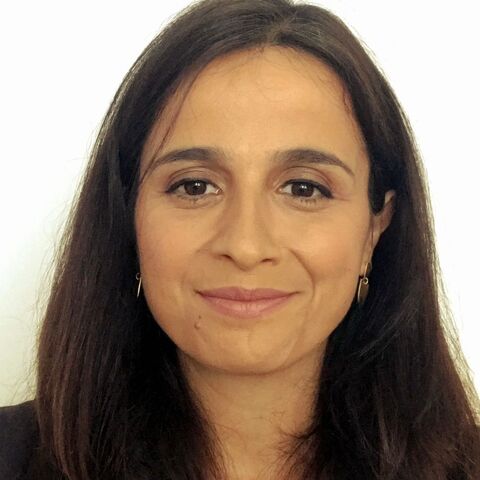
Hi, readers:
Just when it seemed the Middle East had more than enough pressure on its waterways, the Houthis opened another front in Yemen. In a lightning offensive last week, the group routed Saudi-backed forces from Yemen’s Red Sea coastline, seized the strategic port of Mokha and moved on to Perim Island, at the entrance to the Bab al-Mandeb. That puts the Houthis in position to threaten a second vital shipping corridor while Iran, which backs them, remains in control of the Strait of Hormuz.
Unlike the Trump administration's response to the Hormuz crisis, the White House has shied away from military escalation to defend its ally, Saudi Arabia, against the Houthis and instead opted to open a separate diplomatic channel with the group, which President Donald Trump designated a foreign terrorist organization in March 2025.
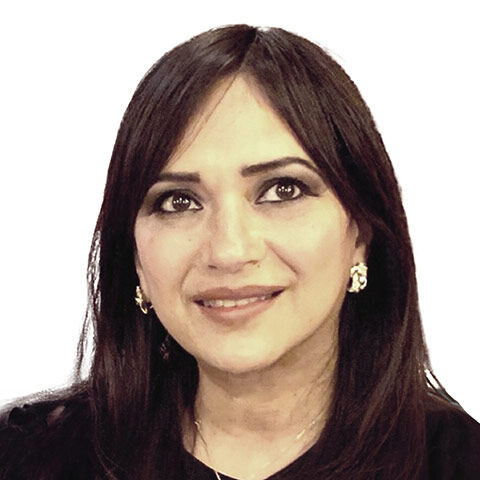
For Beijing, the current crisis is a double-edged sword. According to the Yemeni scholar Fatima Al-Asrar, the conflict could, on the one hand, further unravel an already weakened US security posture in the Gulf, but on the other hand, undermine Saudi Arabia, China's closest Gulf partner.
Let’s unpack.

Leading this week
The Houthi offensive launched Sept. 9 was the group’s largest advance along Yemen’s Red Sea coast since the early stages of the country’s civil war in 2014. It captured Mokha, pushed Saudi-backed forces back from coastal territory and put Houthi fighters on Perim and Hanish Islands, at the Bab al-Mandeb, the narrow waterway connecting the Red Sea and the Gulf of Aden.
With the disruption in the Strait of Hormuz due to the Iran war, Saudi Arabia had come to rely on the Red Sea — via the port of Yanbu — as an alternative export route for oil and other products. The Houthi advance now threatens to close off that option as well.
Expert view: Foreseeable escalation
Fatima Al-Asrar, a scholar and researcher focusing on conflict dynamics in Yemen, told Al-Monitor, “The offensive was very foreseeable,” explaining that the Houthis had been warning of escalation in the preceding weeks. She further noted that skirmishes had already been taking place around Mokha, and Saudi tankers were under active attack in the Red Sea.
“One of the perhaps most underestimated Houthi capacities is the human power,” she said. “There’s just no way that this couldn’t have been foreseeable.”
The speed of the Houthi advance should not obscure the conditions that enabled it. Asrar argues that years of Houthi battlefield experience, local networks, a long coastline vulnerable to rapid movement, and a Saudi-backed force structure already under pressure all helped the Houthis gain an advantage.
Washington’s separate track
Following the Houthi offensive, both President Trump and Vice President JD Vance confirmed within days that talks were underway with the Houthis. In contrast, after a Houthi escalation in March 2025, the United States launched strikes against the group.
Reuters reported on Wednesday that US officials had met with Houthi representatives in Muscat over the weekend for talks organized with Omani assistance; the meeting was not publicized. Sources said the Houthis told US officials that they did not intend to attack American vessels and remained committed to the 2025 ceasefire with the United States.
Asrar assesses that the Trump administration is signaling that it has “its own separate track in negotiations with the Houthis.”
Days before the meeting, Axios, The New York Times and Reuters all reported that Saudi Crown Prince Mohammed bin Salman had asked Trump for military assistance, to which the United States responded that it would not intervene directly for now, but would instead offer intelligence support.
Asrar sees a strategic contradiction. “You cannot decouple Hormuz from Bab al-Mandeb at a time where you’re trying to impose economic D-Day on Tehran,” she said. “It just shows a lack of strategy.”

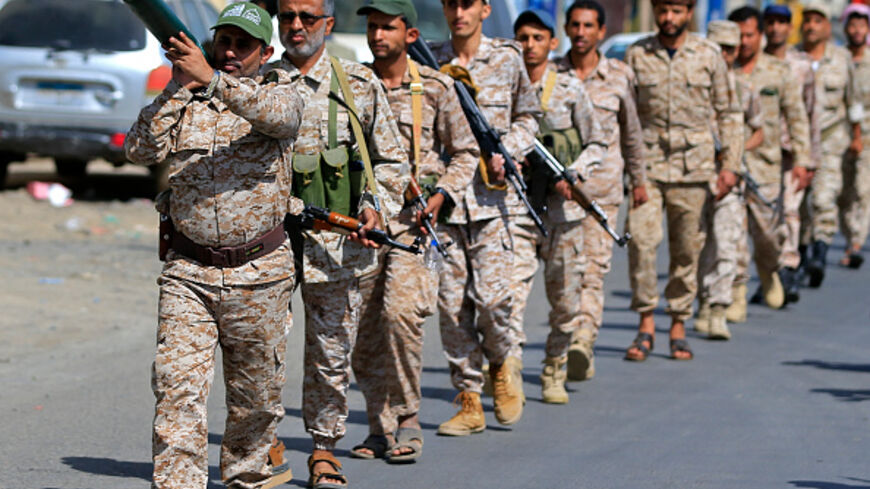
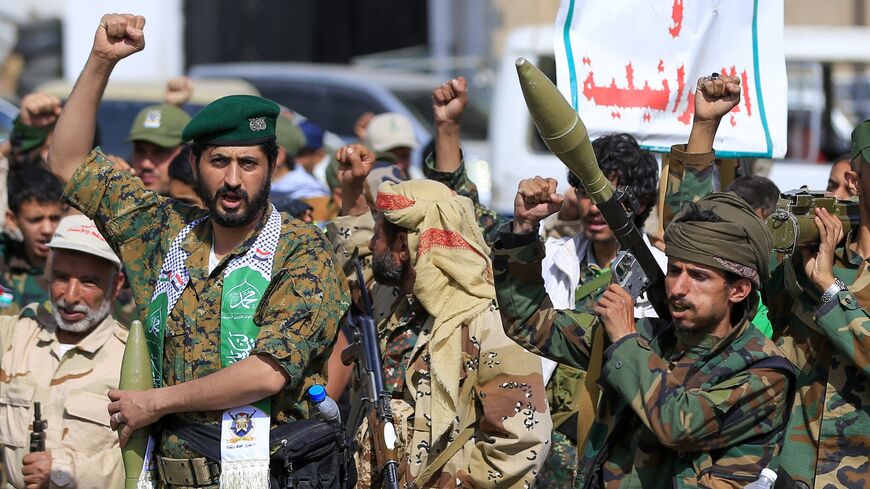
Fighters loyal to the Houthi authorities, march during a rally to recruit more fighters, in Sanaa on September 10, 2026. (Mohammed HUWAIS / AFP via Getty Images)

China can relax . . . short term
For China, the absence of a coherent US strategy on Iran and increasing Saudi-US friction present an opportunity.
“I think China can relax because it has its deal with the Houthis,” Asrar said.
Bloomberg reported in 2024 that the Houthis had told China and Russia, following talks in Oman, that their ships could sail through the Red Sea and the Gulf of Aden without attack.
“This all signals a breakdown in the US security architecture for the Gulf,” said Asrar.
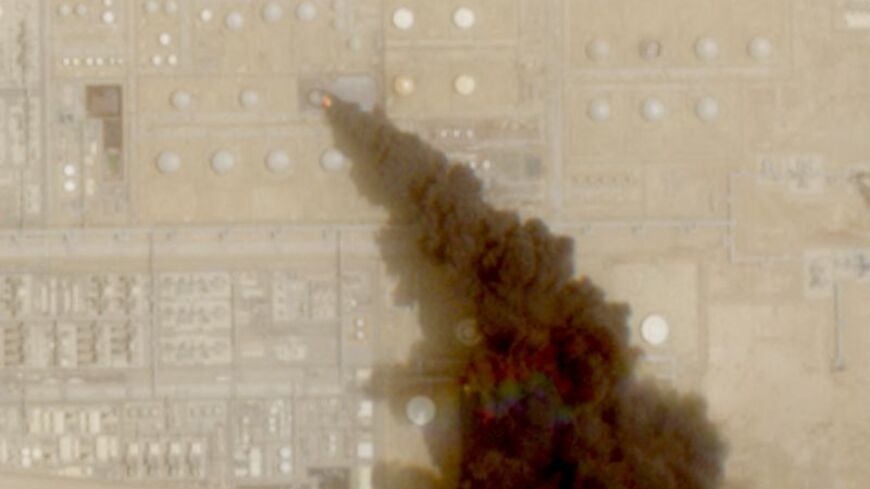
This is not the first time that Trump has appeared to renege on Washington’s security commitments to Saudi Arabia. After the 2019 attack on the Abqaiq and Khurais oil facilities — which temporarily disrupted roughly half of Saudi oil production — Trump declined to order military retaliation against Iran, instead pursuing sanctions and a limited reinforcement of US forces in the kingdom. The episode shook Saudi confidence in the long-standing US security guarantee and ran counter to the logic of the Carter Doctrine, under which an attempt by an outside power to dominate the Gulf is to be treated as an assault on vital American interests and met, if necessary, with military force.
For decades, the US-Saudi relationship has rested, in part, on the expectation that Washington would help deter or respond to threats against the kingdom and the waterways surrounding it. The decision not to intervene directly against the Houthi advance could heighten Saudi concerns about the limits of that commitment.
This is where China sees opportunity. It can move to deepen regional economic and diplomatic ties and argue for collective regional security architecture, thus relieving itself of taking on the full military burden that has long accompanied US influence in the Gulf.
Chinese weaponry is flowing to both sides. China has long supplied ballistic missiles to Saudi Arabia, and debris recovered in Yemen this month appears to be from a Chinese-made DF-15A, possibly fired by Saudi forces at Houthi positions, the Wall Street Journal reported.
Beijing’s role on the Houthi side is less direct, but the group has previously obtained drone components from China through procurement networks, according to the US Treasury Department.
At the same time, Beijing has no interest in a prolonged disruption, in either the Red Sea or Hormuz, that damages global trade or destabilizes Saudi Arabia, a major energy partner. It does, however, benefit when Gulf states question whether Washington can still guarantee maritime security.
Joyce’s take: The Houthi advance creates both opportunity and risk for China. Beijing can leverage its contacts to protect its maritime interests and reinforce an image of diplomatic relevance as US security commitments come under question. China does not, however, want a weakened Saudi Arabia, a regional war or a sustained energy shock that damages its own economy.
The bigger story is not that China is replacing the United States overnight as the Gulf’s security guarantor, military partner, or dominant external power. It is that a more fragmented, post-US security order is already emerging in the Gulf, one in which China can gain influence by selectively engaging actors that Washington cannot, or will not, fully confront.

Photo of the week

In this pool photograph distributed by the Russian state agency Sputnik, India's Prime Minister Narendra Modi (L) stands alongside China's President Xi Jinping (front C) and Russia's President Vladimir Putin (front R) during the 18th BRICS Summit in New Delhi on September 12, 2026. (Photo by Kristina Solovyova / POOL / AFP via Getty Images)

Deals and visits ✈️
- QatarEnergy selects China’s COOEC for package two of $4–5 billion offshore oil field expansion
- Iranian Foreign Minister Abbas Araghchi visits Beijing for talks with Wang Yi on Iran-US negotiations, Hormuz and bilateral ties
- Delegation of 15 senior Chinese women entrepreneurs visits UAE to explore investment and business opportunities
- Iraq’s Diwaniyah signs deal with China CAMC Engineering to develop international airport and free-trade zone
- Jordan signs MoU with China’s Getting International Energy Holdings to study green hydrogen project in Aqaba
- Egypt’s BME signs deal with China’s CATL to establish electric battery manufacturing plant in Egypt
- UAE and China sign MoU establishing China-UAE Business Advisory Committee to boost bilateral investment and corporate ties
- China and Egypt agree to launch third phase of the Egyptian-Chinese industrial zone in the Suez Canal Economic Zone
- Chinese economic delegation from Hainan province visits Oman to discuss investment cooperation in economic and free zones

What we are reading
- China is not ready for a post-American world: The Economist
- Iranian and Saudi panelists spar at Xiangshan Forum over Middle East attacks: SCMP
- Only China, India, and Russia can end the Iran War: Foreign Policy
This one's on us.
The story doesn't end here.
Our correspondents are already on the next chapter. Read everything they file, from $2/week.
See Offers