Turkey rocked by abuse allegations in Imamoglu crackdown
An imprisoned executive’s allegations of abuse shine a spotlight on the widening crackdown against President Recep Tayyip Erdogan’s opponents.
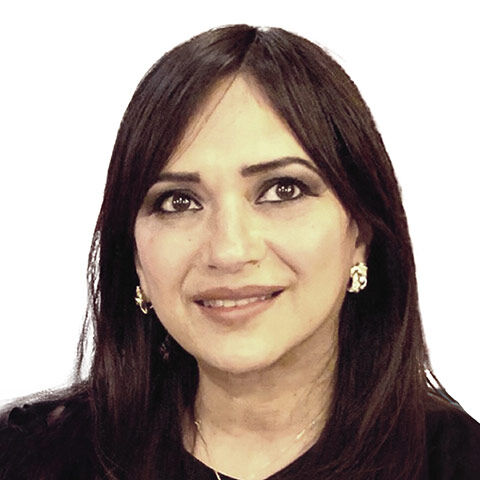
Welcome back to AL-MONITOR Turkey.
The top news story out of Turkey this week is deeply unsettling. Read on for the details, and don’t miss Turkey versus Australia in its first World Cup match, which will take place at 12:00 a.m. EST on Sunday!
Haydi Türkiye!
Amberin
🐕🇹🇷🐾
@amberinzaman on X, @amberinzamanjournalist on Instagram

Leading the week

Supporters of Istanbul Mayor Ekrem Imamoglu protest outside Silivri Marmara Prison and Courthouse Complex during his first hearing over accusations leveled against him on March 9, 2026 in Istanbul, Turkey. (Photo by Burak Kara/Getty Images)
Turkey was shaken by the testimony of an imprisoned woman executive who led the media arm of the opposition-run Istanbul municipality. She is among dozens of associates of jailed Istanbul mayor Ekrem Imamoglu who are being tried on corruption charges in a case that critics say is overtly politicized. Turker, who has been held in Silivri prison for 15 months, said in her first courtroom hearing that during her initial interrogation she was told by the woman police officer to strip, squat and bend to fully expose her genitalia. The Istanbul police directorate denied the charges, but few are convinced. Turker, who has pleaded not guilty to all the charges, said that the prosecutor overseeing her case threatened to hand custody of her children over to social services when she asked to see her lawyer.
Kurdish rights activists rightly recalled that their ethnic kin have been subjected to similar — and worse — humiliations for decades.
Pressure on Imamoglu’s pro-secular main opposition, the Republican People’s Party (CHP), is continuing apace. The party’s perceived allies in the business world are getting caught in the dragnet, as I reported here.
The conventional wisdom is that once the NATO summit that is due to take place on July 7-8 in Ankara is out of the way, it won’t be long before Ozgur Ozel, the CHP leader who was ousted in what critics call a “judicial coup,” will be stripped of his parliamentary immunity and jailed as well. While Turkey’s descent into authoritarianism is widely acknowledged, observers say this is a whole new level — one that is pushing the country toward Russia-style dictatorship.

Other top stories
Unfazed by such critiques, President Recep Tayyip Erdogan’s ruling Justice and Development Party is preparing to hold a referendum on a new constitution, according to its deputy chair, Hayati Yazici. Presumably, it will enable Erdogan to govern for a third term while containing a few reforms aimed at winning Kurdish backing.
Erdogan’s insouciance is to be expected given that he faces zero censure over his government’s actions from Turkey’s western allies. If anything, one could conclude he is being rewarded. This week the Justice Department told a federal court to drop charges against the Turkish state lender, Halkbank. It’s a huge win for Erdogan, as I explained here.
The other big news this week is Armenian Prime Minister Nikol Pashinyan’s victory in the June 7 polls. As I explained here, he didn’t get the requisite supermajority to make constitutional changes that Turkey and Azerbaijan want before normalizing relations with their historic foe.
That said, things are beginning to look up. Turkey announced that it was opening its land border with Armenia for a 10-day period starting on June 12 to let Armenia deliver aid to Lebanon. Many believe that over time the border will be opened completely despite Azerbaijan’s likely objections. Inshallah, I say. For more on the impact of Armenia’s elections, tune in to my podcast with Armenian analyst Tigran Grigoryan here.
Ezgi Akin reported on ongoing tensions between Turkey and Israel. The mutual bashing has become unbearably repetitive. She also explained why Turkey is so cheesed off by France’s military pact with Cyprus amid deepening tensions in the eastern Mediterranean.
Ezgi had an explainer on the significance of Turkey's appointment of a slew of new career ambassadors rather than political appointees, plus another on Venezuelan acting President Delcy Rodriguez’s surprise visit to Ankara this week.
Barin Kayaoglu analyzed how Turkey is using the near closure of the Strait of Hormuz to pitch itself as a Gulf-to-Europe trade hub.
Jack Dutton looked at Turkey’s plans to revive the historic Hejaz railway connecting it with its erstwhile Ottoman colony, Saudi Arabia.
Also, don’t forget to sign up for Nazlan Ertan’s fantastic Istanbul City Pulse newsletter. It’s one of the best things we produce!

Also on our radar
Don’t miss this excellent webinar organized by the Middle East Institute’s Gonul Tol on Turkey, NATO and Russia ahead of the upcoming NATO summit.
She also wrote important pieces, one for the New York Times and another for Foreign Affairs, explaining how Turkey is re-embracing NATO at Russia’s expense.
Elizabeth Tsurkov’s deep dive for Newlines on the true nature of Turkey’s relations with Ahmed al-Sharaa is full of previously undisclosed nuggets of information. Hackneyed as it sounds, this one is a "must read.”
If you are interested in what’s happening with those Syrian Kurdish women fighters who clobbered the Islamic State, tune into this webinar on June 16 that is being organized by the Kurdish Peace Institute in Washington. The featured speaker is Rojhelat Afrin, the commander in chief of the Women’s Protection Units who is now fighting to get Damascus to allow her troops to join Syria’s national army.
This one's on us.
The story doesn't end here.
Our correspondents are already on the next chapter. Read everything they file, from $2/week.
See Offers