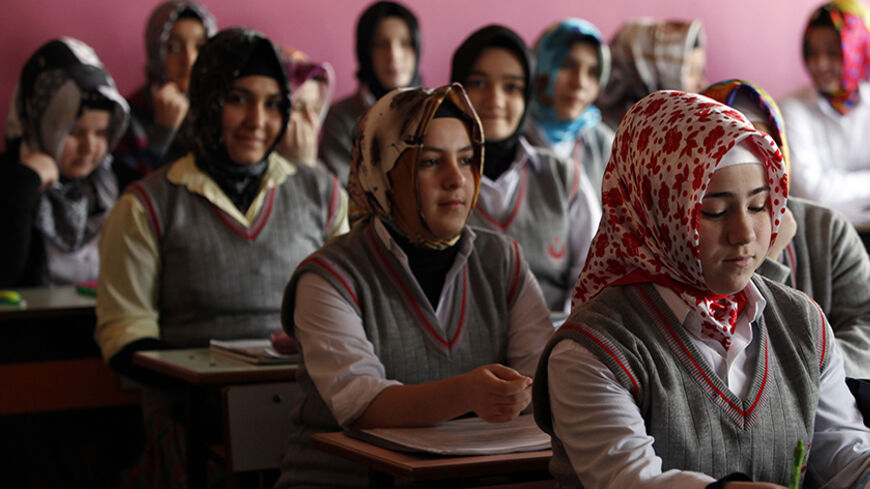
Prime Minister Recep Tayyip Erdogan’s dream to raise a more “pious generation” is one step closer to reality with new education reforms that include optional Koran courses for children as young as 11 years old. The reform bill, which also ups compulsory education from eight to 12 years, was approved earlier this month by President Abdullah Gul, following months of controversy that ended with deputies from the ruling AKP and main opposition CHP parties brawling in public.
Supporters of this religious conservative agenda are pleased with the reform. “As a Muslim, some of the changes made me happy. The Koran and the life of the Prophet Mohammed have now become optional subjects from the age of 11,” said Nuray Canan Bezirgan, a women’s rights activist who was thrown out of university in 1997, when the headscarf ban was implemented. But she complains that the reforms haven’t gone far enough. “There is still no way to pray at school and it is impossible to attend school in a headscarf for girls who choose to do it.”
Nuray is an example of Turkey’s growing middle class, who Prime Minister Erdogan represents. She moved to Canada as a political refugee after losing her right to a university education in her homeland and brutal treatment by the police because of the headscarf ban. Nuray was educated abroad but moved back to Turkey to raise her two children in a Muslim country. Having lived in an open democratic society, she was surprised when she returned in 2007 by the continuing restrictions on religious freedoms in the education system. “My eight-year-old daughter was allowed to wear a headscarf in Kindergarten in Canada, but here in a Muslim country she faces restrictions.”
It is this type of thinking that worries the non-practising, pro-secular factions of Turkish society, who believe that with this reform their children will come under pressure to study more Islam.
An agnostic couple, in the creative industries and the media, who did not want to be named, say this is a top-down reform. With a one-year-old son to plan for, the father said, “Education is a way for people in power to mould the new generation and their dream of a future society. This dictatorial decision will affect millions of parents, but no one was consulted for their opinion.” He added, “Religious education has no place at a civil school. It will lead to discrimination. We will never sacrifice our son to their ends.”
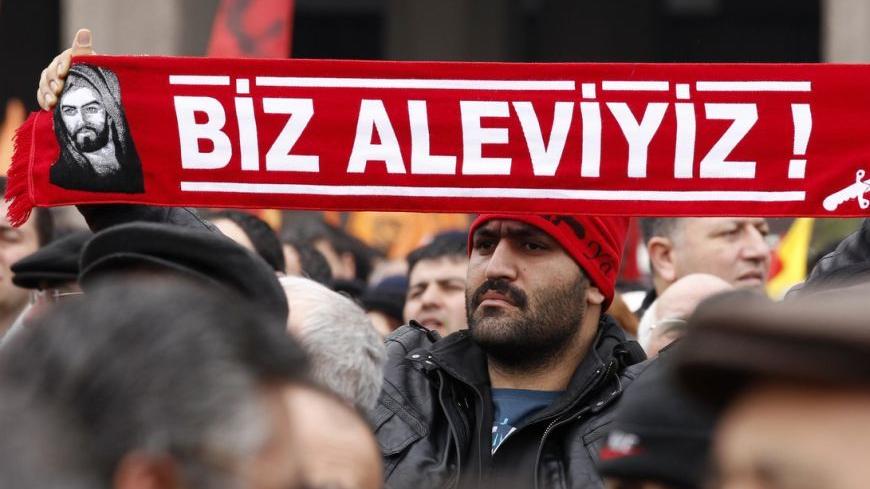
Religious education has been part of national curriculum since the 1980s and in recent years has undergone a process of reform to achieve an equidistant approach to religion, largely after criticism by the 20-million strong Alevi community complained that classes are already biased towards Sunni Islam. This new step may undo all of this work.
AL-MONITOR All-Access gives you unlimited access to all our journalism, the full Daily Briefing, exclusive interviews, premium newsletters, and live events — for less than $2/week.