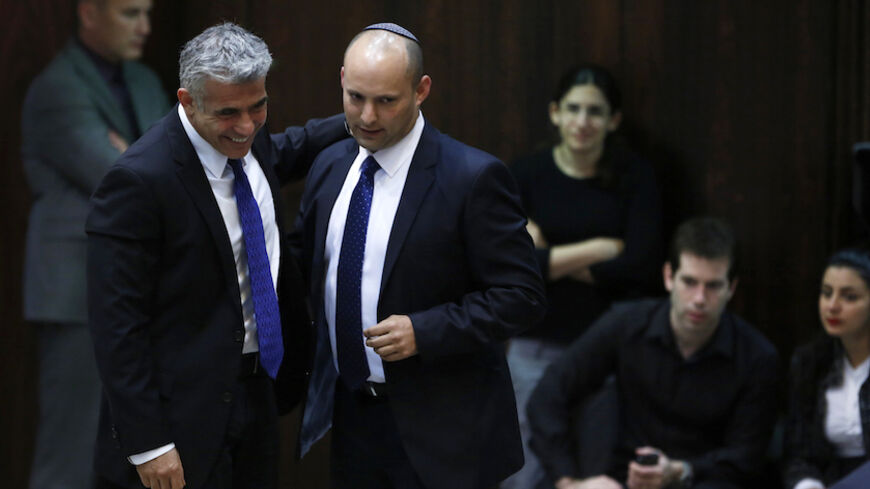
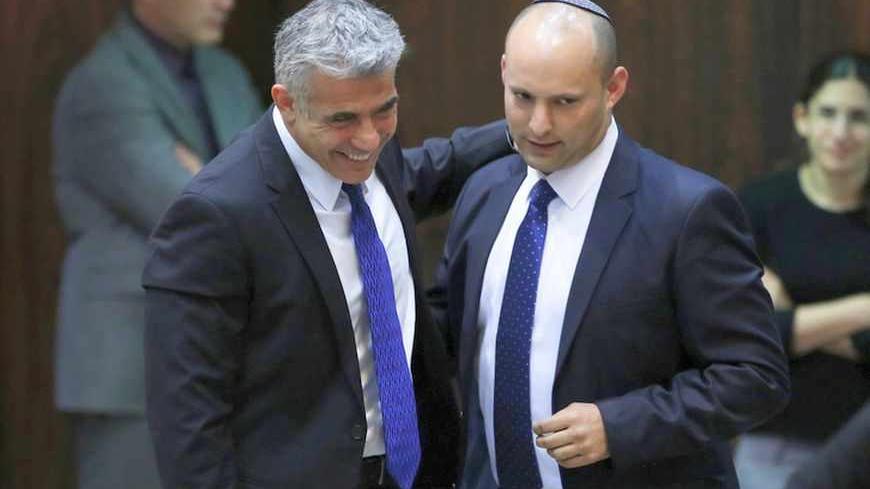
“Minister of Facebook Affairs” was the favorite nickname used by ministers in the previous government when they wanted to mock Finance Minister Yair Lapid, after he left his job as host of the prime-time news magazine show ''Friday Night Studio'' on Israeli TV Channel 2 and took the plunge into politics. At the time, it wasn’t at all certain that the next round of elections would be moved up. Experienced politicians and political pundits contended that if elections were held on schedule in 2013 — as actually happened — support for Lapid would gradually wear down, until it finally disappeared entirely.
Yes, there was a lot of interest in Lapid, because he was such a familiar face in just about every home across Israel. The TV show he hosted on the prime TV station had a huge audience, and he also wrote a popular column for a major newspaper. But even with the curiosity his candidacy evoked, there was also considerable doubt about his ability to survive in politics without any prior experience.
But the new candidate knew exactly what he was doing and where he was heading. He founded his party, Yesh Atid, three months later, and recruited thousands of volunteers through Facebook. Lapid himself spent considerable time every day updating his Facebook page, communicating directly with the people who surfed there. That made him one of the first people in Israel to recognize the vast potential of the Internet in building a political force. At that time, most Knesset members and ministers didn’t understand what Lapid found in Facebook and assumed that it was just some puerile and insignificant virtual space. But Lapid managed to educate them. While some of those politicians did have Facebook pages that their spokespeople started on their behalf, they themselves had no idea how and why they should be used. As a result, they made only minimal use of Facebook, and when they did, the result was rather bland.
By the time it clicked for all the veteran politicians, Lapid was already galloping full speed ahead. He also managed to evoke considerable interest among the masses that took to the streets in the social protests during the summer of 2011. They came to regard him as a promising new kind of leader who spoke their language. That made it easy for them to hang their hopes on him, expecting him to bring about the change that lay behind the protests in the first place. He spoke to them through meetings on Facebook every day, deciphering the most painful issues that preoccupied the young middle class: equality among all Israeli citizens in sharing the burden, housing prices and the cost of living.
AL-MONITOR All-Access gives you unlimited access to all our journalism, the full Daily Briefing, exclusive interviews, premium newsletters, and live events — for less than $2/week.