Iran’s oil minister has big plans for likely last term
Having begun yet another — and likely his last — term as Iran’s minister of petroleum, Bijan Namdar Zanganeh faces surmountable challenges in pushing the country’s energy sector into the 21st century.
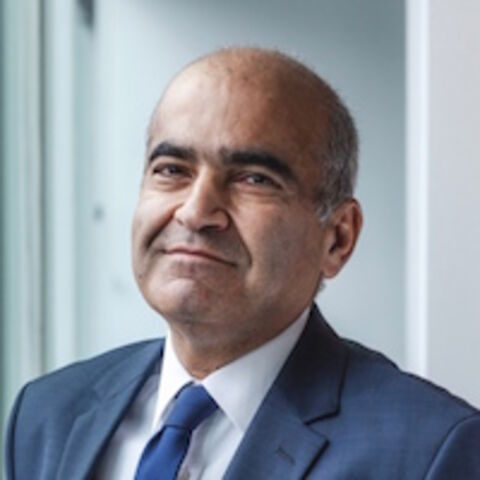

Bijan Namdar Zanganeh, the most experienced minister in the Islamic Republic of Iran, has yet again been entrusted with one of the most challenging portfolios in the Hassan Rouhani administration: the Ministry of Petroleum (MoP). Experts agree that in the past four years, Zanganeh and his team have managed to rehabilitate the petroleum sector after the damaging years under former President Mahmoud Ahmadinejad’s (2005-2013) trial and error mentality and external sanctions. Now, Zanganeh and the MoP have new ambitions in the next four years, which will most probably be his final term as petroleum minister.
In his presentation to parliament prior to his latest vote of confidence in early August, Zanganeh outlined the following plans for the non-gas subsectors in the next four years:
- Development of shared oil fields.
- Signing of new contracts with the goal of developing shared fields and increasing the rate of recovery from the country’s oil basins using the latest technologies and foreign investment in order to generate employment.
- Increasing the production capacity of oil with the goal of surging or at least maintaining Iran’s share of the global trade and improving Iran’s position in OPEC with the goal of empowering Iran economically, politically and securitywise.
- Renovating the old and degenerated segments of the oil industry.
- Constructing an oil terminal in the Sea of Oman.
- Completing the value chain in the petrochemical sector.
- Shifting away from exporting crude oil and emphasizing the export of petroleum products.
- Technological promotion in the oil sector and completion of the projects for local manufacturing of equipment.
This is an ambitious list for a four-year term, but the Iranian government will certainly manage to pursue and materialize some of these goals. Some of the objectives are driven by political stakeholders (such as the focus on shared fields), some by security considerations (such as the oil terminal in the Sea of Oman) and others by technocrats (such as the introduction of the latest technologies). At the same time, the core challenge in achieving all of the listed targets will be to attract the needed foreign investment and technology. There is no doubt that the signing of the deal with the French Total-led consortium has generated a momentum in the interest of international oil companies (IOCs) to engage the Iranian market.
Notwithstanding, the current political atmosphere and rising tensions between Tehran and Washington may compel a number of IOCs to delay their investment plans for Iran. Indeed, the petroleum sector will require more than $200 billion in investments in the next five years to achieve the mentioned goals. This, in turn, will necessitate massive foreign investment as well as the transfer of technology. What will help Iran in this process is the fact that it is one of few low-cost oil-producing countries that is offering its projects to IOCs. Low costs, as well as negligible geological risk, are benefits that could overcome the current political risks, but the government has to make sure that all other challenges faced by IOCs in Iran (such as corruption, legal uncertainties, etc.) are reduced to a minimum. Furthermore, one main bottleneck for IOCs has been the financing of projects due to the reluctance of first-tier international banks to engage the Iranian market. This means that the MoP and other Iranian authorities will have to offer suitable solutions to facilitate the financing and banking transactions related to major investments.


