Iraq taps Krikor Der-Hagopian as first Armenian Christian ambassador to US
Baghdad’s pick of a US-educated Armenian Christian adviser as envoy to Washington underscores a bid to reset US-Iraq ties and broaden the country’s diplomatic profile.
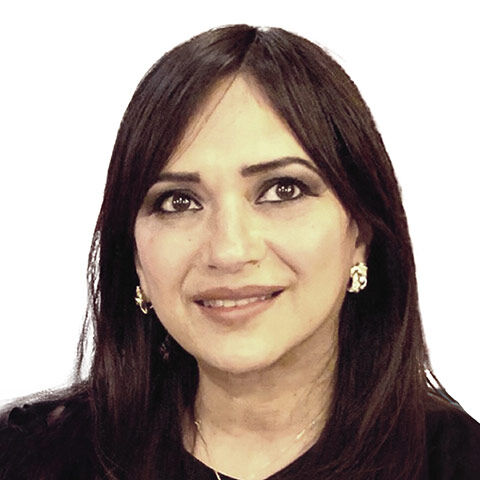

Iraq has nominated Krikor Der-Hagopian, an Armenian Christian adviser to Prime Minister Ali al-Zaidi, as ambassador to Washington. Regional diplomats confirmed the nomination to Al-Monitor, describing it as part of a broader effort by Baghdad to recalibrate relations with the United States.
Der-Hagopian, a US-educated Iraqi official who has served in numerous roles, including as an adviser to former President Barham Saleh and to the last prime minister, Mohamed Shia al-Sudani, is awaiting formal consent from the Trump administration before taking up his post. If confirmed, the Armenian Christian would become Iraq’s first non-Shiite ambassador to Washington in decades.
Hopes are that he will get the green light in time for Zaidi’s meeting with President Donald Trump in Washington that is due to take place in the third week of July.
The 49-year-old father of three, who earned a master's in international relations at the University of Denver’s Josef Korbel School of International Studies, is widely seen as a shoo-in. Well-placed sources familiar with Der-Hagopian say he has an established track record of maintaining smooth relations with successive US administrations.
“I view his appointment as an extremely positive signal that the prime minister has decided to send probably the most qualified member of his own team, the person with the most insights on how Washington works,” Victoria Taylor, a former deputy assistant secretary of state for Iraq and Iran, who left the post in May 2025 to join the Atlantic Council, told Al-Monitor.
“He has been excellent in bilateral relations and worked with international companies,” one of the sources said. This aligns with efforts to refocus the United States’ fraught relationship with Iraq away from a purely security focus toward what is being billed as a “business first” agenda.
“I am not surprised to hear that Krikor is being considered for such a prestigious position,” recalls Denver-based political scientist Simon Maghakyan, a postdoctoral fellow at the University of Oxford, who got to know Der-Hagopian during the latter’s graduate studies in Denver. “I remember him as a bright, sincere, and strategic thinker and bridge-builder,” Maghakyan told Al-Monitor.
Der-Hagopian will be replacing Iraq’s former deputy foreign minister, Nizar al-Khairallah, who is the current Iraqi ambassador in Washington. In a related development, a seasoned State Department Middle East hand, Peter Shea, is expected to replace another State Department professional, Joshua Harris, as interim head of mission in Baghdad until — and if — a permanent ambassador is named.
Promoting Iraqi-US commercial ties has been a big priority of President Trump’s newly anointed Iraq envoy, Tom Barrack, who was in Baghdad last week on his first official visit since assuming the title. In his meeting with the Iraqi premier, energy projects were a top agenda item, sources familiar with the talks said. These projects include multi-billion dollar negotiations with US major Chevron to develop oil in fields in southern Iraq, the licensing of Elon Musk’s Starlink for high-speed internet connectivity, the floating liquefied natural gas terminals with another US company, Texas-based Excelerate Energy, and the rehabilitation of an oil pipeline connecting oil fields in Kirkuk with export terminals in Syria’s Baniyas, a readout of the meeting posted by the US embassy in Iraq stated.
The readout said Zaidi and Barrack had “discussed the shared aspirational vision for the Iraqi government…to implement Iraqi plans for the complete disarmament and disbandment of all armed groups and formations operating outside the authority and control of the Iraqi state.” This was an overt reference to Iran-backed Shiite militias that wield outsize power in Iraq. Successive US administrations have pressed Baghdad to disarm and dismantle the militias and to cut off their revenue streams, so far to little effect.
Iran is widely seen as having emerged emboldened from its war with Israel and the United States. If anything, experts say it will likely double down on its alliance with Shiite militias in Iraq that targeted US bases and US-operated oil fields in Iraq throughout the four-month-old conflict.
The Iraqi government has set a September deadline for the militias originally formed to fight ISIS to disarm.
Barrack’s support to Der-Hagopian is expected to prove key during his tenure in Washington “where Iraq’s importance has really declined on the agenda,” Taylor noted. “Therefore the positive for Iraq is to have someone paying attention to the file who is so close to the president,” Taylor observed. Barrack is a longtime friend of Trump.
Barrack, who is triple hatted as the Syria envoy and ambassador to Turkey, has good relations with Der-Hagopian, a regional official speaking on background told Al-Monitor.
Still, Der-Hagopian will have his work cut out for him. The narrative that Iran fully controls Iraq persists in Congress. Massive corruption that continues to blight Iraq has not helped its image among US lawmakers either. “Der-Hagopian is an excellent salesman but he is stuck with a damaged product,” an Iraq-based source who knows the new envoy personally told Al-Monitor.
Iraqi-US ties have been largely anchored in security since the United States overthrew Saddam Hussein and occupied Iraq in 2003. However, those ties have unraveled amid persistent calls by successive Iraqi leaders with much alleged prodding from Tehran for US troops to leave the country. The bulk had pulled out by the start of 2026 with several hundred redeploying to bases in the Kurdistan Region of Iraq where they have faced drone attacks by Shiite militias even before the start of the Iran war in February 2026.
The Pentagon’s funding for Iraqi forces has also dipped as it pivots away from its mentorship role as the leader of the global coalition to fight the Islamic State known as Operation Inherent Resolve towards a bilateral format with the Iraqi military. The nature and degree of the US military’s involvement in the bilateral security relationship after the coalition folds up its flag remains to be discussed by the two sides, as does the future presence of US troops in the country, a well-placed source briefed on the status of the diplomatic track told Al-Monitor.
“The nature of the US Iraq security partnership is going to be changing with the end of Operation Inherent Resolve and I think the new Iraqi ambassador can play a really pivotal role in helping to define what the future of that partnership will look like,” Taylor concluded.
Al-Monitor’s Defense and Security Correspondent Jared Szuba contributed to this report.
This one's on us.
The story doesn't end here.
Our correspondents are already on the next chapter. Read everything they file, from $2/week.
See Offers