Iran's Supreme Leader Ali Khamenei, architect of regional expansion, declared dead
Ayatollah Ali Khamenei was killed during US and Israeli strikes after serving for 36 years as the Islamic Republic’s second supreme leader.

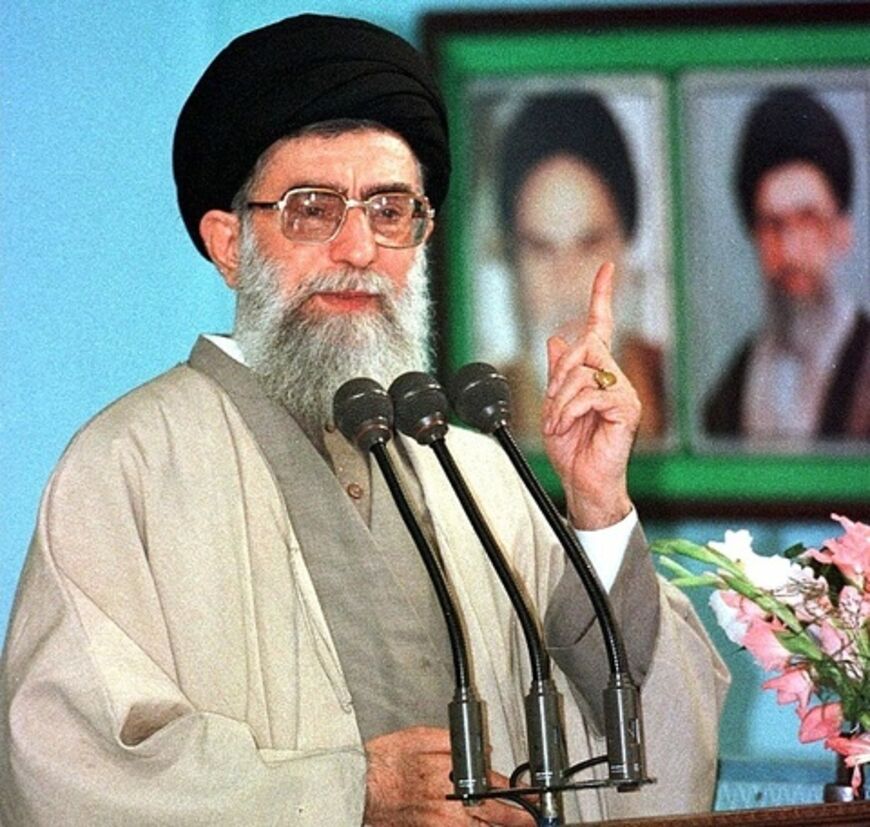
Iranian Supreme Leader Ayatollah Ali Khamenei, 86, whose rule reshaped the Islamic Republic through decades of confrontation with the West and a consolidation of clerical power, was killed Saturday after the US and Israel launched strikes on the country, US President Donald Trump said.
“Khamenei, one of the most evil people in History, is dead,” Trump wrote on Truth Social. “This is not only Justice for the people of Iran, but for all Great Americans, and those people from many Countries throughout the World, that have been killed or mutilated by Khamenei and his gang of bloodthirsty THUGS," he said.
An unlikely leader
Khamenei ascended to Iran’s highest post in 1989 after the death of the Islamic Republic’s founding leader, Ayatollah Ruhollah Khomeini. A mid-ranking cleric at the time, Khamenei was an unlikely candidate who secured the position largely through political maneuvering rather than religious seniority.
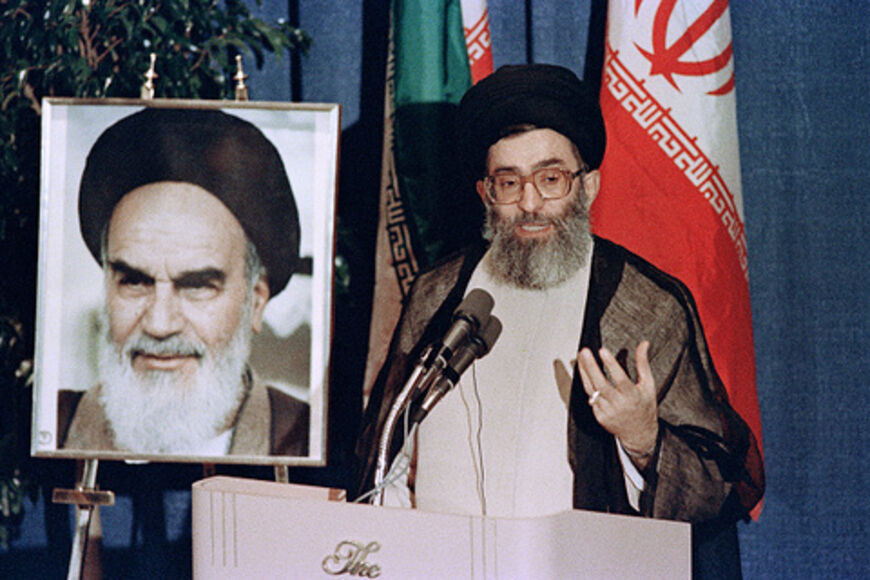
Born in 1939 in the northeastern city of Mashhad to a modest clerical family of Azerbaijani origin, Khamenei had studied Shiite theology but had not attained the senior clerical rank expected of a supreme leader. His elevation was made possible through political maneuvering within Iran’s elite, including the support of powerful figures in the clerical establishment and a constitutional change that lowered the religious qualifications required for the post.
Khamenei rose through the ranks after the 1979 revolution as a loyal enforcer of the new system. He served briefly as deputy defense minister in 1979, then as president from 1981 to 1989 during the Iran-Iraq War, forging close ties with the security services and institutions that would later form the backbone of his rule. Khamenei was the first cleric to serve as president. Over time, he built a network of allies within the clerical class, the judiciary and the powerful Islamic Revolutionary Guard Corps (IRGC), allowing him to consolidate authority well beyond what the position initially carried.
Domestic legacy
During his more than three decades in power, Khamenei oversaw the transformation of Iran into a highly centralized theocracy. While the Islamic Republic continued to hold regular elections, they were tightly controlled and not free; candidates were vetted by the Guardian Council, a clerical body loyal to Khamenei, which has disqualified hundreds of moderates and Reformists over the years.
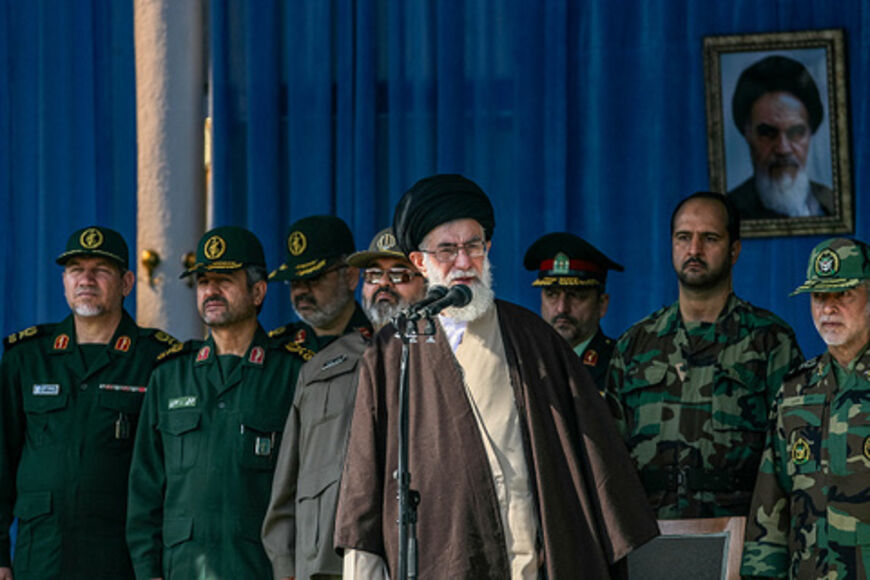
Under Khamenei, power became increasingly concentrated in unelected institutions loyal to the supreme leader, particularly the IRGC. The IRGC, originally created to defend the Islamic Republic after the 1979 revolution, has evolved into a dominant military, intelligence and economic force. It plays a central role in enforcing internal security, suppressing protests and shaping foreign policy through its external arm, the Quds Force. Domestically, the IRGC and its affiliated Basij paramilitary force have been repeatedly deployed to quell unrest, often using mass arrests, intimidation and lethal force, while civil society, independent media, labor unions and political activism have come under sustained pressure. An Amnesty International report published in late January found that Basij battalions were involved in the regime’s deadly crackdown on the wave of protests in Iran in December and January.
The IRGC has entrenched itself as a dominant economic force in Iran, using its political influence and opaque networks to secure lucrative contracts and take control of key sectors. As of December 2024, the IRGC controlled about 50% of Iran's oil exports, according to a Reuters report at the time
Khamenei’s tenure has coincided with prolonged economic decline. International sanctions, mismanagement and corruption have battered Iran’s economy, making inflation, unemployment and currency devaluation persistent features of daily life. By late 2025, inflation had surged above 40%, and the rial had fallen to a record low of around 1.4 million to the US dollar, eroding savings and purchasing power. On Feb. 19, after nationwide protests rocked the country, the rial traded at more than 1.63 million to the dollar.
Anti-regime protests over economic hardship and social repression have been met with repeated crackdowns. Security forces violently suppressed student demonstrations in 1999, crushed the Green Movement following disputed elections in 2009 and responded harshly to the women-led protests that erupted in 2022. In 2025, Iran carried out at least 1,922 executions according to HRANA, the highest annual total in more than a decade.
The latest mass protests — which began in response to the collapse of the Iranian currency in the final days of 2025 and continued into the early weeks of 2026 — were met with a similar response, with at least 7,000 people killed as of late February and more than 11,000 cases still under review, according to HRANA
Despite the turmoil, Khamenei presided over a state that demonstrated institutional durability by increasingly insulating its top leadership from public pressure through a dense web of security forces, clerical oversight bodies and legal mechanisms.
Building up proxy forces
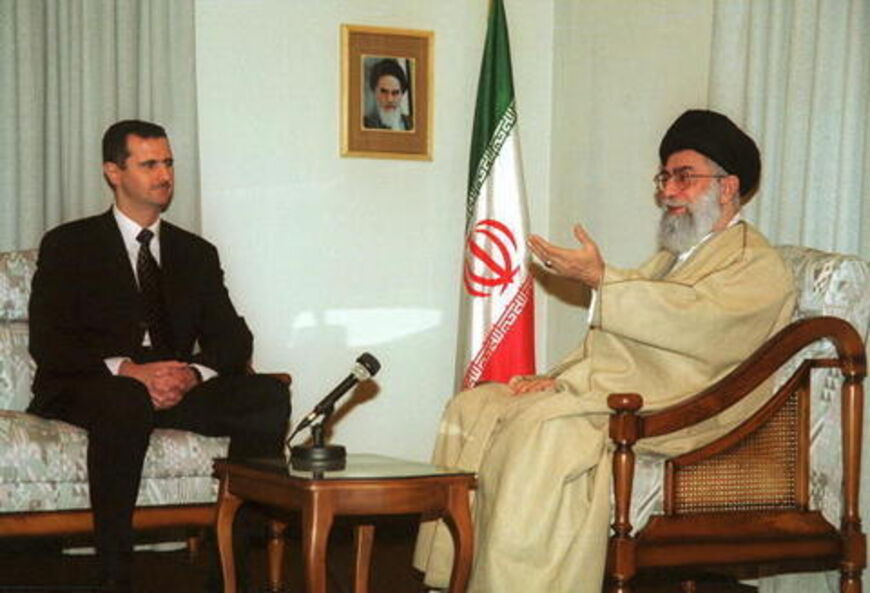
Khamenei was the chief architect of what Tehran calls the "Axis of Resistance," a regional network built around opposition to the United States and Israel. This strategy saw Iran deepen its partnerships with Hezbollah in Lebanon, back Shiite militias in Iraq, support Bashar al-Assad's government in Syria and provide support to Yemen’s Houthi movement. Iran has also provided weapons and funding to Palestinian militant group Hamas, though the group has had rifts with Iran in the past.
In November 2025, the US Treasury Department said that Iran had transferred more than $1 billion to Hezbollah since January that year.
At the same time, Iran’s relations with many of its neighbors remained fraught. Khamenei viewed Saudi Arabia in particular as a geopolitical and ideological rival, though he endorsed a Chinese-brokered diplomatic agreement in 2023. Tensions with the Gulf states, Israel and at times Turkey have long flared along proxy fault lines.
Beyond the Middle East, Khamenei pushed Iran to deepen ties with countries in the Global South, seeking partners less aligned with Washington. He repeatedly emphasized closer relations with Russia and China as pillars of Iran’s foreign policy; he first visited China in 1989, shortly before becoming supreme leader. Under his leadership, Iran expanded strategic cooperation with Moscow, particularly in defense and energy, while China became its largest trading partner and a key diplomatic backer amid Western sanctions.
Tehran also strengthened links with African and Asian states and joined groupings such as BRICS, which it formally entered in 2024, as part of a broader effort to reduce US dominance over the global economic system.
Khamenei authorized Iran’s participation in negotiations that led to the 2015 nuclear agreement with the Obama administration and its allies, formally known as the Joint Comprehensive Plan of Action (JCPOA), under which Iran accepted limits on its nuclear program and increased international inspections in exchange for sanctions relief.
Trump withdrew from the deal in 2018. Iran remained compliant for about a year after the US exit per intelligence assessments, but in July 2020 announced it would no longer observe the agreement’s 3.67% enrichment limit and subsequently increased enrichment to 60% purity — a technical step away from the 90% level required for nuclear weapons.
Succession
According to Iran's constitution, the supreme leader is chosen by the Assembly of Experts, an 88-member clerical body whose candidates are approved by the Guardian Council and then elected in nationwide votes. While the body has constitutional authority to select a new leader upon death or incapacity, in practice the process has been shaped by the top rungs of leadership, chiefly Khamenei himself.
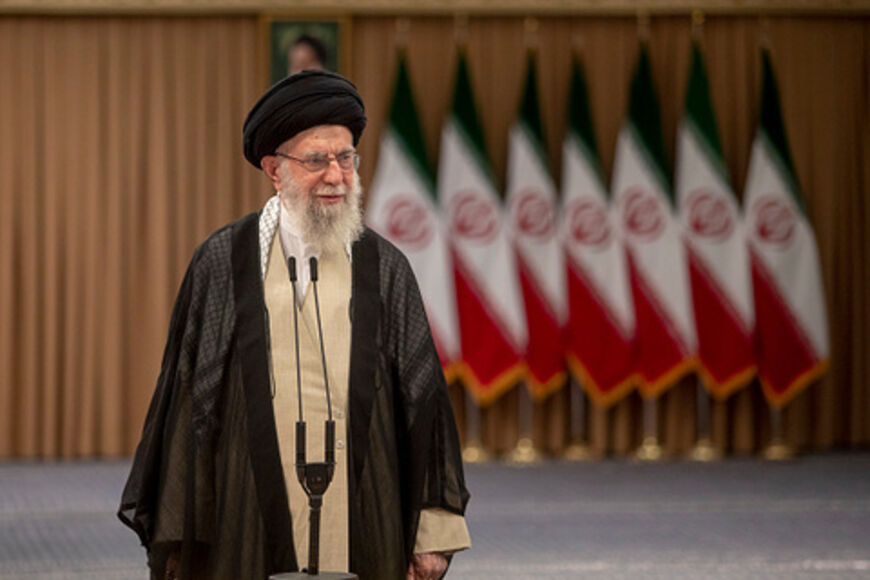
In June, the New York Times reported that Khamenei had submitted a list of three potential successors to the assembly. The names contained in the list were not disclosed, but among the names frequently mentioned are:
Mojtaba Khamenei, his 56-year-old son, whose views mirror his father's and who has close ties to the IRGC.
Hassan Khomeini, the 53-year-old grandson of Ayatollah Khomeini, who has been closely aligned with Reformist factions in Iran.
Assembly of Experts member Ayatollah Alireza Arafi (born 1959); Ali Asghar Hejazi (born 1946), Khamenei's deputy chief of staff; and 64-year-old Sadegh Larijani, chairman of Iran's Expediency Council.
This marks the second leadership transition in the history of the Islamic Republic. The first, in 1989, followed a major reversal: Ayatollah Khomeini had initially designated Ayatollah Hossein Ali Montazeri as his successor but dismissed him after Montazeri spoke out publicly against the mass execution of political prisoners in 1988. No successor was publicly named before Khomeini's death.
This one's on us.
The story doesn't end here.
Our correspondents are already on the next chapter. Read everything they file, from $2/week.
See Offers