Palestinians horrified by Israel's new death penalty law


Fear for her son's fate kept Maisoun Shawamreh awake through the night in the occupied West Bank following the Israeli parliament's approval of a law permitting the execution of Palestinians convicted of deadly terror attacks.
"The mothers of prisoners -- none of us slept last night," Shawamreh told AFP as she joined a protest in Ramallah against the law on Tuesday.
Her son has been in detention for three years, awaiting sentencing on charges of attempted murder.
"He may or may not be subject to execution," she said, uncertain of what lies ahead.
Under the new law, passed in parliament late Monday, Palestinians in the West Bank convicted by military courts of carrying out deadly attacks classified as "terrorism" will face the death penalty as a default sentence.
Because Palestinians in the territory are automatically tried in Israeli military courts, the measure effectively creates a separate and harsher legal track.
In Israeli civilian courts, the law allows for either death or life imprisonment for those convicted of killing with intent to harm the state.
While the law does not provide for retroactive application, critics say the distinction underscores a system of unequal justice.
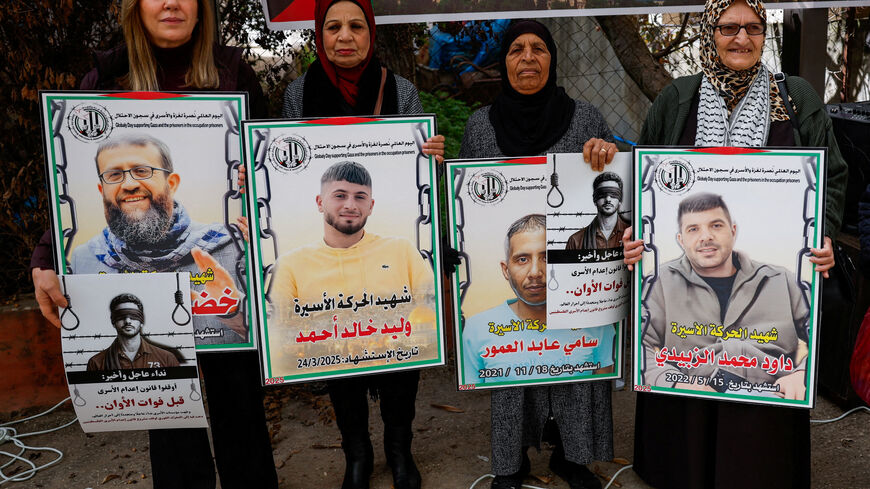
In Ramallah, dozens of activists, political factions and civil society groups gathered to protest the law.
Some held placards depicting a blindfolded prisoner flanked by two hanging nooses -- a stark image of what they fear lies ahead.
"Stop the execution of prisoners law before it's too late," read the placards, held alongside portraits of imprisoned Palestinians.
- 'Cruel and discriminatory' -
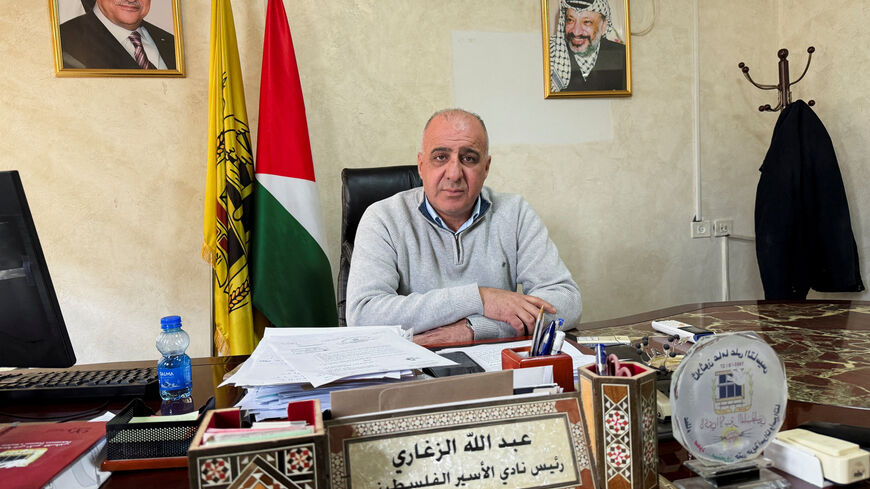
Abdullah al-Zaghari, director of the Palestinian Prisoners Club, condemned what he described as an openly discriminatory law.
"This fascist and racist legislation reflects the reality of the occupation," he said. "It applies to Palestinians -- not to Israeli Jews who carry out daily violence against Palestinian civilians."
Haitham, a 28-year-old employee of an international humanitarian organisation, said the law was "horrible".
"But we expected it... What can you expect from a government with people like Netanyahu?" he told AFP, declining to give his last name.
After lawmakers approved the bill, Israel's far-right National Security Minister Itamar Ben Gvir celebrated its passage with a champagne toast in a parliamentary corridor, joined by some fellow legislators.
UN chief Antonio Guterres's spokesman Stephane Dujarric condemned the law as "cruel and discriminatory".
"We ask that the Israeli government rescind it and not implement it," he told journalists.
The law "seriously jeopardises Israel's observer status with the Parliamentary Assembly of the Council of Europe", said PACE President Petra Bayr on Tuesday.
- Doubt in Israel -
Even within Israel some scepticism has emerged.
Dozens of Israelis gathered outside the Knesset in Jerusalem on Tuesday evening to protest against the law, brandishing banners reading "Palestinian Lives Matter" before police dispersed them with water cannon.
The legislation is "primitive and very stupid", said Meyir Lahav, a physician from Tel Aviv, adding that such measures were "deplorable and unacceptable in our society".
"We should be ashamed."
"What I don't like is that it doesn't apply to everyone," said Tom, a software engineer, who gave only his first name.
"If someone commits murder, it should apply to all -- Jews, Arabs, Muslims alike."
Yves, a French resident of Israel, also opposed the measure.
"To decide that, once a person has been captured, they should be put to death -- regardless of what they have done -- and to entrust another with carrying out that act, is something I reject on principle," he said.
But others, like businessman Noah Levi, firmly backed the law.
"The death penalty is a very good thing; we should have implemented it a long time ago," Levi said.
According to him, Palestinians "have killed innocent people, which is why we must take measures to prevent a future catastrophe for Israel".
The death penalty exists in Israel but it has been applied only twice: in 1948, shortly after the state's founding, against a military captain accused of high treason, and then in 1962, when the Nazi war criminal Adolf Eichmann was hanged.
Meanwhile, the new law is already facing legal challenges.
Several Israeli human rights groups, along with three members of parliament, filed petitions to the Supreme Court seeking to overturn the law.
The Association for Civil Rights in Israel (ACRI) said the law created "two parallel tracks, both designed to apply to Palestinians", and should be struck down on constitutional grounds.
The bill appears to conflict with Israel's Basic Laws, which prohibit arbitrary discrimination.
vide-acc-lba-jd/dcp