In Syria, detention of Hassan Akkad raises alarm about free expression under Sharaa
Akkad, a British-Syrian filmmaker, was detained Wednesday night after his campaign questioning the whereabouts of funds allegedly pledged for relief, reconstruction and community initiatives across Syria.
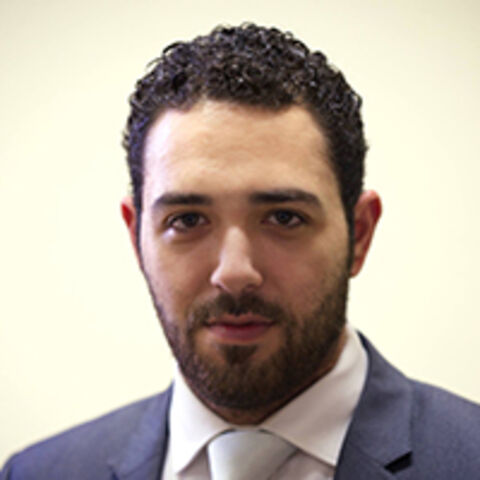

Security forces detained one of Syria’s most prominent transparency campaigners on Wednesday night in central Damascus, setting in motion a case that is already raising questions about the limits of accountability and free expression in the country’s post-Assad era.
Hassan Akkad, a Syrian-British filmmaker and activist known for his outspoken commentary on Syrian affairs, was detained following weeks of controversy surrounding Give Us the Money That You Owe, a campaign publicly questioning the whereabouts of funds allegedly pledged for relief, reconstruction and community initiatives across Syria.
Launched in April and focused on individuals and institutions that have publicly announced donations or financial commitments to Syrian reconstruction, the online campaign soon gained traction with its goal of ascertaining the status of the alleged contributions and the projects in need of support.
#Damascus: Influencer Hassan Akkad Detained by General Security Forces
— Syria Justice Archive (@SyJusticeArc) June 17, 2026
Hassan Akkad, a Syrian social media influencer, was arrested this evening at a Damascus restaurant (source: Syria TV) hours after Foreign Policy published an article on him and his campaign.
Akkad had been… pic.twitter.com/ChVDwaGqfA
In exclusive interviews, Al-Monitor spoke to members of the campaign team, who described the events leading up to Akkad's detention.
“We were sitting with Hassan at R House coffee shop in the Al-Malki district of Damascus, alongside a Canadian journalist and several other well-known individuals, when at around 9:30 p.m. a man entered the cafe and approached Hassan,” a campaign team member told Al-Monitor, speaking on condition of anonymity.
“He told Hassan there was a security patrol outside and asked him to come out to speak with them,” the team member continued. “Hassan walked towards the entrance, and several members of the Criminal Security Directorate’s raid unit emerged from a van parked outside. Around half of them were wearing face masks or balaclavas.”
The officers identified themselves as members of the directorate's cybercrime branch.
“We asked to see identification and requested an arrest warrant, but none was presented to us,” the team member recalled.
Campaign members said they lost contact with Akkad after he was taken away and were unable to communicate with him. They later learned that he had briefly spoken with his mother while at the cybercrime branch and had told her that he expected to be released. The call was not made from his personal phone, which he was apparently not carrying when detained.
“There is an open legal case against Hassan, but no official statement has been issued by the authorities, no arrest warrant has been shown to us, and no explanation has been provided regarding the reasons for his detention,” the campaign team member added.
The team claimed that they had been prevented from filming the arrest and that officers had immediately demanded Akkad’s mobile phone when taking him into custody, but he did not have it with him.
A statement shared with Al-Monitor by Akkad’s campaign team said his legal representatives were monitoring his legal and security situation. Syrian authorities had not issued an official statement at the time of publication.
Complainants and pledges
According to campaign members, two complaints are believed to have been filed against Akkad. One is publicly known and was submitted by the Syrian journalist Moussa al-Omar, apparently in early June based on Akkad's videos. The second complainant has not been disclosed by officials.
Sources close to Akkad's case told Al-Monitor that they believe the second complaint may be linked to the prominent businessman Mohammad Hamsho, but they could not independently verify their suspicions with information from government officials.
Hamsho became a focus of Akkad’s campaign after the activist repeatedly questioned a publicly announced, but unfulfilled pledge of $1 million toward Syria’s reconstruction.
Akkad’s detention follows months of public disputes with several prominent figures. More recently, the activist became embroiled in a confrontation with Omar, who is reported to have filed a complaint with Syria’s cybercrime authorities, alleging defamatory conduct.
In a series of videos posted online in May, Akkad questioned Omar about a $10,000 pledge he had made to the Homs governorate, asserting that it had not been paid. Omar denied the allegation.
بعدما نادى «هاتوا الفلوس».. حسان عقاد خلف القضبان
— X media (@X_news_media) June 18, 2026
After Calling for “Bring the Money”.. Hassan Akkad Ends Up Behind Bars!#xmedia pic.twitter.com/rC46YSq57a
For many Syrians, the controversy extends beyond disputes with public figures. Following the fall of President Bashar al-Assad’s government in December 2024, the country's interim leadership launched fundraising campaigns and reconstruction initiatives across the country. Wealthy businessmen, figures in the diaspora, charities and local organizations pledged support for communities devastated by years of war. Yet questions have persisted about oversight, transparency and whether some publicly announced commitments have been fulfilled.
Answers and accountability
Akkad supporters argue that his campaign merely reflects growing public frustration over the lack of answers surrounding alleged contributions and pledges. They maintain that asking where the money is being spent and whether the projects allegedly in need actually exist should not be grounds for legal action.
The Akkad case is emerging as an early test of how the government of President Ahmed al-Sharaa will address public demands for accountability, legal protections against defamation, and online abuse, and whether simple complaints will routinely lead to quick arrests under murky circumstances.
The Damascus-based journalist Angela Al-Sahwi told Al-Monitor that Akkad's detention risks creating a chilling effect on public debate.
“The arrest of Hassan Akkad and the harassment he has been subjected to today will make anyone who wants to speak out on a wide range of subjects afraid, forcing them to think twice — or even ten times — before taking any step,” Sahwi said. “The pattern of harassment that emerged after Hassan spoke about Mohammad Hamsho, and the way figures [i.e., the donors] who claim to support the government mobilized against him, suggests either complicity or a failure by the authorities to protect a Syrian citizen whose only offense was speaking out.”
Sahwi further stated, “It is absurd that individuals such as Fadi Saqr, whose crimes are documented and whose hands are stained with Syrian blood, remain free, and figures such as Mohammad Hamsho, who is sanctioned by the European Union, can roam about at ease, while a young Syrian trying to help people is treated in this manner and arrested in the middle of Damascus for a mere complaint.”
1/ The reported arrest against Hassan Akkad is not just about one activist or one video. It is about whether the new Syrian authorities will tolerate public criticism when it comes from Syrians who demand accountability, dignity, and rights.
— Hussam Hammoud | حسام (@HussamHamoud) June 18, 2026
🧵 pic.twitter.com/648Y0O0eka
Saqr, a commander in the National Defense Forces under Assad, was slapped with US sanctions in 2020 over alleged human rights abuses during the almost 14-year Syrian civil war (2011–24). The businessman Hamsho, known for his close ties to the Assad regime, was also sanctioned by the United States, for alleged financial support of the dictatorial government.
As debate continues over transparency, accountability and criticism in post-Assad Syria, Akkad’s detention is likely to become a closely watched litmus test of whether the space for civic activism has already reached its limit.
This one's on us.
The story doesn't end here.
Our correspondents are already on the next chapter. Read everything they file, from $2/week.
See Offers