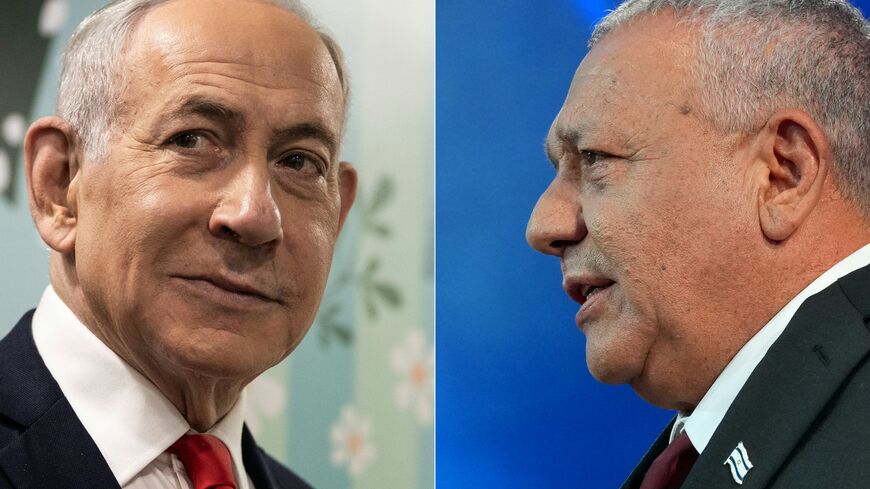
How Netanyahu is trying to discredit Arab parties in bid to block Eisenkot
Prime Minister Benjamin Netanyahu is seeking to discredit the Arab parties' unprecedented electoral breakthrough by casting their victory as illegitimate.


TEL AVIV — Neither Prime Minister Benjamin Netanyahu nor his rival, Yashar leader Gadi Eisenkot, emerged from this week's elections with a clear path to power. While the country is caught in a political deadlock, in a bid to prevent his opponent from assembling a government, Netanyahu has launched a campaign to delegitimize the Arab parties, which scored an unprecedented electoral breakthrough.
Arab parties emerge as kingmakers
Netanyahu's Likud party came first in the Oct. 27 elections, winning 27 seats. Yet his political bloc commands just 53 seats in the 120-member Knesset, eight short of the 61-seat majority required to form a government. Eisenkot's bloc is even further from that threshold with only 48 seats.
Against this backdrop, the election's most consequential outcome may have been the surge in support for the country's Arab parties. Israel's Arab minority, which makes up approximately 21% of the population, turned out in record numbers, delivering a combined total of 19 Knesset seats to its political representatives.