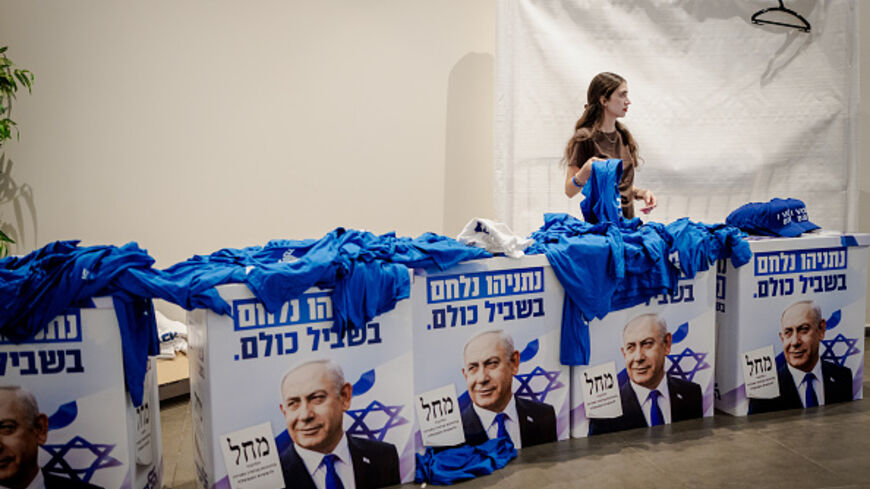
Netanyahu victory or another vote? 5 scenarios for Israel’s election
Arab turnout could prove decisive as polls project 13 to 15 seats for the two Arab parties, up from nine Arab lawmakers in the current Knesset.


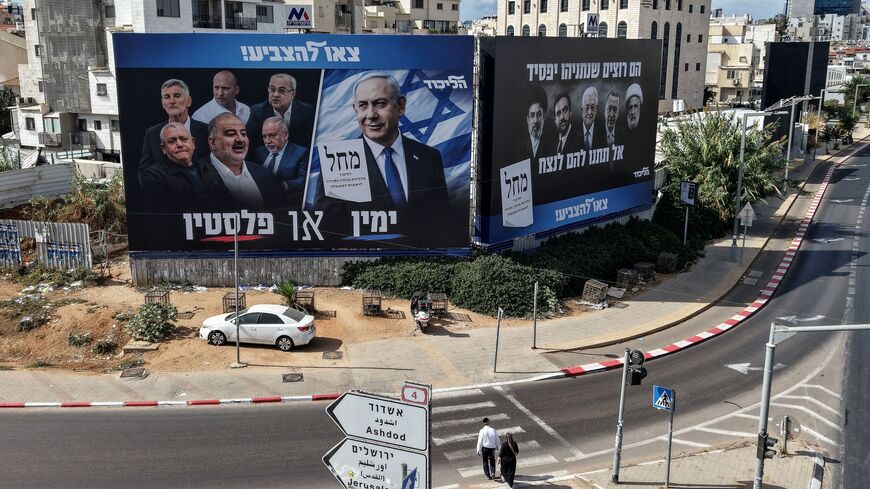
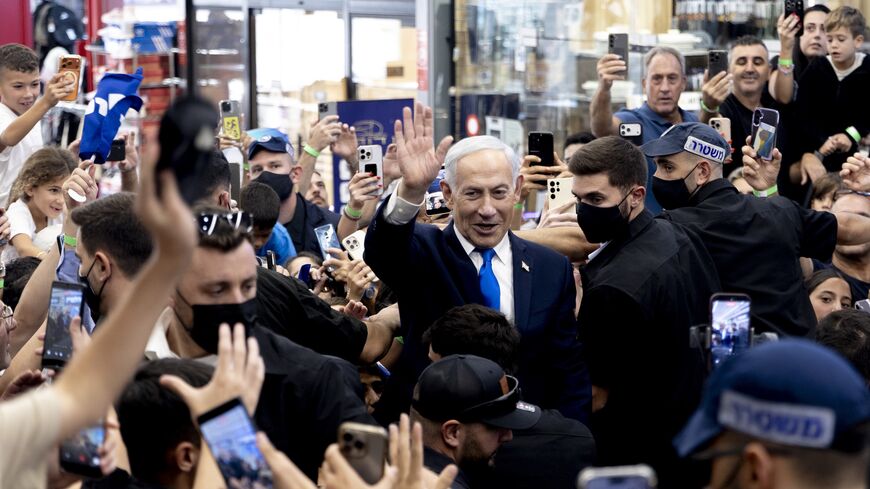
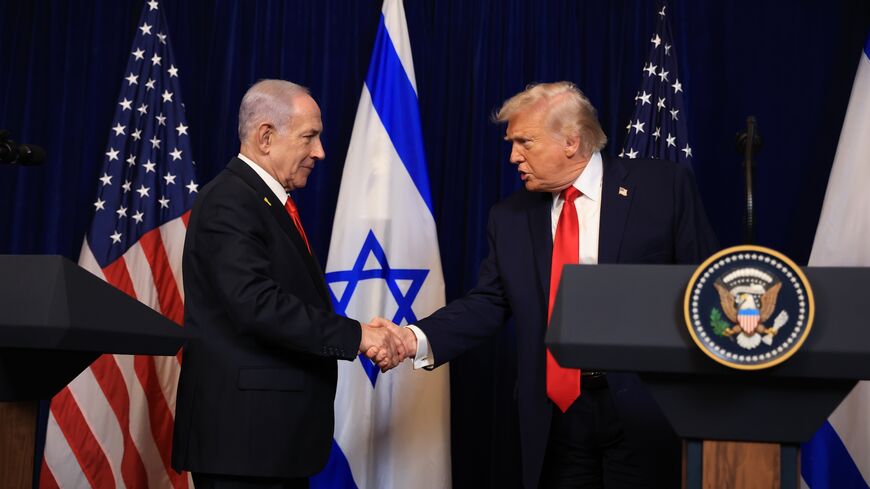
TEL AVIV — Polls show the opposition and Prime Minister Benjamin Netanyahu’s camp winning nearly the same number of seats in Israel’s Oct. 27 elections, leaving neither bloc with a clear path to a majority and several scenarios in play.
Analysts tell Al-Monitor that Netanyahu’s chances of securing a majority appear slim but cannot be ruled out, and that another round of elections, which would be Israel's seventh in under four years, remains a distinct possibility.
Under Israel’s proportional representation system, a candidate tasked by the president with forming a government must secure the support of at least 61 of the Knesset’s 120 members. Polls over the past four months have generally given Gadi Eisenkot’s center-right Yashar party an edge over Netanyahu’s Likud party, though the gap between the parties — and between their respective blocs — has narrowed.
Eisenkot and fellow opposition leaders Naftali Bennett, Yair Lapid and Avigdor Lieberman have all said they would not include Arab parties in a future coalition. Bennett and Lapid head Together, an alliance of Bennett’s right-wing party and Lapid’s centrist Yesh Atid. Lieberman leads Yisrael Beiteinu, a right-wing party that largely represents Israelis of Russian-speaking origin. Polls over the past four months suggest the Arab parties, the Joint List and Ra’am, could win 13 to 15 Knesset seats, up from nine currently, making them possible kingmakers in the coalition-making process.