UAE nominates Lana Nusseibeh for UN secretary-general: What to know
Nusseibeh, who is of Palestinian descent, would become the second Middle Eastern person to serve as UN secretary-general after Boutros Boutros-Ghali and the first woman to hold the position.
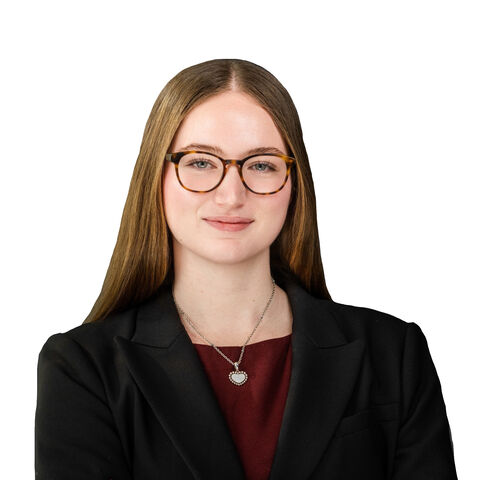

The United Arab Emirates has nominated Lana Nusseibeh, a senior diplomat and former ambassador to the United Nations, to succeed Antonio Guterres as UN secretary-general. The move adds a Middle Eastern candidate to a crowded race in which Latin American representation and the prospect of the organization’s first female leader have emerged as central themes.
The UAE’s Foreign Ministry announced its nomination of Nusseibeh on Wednesday, citing her "extensive experience with regard to the United Nations and her wisdom in dealing with current international challenges."
Nusseibeh, who currently serves as the UAE's minister of state at the Ministry of Foreign Affairs, was the first woman to represent the Emirates as permanent representative to the United Nations. She held the post from 2013 to 2024, a period that included the UAE’s two-year term on the Security Council.
Her nomination comes as the UN seeks a successor to Guterres, whose second five-year term ends Dec. 31. The next secretary-general will take office on Jan. 1, 2027.
Who is Nusseibeh?
Nusseibeh has spent much of her career representing the UAE at international institutions, including at the UN.
Earlier in her career, Nusseibeh worked as a consultant for UNESCO in Paris and as an analyst with the Gulf Research Center’s Security and Terrorism Programme. She holds an undergraduate degree in history from the University of Cambridge and a master’s degree in Israeli and Jewish Diaspora Studies from SOAS University of London.
Before becoming the UAE’s permanent representative to the UN in September 2013, she helped establish the foreign ministry’s policy planning department, serving as its first director, and worked as the UAE’s co-special envoy to Afghanistan and Pakistan. She also served as deputy sherpa for the UAE’s participation in the Group of 20 and led a task force connected to the International Renewable Energy Agency.
During her tenure at the UN, Nusseibeh held several positions within the organization’s multilateral structures. In 2017, she served as president of the UN Women Executive Board and as one of the vice presidents of the General Assembly’s 72nd session. She also co-facilitated work on revitalizing the General Assembly and co-chaired the Friends of the Future of the UN, an informal group focused on the organization’s future.
Nusseibeh has defended the UAE’s ties with Israel while also publicly supporting Palestinian statehood. After the Oct. 7, 2023, attacks, she condemned the killing of Israeli civilians and the taking of hostages, describing the Hamas assault as “unjustifiable.”
While serving as the UN ambassador, Nusseibeh helped advance a Security Council resolution in 2023 establishing a mechanism to facilitate humanitarian aid deliveries into Gaza. She represented the UAE before the International Court of Justice in 2024, supporting Palestinian self-determination and a two-state solution while criticizing Israeli policies in the occupied Palestinian territories.
In 2025, she warned that Israeli annexation of the West Bank was a red line for the UAE and would threaten regional integration.
She has also criticized Hezbollah. In 2023, she accused the group of obstructing UN peacekeepers in southern Lebanon, conducting military drills and undermining Lebanon’s state institutions, warning that its actions risked escalating regional tensions.
Nusseibeh has defended the UAE against Sudanese government and military allegations that Abu Dhabi has supplied weapons to the Rapid Support Forces, which the UAE denies. She has called for a ceasefire and a civilian-led political transition in Sudan.
Palestinian roots
Nusseibeh’s family has deep roots in Jerusalem. Her grandfather, Anwar Nusseibeh, was a prominent Palestinian politician who held several ministerial posts in Jordan’s government when it occupied the West Bank and East Jerusalem and served as its ambassador to Britain from 1965 to 1967. He returned from London shortly before the 1967 war and remained in Jerusalem after Israel occupied East Jerusalem. He later broke with the PLO, opposing its claim to be the sole legitimate representative of the Palestinian people.
Anwar’s son Sari Nusseibeh, a philosopher and former president of Al-Quds University, was appointed the PLO’s representative in Jerusalem by Yasser Arafat in 2001. He later co-founded a peace initiative with former Shin Bet chief Ami Ayalon that advocated a two-state solution.
Anwar’s other son, Zaki Nusseibeh, is Lana Nusseibeh’s father. He is a cultural adviser to the UAE president and is a prominent figure in the country.
The race
Nusseibeh enters a selection process shaped by questions of regional representation, gender and the future of the UN.
An informal regional rotation has fueled expectations that the next secretary-general will come from Latin America or the Caribbean.
Among the candidates already in the race, Costa Rican diplomat Rebeca Grynspan has emerged as a prominent contender. Grynspan, a former vice president of Costa Rica, has led the UN Conference on Trade and Development since 2021. Other candidates include Rafael Grossi, an Argentinian who has led the International Atomic Energy Agency since 2019, and Guyana’s UN ambassador Carolyn Rodrigues-Birkett. Of the eight candidates now in the race, five are women and five are from Latin America or the Caribbean.
Should Nusseibeh win, she would become the first woman to serve as UN secretary-general and the second Arab to hold the post, after Egypt’s Boutros Boutros-Ghali, who served from 1992 to 1996.
The Security Council has held a series of informal straw polls to gauge support for the candidates. It is expected to continue those consultations before formally recommending a nominee to the 193-member General Assembly.
The five permanent members of the Security Council — the US, China, Russia, France and the UK, also known as the P5 — wield veto power over the recommendation.
In a straw poll taken on Oct. 16, Grynspan remained in first place with nine “encourage” votes, three of them from the P5. Rodrigues-Birkett ranked second with eight, also with three from the P5, while Rafael Grossi followed in third with eight “encourage” votes, two of them from the P5, according to 1 for 8 Billion, a civil society campaign advocating for a more transparent UN secretary-general selection process.
Politico reported this month that the Trump administration was opposed to the existing slate of candidates, with officials arguing that none sufficiently shared US President Donald Trump’s vision for the organization.
The Trump administration has sought to reduce US financial and institutional commitments to the organization, withdrawing from or cutting support for several UN bodies and agencies, including the UN Human Rights Council, UNESCO and the World Health Organization. The US in 2024 suspended its funding for the UN agency for Palestinian refugees, UNRWA, after Israel accused agency employees of involvement in the Oct. 7, 2023, Hamas-led attack.
This one's on us.
The story doesn't end here.
Our correspondents are already on the next chapter. Read everything they file, from $2/week.
See Offers